

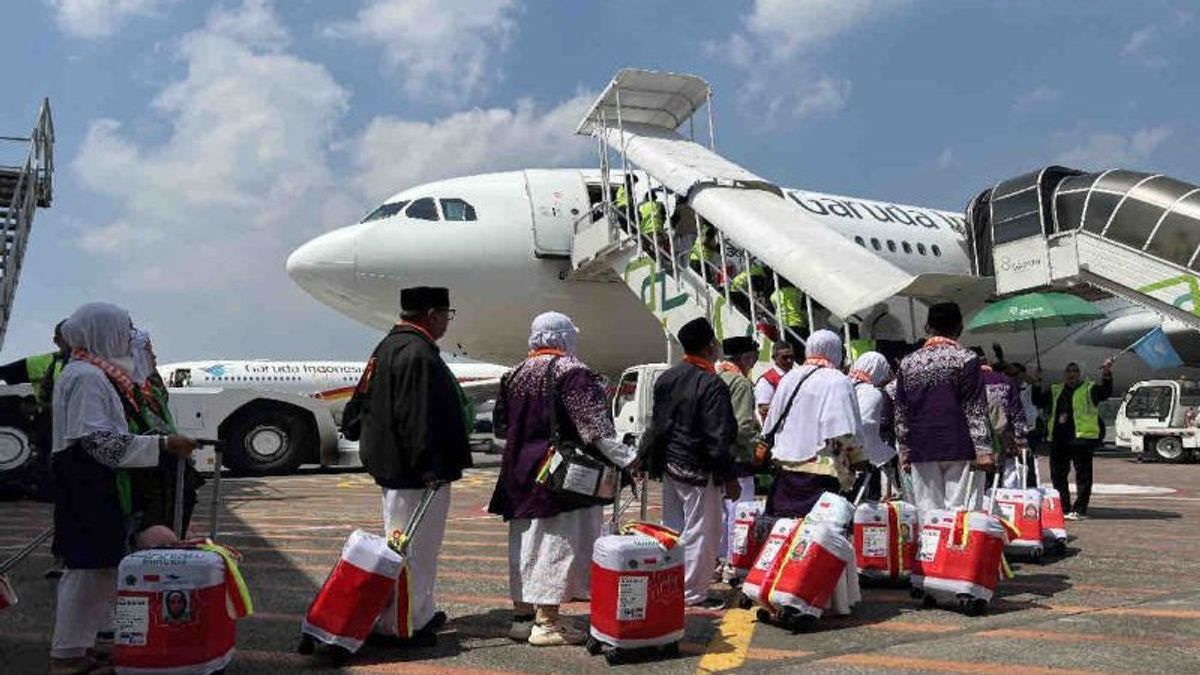


JAKARTA - The Directorate General of Customs and Excise (DJBC) of the Ministry of Finance provides import duty and tax exemption facilities for souvenirs of pilgrims in the 2026 Hajj season, with a maximum value limit of US$3,000 or Rp48,000,000 per person.
This provision is regulated in the Minister of Finance Regulation (PMK) Number 4 of 2025. This facility includes the exemption of import duties, VAT, income tax, and other import levies, as long as it meets the established requirements.
Head of Import Section III of the DJBC, Cindhe Marjuang Praja, explained that the limit of US$3,000 was divided into two shipments, each with a maximum of US$1,500.
"Pilgrims can send personal items or souvenirs with a maximum total of US$3,000, but must be in two shipments," said Cindhe in a media briefing, Thursday, April 16.
This scheme adjusts the travel pattern of Indonesian pilgrims, who generally stop in Madinah and Mecca, so that shipments can be made from each city as long as they are within the provisions.
Delivery can be carried out through official organizers such as Pos Indonesia and international logistics services. However, DJBC emphasized that this facility only applies to personal goods, not consignment goods or consignment services (jastip).
"If it is a crime, it is not included in this exemption facility," he said.
In addition to the value limit, the government also regulates the maximum size of the package, namely one package with dimensions of 60 cm long, 60 cm wide, and 80 cm high per shipment.
DJBC also set the delivery period, namely from the departure of the first batch to a maximum of 30 days after the return of the last batch.
If the value of goods exceeds US$1,500 per shipment or the number of shipments is more than twice, then a 7.5% import duty and an effective 11% VAT will be imposed.
For carry-on baggage, regular pilgrims receive full exemption, while special pilgrims are exempt up to US$2,500. The excess is subject to a 10 percent import duty and VAT, without PPh.
This facility only applies to pilgrims who are registered in the official government quota. DJBC considers this policy as a form of fiscal relaxation given the characteristics of Indonesian Hajj pilgrims who generally save in the long term to go to the Holy Land.
"The condition of Indonesian pilgrims is very special, so we provide more facilities," said Cindhe.
The English, Chinese, Japanese, Arabic, and French versions are automatically generated by the AI. So there may still be inaccuracies in translating, please always see Indonesian as our main language. (system supported by DigitalSiber.id)
Most Popular Tags
#Prabowo Subianto #donald trump #2026 World Cup #Febrie Adriansyah #8791Popular


