



Member of Commission IX of the House of Representatives, Nurhadi, highlighted the action of thousands of workers who held a demonstration in front of the DPR Ggdung, Senayan, Jakarta. According to him, the action of workers who demand a number of things is a warning of the problem of employment. This is no longer a common issue, but rather enters into a phase of a real structural crisis.
"The demonstration carried out by workers is not just an action, but this is a loud alarm for the labor crisis," said Nurhadi, Thursday, April 16.
Nurhadi assessed that the wave of labor action could not be separated from the objective conditions of national employment which was still full of inequality. He said the problem did not stop at the number of unemployed, but also the quality of available jobs.
"State data itself shows that the problem is real. As of August 2025, the number of unemployed people is still around 7.46 million, and this is not a small number. This is a portrait of our system that has not been able to absorb labor optimally," said Nurhadi.
"BPS has recorded that the average wage of our workers is still in the range of IDR 3.3 million per month, while many new jobs are actually growing in the informal sector, part-time, and with minimal social security. This is not a decent job, this is a job to survive," he continued.
Nurhadi said the phenomenon of labor mismatch was exacerbating the situation. Because about 35 percent of young workers work not in accordance with their level of education. "This means that there is a systemic failure in the planning of the national labor force," said Nurhadi.
Members of the Commission in the DPR who deal with employment issues also touched on the increasing trend of layoffs in recent times. Nurhadi referred to data from the Ministry of Manpower which recorded more than 26 thousand cases of layoffs until mid-2025.
"And this is only the recorded number. The reality on the ground could be bigger," said the NasDem Faction member.
According to Nurhadi, the condition is exacerbated by the increasingly flexible labor market structure but is not accompanied by protection. The Employment Outlook report shows that many new jobs are actually in low-productivity, informal sectors, and without adequate protection. "This explains why today's workers are taking to the streets," he said.
Therefore, Nurhadi reminded that the State should not only be friendly to investors but neglect the welfare of workers. He emphasized that workers' demands for the abolition of outsourcing and the formation of a new Employment Law are rational and reality-based demands.
"We cannot continue to allow flexibility to be used as an excuse to weaken labor protection. If outsourcing is allowed without limits, then what is born is mass job insecurity," he said.
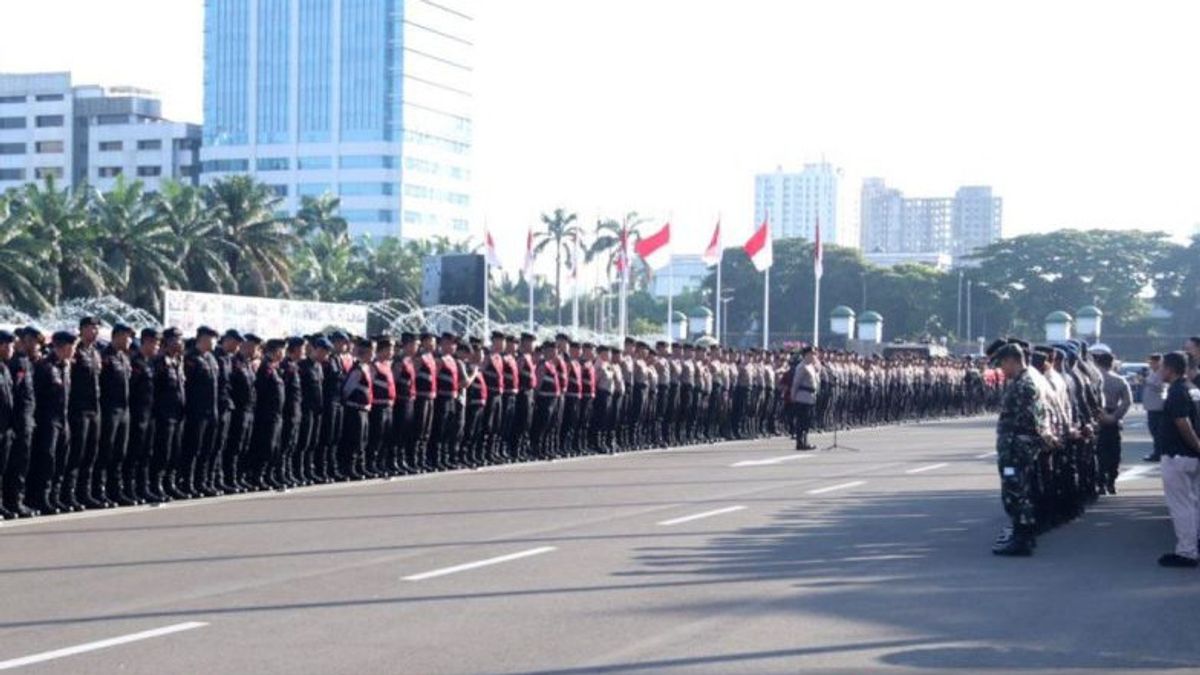
It was reported that thousands of workers held a demonstration in front of the DPR building today to convey aspirations. The action was part of a series of activities ahead of the International Labor Day or May Day which is commemorated on May 1.
The workers demand the abolition of cheap wage practices and outsourcing systems, the enactment of the Manpower Bill, and urge the Government to stop the threat of layoffs (PHK) triggered by global conditions.
The English, Chinese, Japanese, Arabic, and French versions are automatically generated by the AI. So there may still be inaccuracies in translating, please always see Indonesian as our main language. (system supported by DigitalSiber.id)
Popular


