

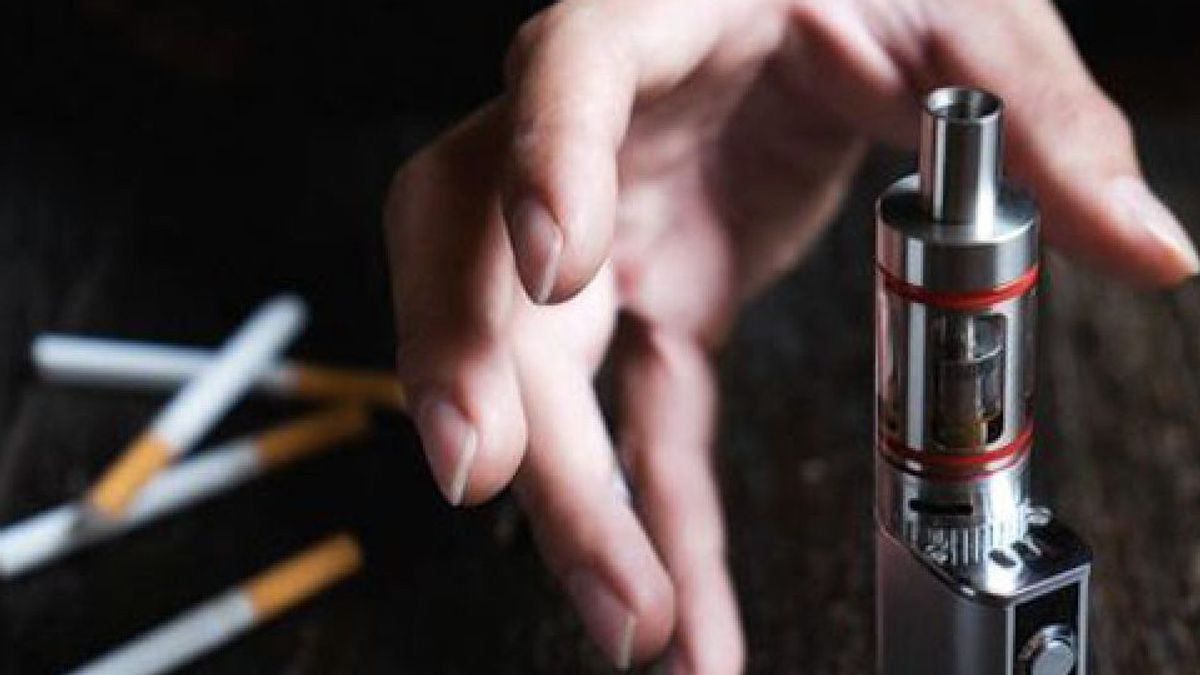


JAKARTA - Deputy Chairman of Commission IX of the Indonesian House of Representatives, Yahya Zaini, assessed that the discourse on banning vape or electronic cigarettes needs to be considered because it has the potential to be misused. In fact, according to him, not only in contact with drugs, banning vape can also reduce unhealthy lifestyles among young people.
"The proposed ban on vaping is quite reasonable because it can reduce unhealthy lifestyles, which have recently become a common phenomenon, especially among young people," Yahya Zaini told reporters, Friday, April 10.
The Golkar legislator from the East Java VIII constituency also assessed that vape has often been perceived as a lighter alternative than conventional cigarettes. In fact, said Yahya, the latest developments show that the problem is not as simple as comparing nicotine levels.
"When the fluids consumed can be modified with harmful chemical content or even prohibited substances, the public health risk increases much more complex," said Yahya.
The vape is often promoted as a safer alternative than tobacco cigarettes. However, according to Yahya, this claim is misleading because the vape still contains harmful substances and poses health risks.
"Many studies reveal that vape vapor contains heavy metals and toxic chemicals that trigger cancer, anxiety, and even mental health disorders," he explained.
Yahya also reminded that vape vapor or aerosol damages internal organs and is high risk for passive smokers, as well as very dangerous for fetuses. A number of studies have also revealed that vape has now become one of the trends or lifestyles of young people, including teenagers.
"So the issue of vaping is now no longer only related to the behavior of nicotine consumption, but has entered the space of protecting the health of the younger generation," said Yahya.
Therefore, Yahya also encourages a health policy approach that does not stop at prohibitions or restrictions, but ensures that every inhalant product in circulation has a standard of content supervision that can be strictly verified. Because without a strong standard, Yahya assesses that the public will always be in a position to buy products that are visually uniform but have very different content risks.
"In the end, public health protection requires the State to read vape not only as a consumption product, but as a medium that can bring new health risks," concluded Yahya Zaini.
As is known, the proposal to ban the circulation of vape in Indonesia was submitted by the National Narcotics Agency (BNN) because it has the potential to be misused to consume drugs. This vape ban is proposed to be included in the bill on Narcotics and Psychotropic Substances which is currently being discussed in the DPR.
Based on the results of the BNN's central laboratory test on 341 vape liquid samples, 11 samples contained cannabinoids or marijuana to one sample containing methamphetamine or crystal meth.
Not only cannabinoids, BNN also found etomidate, which is a narcotic, in the contents of the vape samples tested. If vaping as a medium is prohibited, BNN assesses that the circulation of etomidate can also be significantly overcome.
The English, Chinese, Japanese, Arabic, and French versions are automatically generated by the AI. So there may still be inaccuracies in translating, please always see Indonesian as our main language. (system supported by DigitalSiber.id)
Most Popular Tags
#Prabowo Subianto #donald trump #firearm #8791 #giias 2026Popular


