



JAKARTA - After the return flow of Eid al-Fitr 1447 Hijriah, the activity of crossing people at the State Border Crossing Post (PLBN) Skouw National Border Management Agency of the Republic of Indonesia (BNPP RI) has begun to show a declining trend.
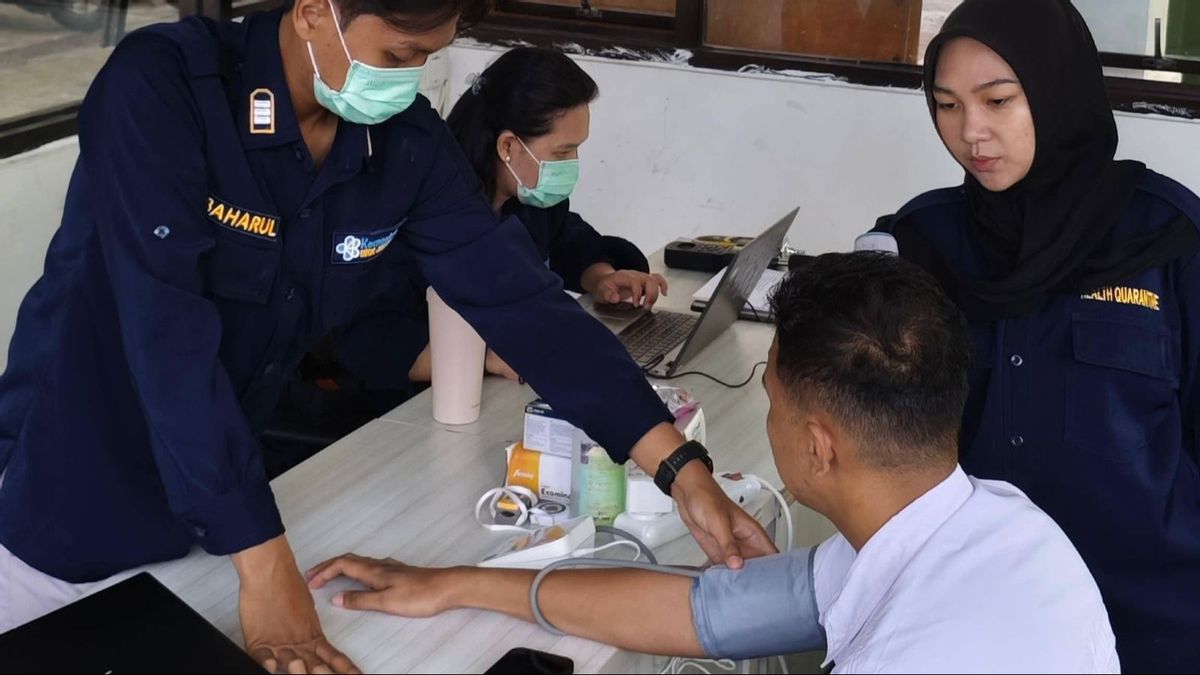
However, the health service post that was alerted since March 14, 2026, will continue to operate fully to ensure the safety and health of passers-by in the Indonesian-Papua New Guinea border area until March 30, 2026.
Based on the observation of officers, the peak of the increase in passersby at the Skouw PLBN occurred on March 19 to 20, 2026.
Entering the Lebaran reverse flow period, community mobility at the Skouw PLBN is now gradually normal, but the readiness of the health service post is still maintained as an anticipation step.
During the operation of the post, all health services ran smoothly without any emergency cases that required referral to advanced health facilities.
Since it was first opened, the number of visits to the health post has gradually increased and reached its peak on H-2 Eid and then increased again on H+2 Eid.
Until March 26, 2026, a total of 48 visits to the health post were recorded, with an average of four patients per day for 13 days of operation.
In terms of the type of complaint, Acute Respiratory Tract Infection (ISPA) is the most dominant case. This condition is estimated to be influenced by the humid weather and high mobility of passers-by.
In addition to ISPA, officers also handle complaints of headaches due to fatigue and dehydration, fever requiring observation, and non-communicable diseases such as hypertension and hypercholesterolemia.
As part of early detection efforts, health workers have screened 7,480 passersby using thermal scanners. The results of the examination showed that all passers had body temperatures below the fever threshold.
Head of the Skouw PLBN, Ni Luh Puspa Jayaningsih said that the health post has a strategic role in maintaining health security in border areas, especially during the momentum of the homecoming and Eid al-Fitr.
According to him, the existence of health posts not only serves as basic medical services, but also as the front line in the cross-country health vigilance system.
"This health post not only serves the community, but also becomes an early detection system for potential disease risks that come from outside the region. We see a change in disease patterns in border communities, so that in the future a more comprehensive and sustainable health approach is needed," said Ni Luh in a statement received in Jakarta, Monday, March 30, 2026.
He also added that the high mobility of the community during Eid needs to be balanced with an awareness of maintaining health. Based on data from field inspections, as many as 62.5 percent of passers who use the post office service are recorded as active smokers.
This condition is considered to worsen respiratory disorders, especially in the midst of the dominance of ISPA cases and the potential for the spread of droplet-based diseases.
For this reason, the public is urged to start reducing smoking habits, using masks in crowded areas, maintaining body resistance, and not ignoring the early symptoms of the disease. The use of health post services is also encouraged as a preventive measure through periodic health checks and consultations.
With the condition still under control until the 5th day of Eid, the health services at the Skouw PLBN showed optimal readiness in supporting the smooth flow of the homecoming and return to Idulfitri 1447 Hijriah.
More than just a temporary service, the presence of this health post confirms the commitment of the Skouw PLBN, which is managed by BNPP RI as the country's leading guard in maintaining the security, comfort, and health of the community in the Indonesian-Papua New Guinea border area.
The English, Chinese, Japanese, Arabic, and French versions are automatically generated by the AI. So there may still be inaccuracies in translating, please always see Indonesian as our main language. (system supported by DigitalSiber.id)
Most Popular Tags
#Prabowo Subianto #donald trump #2026 World Cup #Febrie Adriansyah #8791Popular


