

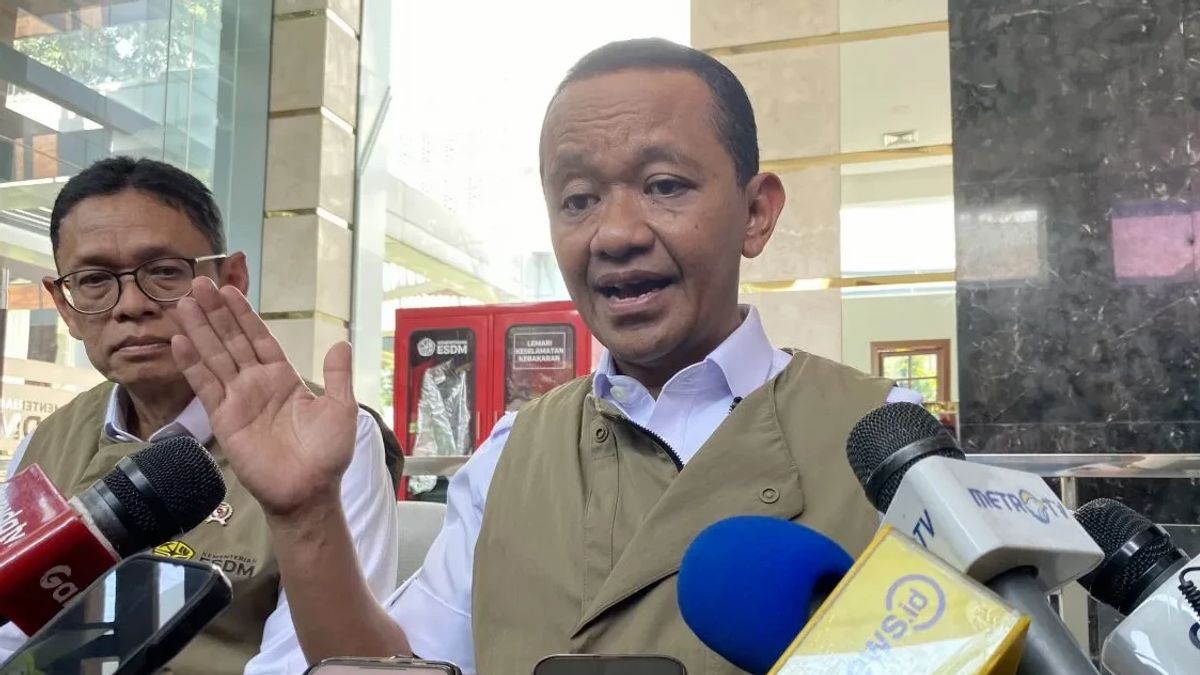


JAKARTA - Energy and Mineral Resources Minister (ESDM) Bahlil Lahadalia managed to dispel public fears about the availability of fuel oil (BBM) operations that can last for 20 days amid the heating of global geopolitical tensions. The public also calculated the estimated national fuel reserves will run out in conjunction with the momentum of Lebaran 2026. However, the reality is that energy availability is safe until now.
Researcher from the Thermal Engineering and Energy Systems (RTSE) Laboratory of the Sepuluh Nopember Institute of Technology (ITS), Ary Bachtiar Krishna Putra, appreciates the government's performance in maintaining fuel supply during holidays. He assessed that this condition is inseparable from the experience of Minister Bahlil in managing energy needs during the Lebaran homecoming period which occurs every year.
"Yes, because it is an annual event. This means that in terms of supply, the government may already have a flight time to guarantee the availability and price of fuel," Ary said in an interview, Wednesday, March 25.
According to him, the pattern of fuel consumption during Lebaran is quite predictable because it takes place in a limited time, generally only about a week during the homecoming and return flow. This makes it easier for the government to anticipate a spike in demand.
"If Lebaran is indeed an addition because you go home, it is also in the category of maybe every week, meaning from departure to return," he said.
In addition, he assessed that the behavior of the community who are more wise in using fuel also contributes to the stability of supply. Concerns about the potential for scarcity make people tend to withhold unnecessary consumption.
"If the community has started to control themselves not to spend too much, the benefits are felt. I see in some areas, the condition is not too much in line with BBM," he said.
On the other hand, Ary reminded that fundamentally Indonesia's energy resilience still has challenges, especially related to the relatively limited fuel reserve capacity compared to other countries in the region. He said, the current national energy reserves are still in the range of 20 to 28 days, far below countries such as Japan and Singapore which are able to store reserves for months.
Therefore, Ary assessed the government's move to increase the fuel storage capacity to 90 days was a strategic policy that needed to be immediately realized to strengthen national energy resilience.
"If it can be 90 days, it's amazing. That means that if the market price goes up and down, we still have time and reserves from previous procurement," he said.
Furthermore, he also highlighted the role of biodiesel programs such as B50 which is considered to have helped reduce dependence on imported gasoline, although for Indonesian gasoline it still depends on foreign supplies.
With the combination of government experience, predicted consumption patterns, and ongoing energy policy support, Ary assessed the success of maintaining fuel supply during this year's Lebaran as a positive indicator in national energy management.
The English, Chinese, Japanese, Arabic, and French versions are automatically generated by the AI. So there may still be inaccuracies in translating, please always see Indonesian as our main language. (system supported by DigitalSiber.id)
Most Popular Tags
#Prabowo Subianto #donald trump #firearm #8791 #giias 2026Popular


