

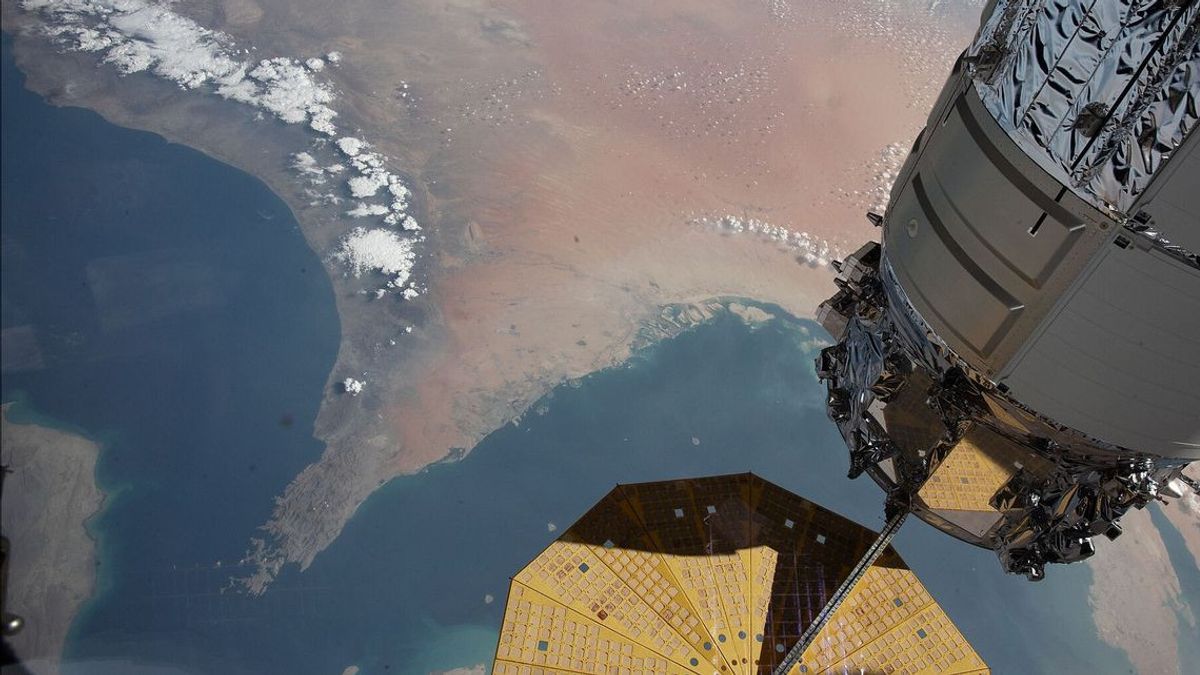


JAKARTA - United Nations Secretary-General António Guterres stated that the United Nations wants to contribute to resolving the crisis in the Strait of Hormuz.
"My main goal is to see if it is possible to create conditions in the Strait of Hormuz like they have never been before. Of course the context is different and the solution will also be different, but we want to play a role and be ready to manage the system," Guterres said in an interview with Politico published Saturday, March 21. reported by ANTARA from Sputnik.
According to him, the UN is currently working with the Gulf countries, as well as maintaining communication with the European Council.
Previously, Guterres, Thursday (19/3), called on Israel and the United States (US) to stop operations against Iran because they risk getting out of control, causing great suffering for civilians and impacting the global economy.
"It's time for the rule of law to defeat the law of force. It's time for diplomacy to defeat war," Guterres told reporters on the sidelines of the European Union leaders' summit.
The UN Secretary-General urged Iran to reopen the Strait of Hormuz amid the US and Israeli military attacks on the country.
Guterres also called on Iran to stop retaliating against neighboring countries in the Gulf region, arguing that these countries "have never been parties to this conflict."
"The prolonged closure of the Strait of Hormuz has caused great suffering for many people around the world who have nothing to do with this conflict," Guterres said.
Previously on February 28, the United States and Israel launched an attack on a number of targets in Iran, including in Tehran, which caused various damages and many civilian casualties. Iran then retaliated with attacks on Israeli territory and US military targets in the Middle East.
The US and Israel initially stated that the "preliminary" attack was necessary to face the threat that was considered to come from the Iranian nuclear program, but later confirmed their desire to see a change of power in Iran.
The English, Chinese, Japanese, Arabic, and French versions are automatically generated by the AI. So there may still be inaccuracies in translating, please always see Indonesian as our main language. (system supported by DigitalSiber.id)


