
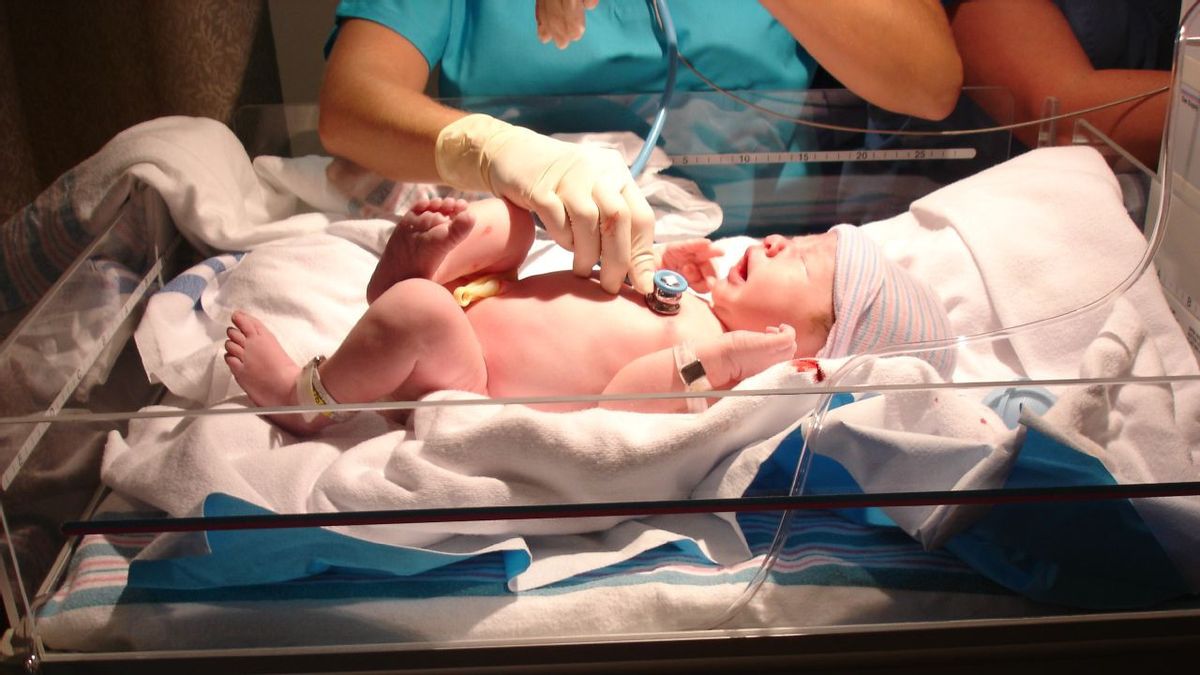


JAKARTA - The number of children born in Japan in 2025 has again decreased compared to the previous year, 705,809 people, the lowest number since data became available in 1899 and reached a new record for the 10th consecutive year, according to data from the Ministry of Health released Thursday.
The figure, which includes foreign residents, was down 2.1 percent from 2024, or 15,179 births, as the country faces a rapidly aging population and rising anxiety about childcare due to higher living costs amid inflation.
However, the rate of decline slowed compared to the previous year.
In addition to economic anxiety, it seems that more people are choosing to get married and have children at an older age, or not get married at all, due to a shift in priorities, experts say, launching Kyodo News (27/2).
The population decline shows no sign of abating, with the natural decline - reducing the number of births from deaths - reaching an all-time high of 899,845, according to preliminary data released by the Ministry of Health, Labor, and Welfare.
Meanwhile, the National Institute of Population and Social Security Research estimates that the number of births, including the births of foreign nationals in the country, will not fall below 710,000 by 2042.
In separate data released by the ministry in June last year, the number of babies born to Japanese nationals in 2024 fell to 680,000, falling below 700,000 for the first time.
The 2.1 percent drop shown in the latest data - compared with 5.0 percent in 2024 - likely partly reflects a second consecutive year of marriage increases in 2025, up 1.1 percent to 505,656.
The figure is still far below the more than 600,000 marriages that took place each year in Japan until 2019, before the coronavirus pandemic disrupted normal social interaction patterns.
"Unfortunately, we have not been able to reverse this trend," a senior government official said at a news conference on Thursday.
In the midst of this situation, Tokyo and Ishikawa, in central Japan, are the two prefectures that have experienced an increase in birth rates, out of a total of 47 prefectures in Japan.
Among the few bright spots for the country's 47 prefectures, Tokyo and Ishikawa, in central Japan, have seen an uptick in births.
The change in Tokyo, where the figure rose by 1.3 percent in the first increase in nine years, could be the result of people moving into the capital along with support for childcare regulated by the metropolitan government, experts say.
Meanwhile, Ishikawa's case is seen as a recovery from the decline after the devastating earthquake that hit the Noto Peninsula in January 2024.
Meanwhile, 45 other prefectures continued to experience a decline in birth rates, with the sharpest decline of 8.7 percent in Shimane followed by declines in Yamagata, Aomori, and Nagano.
Rural areas are experiencing population decline as people choose to move for schools and jobs. Few cities have found the right formula to reverse the trend.
According to the latest population data, Japan recorded 1.61 million deaths in 2025, down 13,030 from 2024.
It is known that around 2.09 million children were born in Japan in 2025. The figure fell below one million in 2016.
The English, Chinese, Japanese, Arabic, and French versions are automatically generated by the AI. So there may still be inaccuracies in translating, please always see Indonesian as our main language. (system supported by DigitalSiber.id)
Popular


