

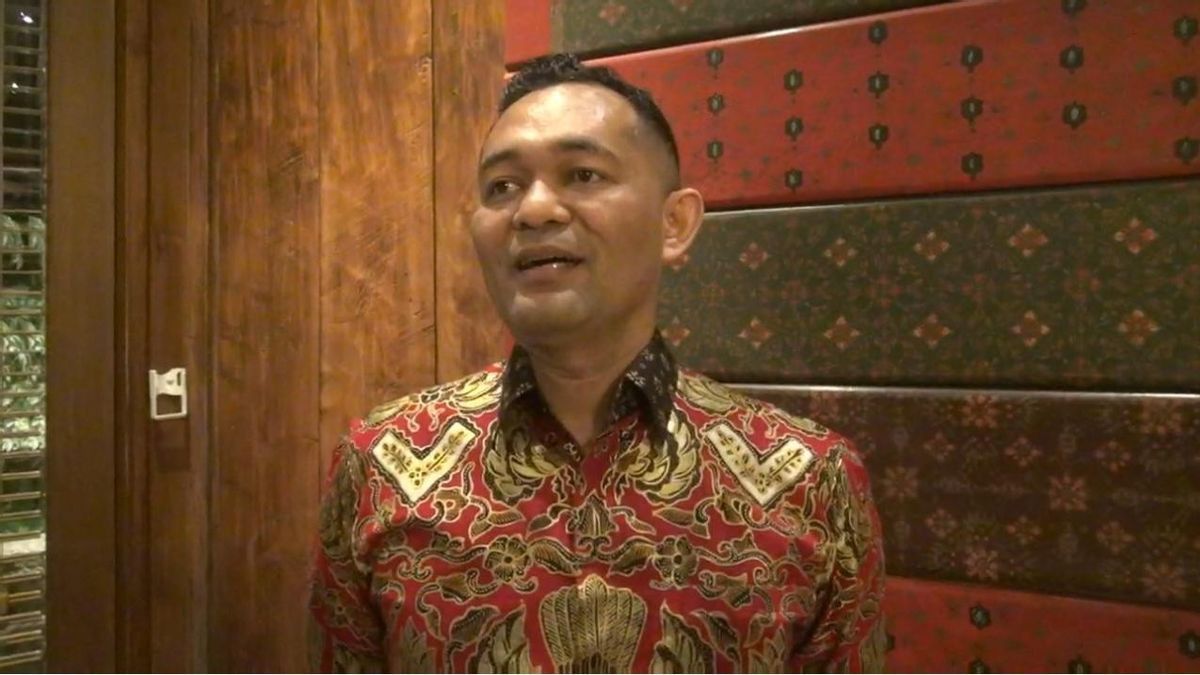


JAKARTA - Political and intelligence issues analyst Boni Hargens considers the discourse on placing the National Police under the ministry structure to be a serious setback that has the potential to open up space for the politicization of the law enforcement institution.
According to Boni, the scheme can threaten the independence of the National Police as well as weaken the constitutional authority of the president as the head of state in overseeing national law enforcement.
"The idea of placing the National Police under the ministry will threaten the independence of the National Police by partisan political interests. The minister is a political figure who is appointed based on the consideration of the coalition, so that he has the potential to use his authority over the National Police for certain political interests, not objective law enforcement," said Boni, Saturday, February 7.
He assessed that the ministry's structure would add a layer of bureaucracy that could hinder the police's rapid response to security and crime threats. In an emergency situation, he said, the police needed a direct command line with the president, not through the ministry's administrative mechanism.
In addition, placement under the ministry is considered prone to conflicts of interest when law enforcement comes into contact with the political agenda of ministers or government coalitions. This is feared to damage the integrity and credibility of the National Police in the eyes of the public.
Boni even suspected that the discourse was a veiled attempt to limit the president's direct access to law enforcement institutions. In fact, according to him, the president needs quick control and direct information to respond to security crises, terrorism, and threats to national stability.
He emphasized that the accountability of the National Police to the president was not merely an administrative matter, but a constitutional mandate as stipulated in Article 30 paragraph (4) of the 1945 Constitution. Therefore, the rejection of the National Police Chief General Listyo Sigit Prabowo to the idea should be appreciated.
According to Boni, there are three main reasons why the National Police must be directly responsible to the president. First, to maintain the integrity of the institution so that it remains professional and not politicized. Second, to ensure operational effectiveness through a rapid command line. Third, to increase public confidence in law enforcement.
"When the police are independent and accountable to the head of state, the rule of law can run. However, if it is politicized through the ministry structure, law enforcement risks becoming an instrument of political power," he said.
"Therefore, maintaining the direct accountability of the National Police to the president is a constitutional necessity to maintain the integrity of the Indonesian presidential democracy," concluded Boni.
The English, Chinese, Japanese, Arabic, and French versions are automatically generated by the AI. So there may still be inaccuracies in translating, please always see Indonesian as our main language. (system supported by DigitalSiber.id)
Most Popular Tags
#Prabowo Subianto #donald trump #firearm #8791 #giias 2026Popular


