



BENGKULU - The first trial of the alleged Corruption Crime (TPK) and Money Laundering Crime (TPPU) cases related to the credit agreement facility between PT Bank Raya Indonesia Tbk (BRI Agro Niaga) and PT Desaria Plantation Mining (DPM) was held at the Bengkulu Class IA District Court, Tuesday, January 13.
The trial with the agenda of reading the indictment letter was attended by the defendants Raharjo Sapto Ajie Sumargo and Novita Sumargo. The case was registered with number 12/Pid.Sus-TPK/2026/PN Bgl to 15/Pid.Sus-TPK/2026/PN Bgl. The Public Prosecutor (JPU) read the indictment letter against the two defendants along with seven other defendants from the Bank Raya.
The defendant's legal team assessed that the JPU's indictment letter was not meticulous, incomplete, and vague or obscuur libel. They argue that the case is actually a purely civil dispute, not a criminal act of corruption or TPPU as alleged.
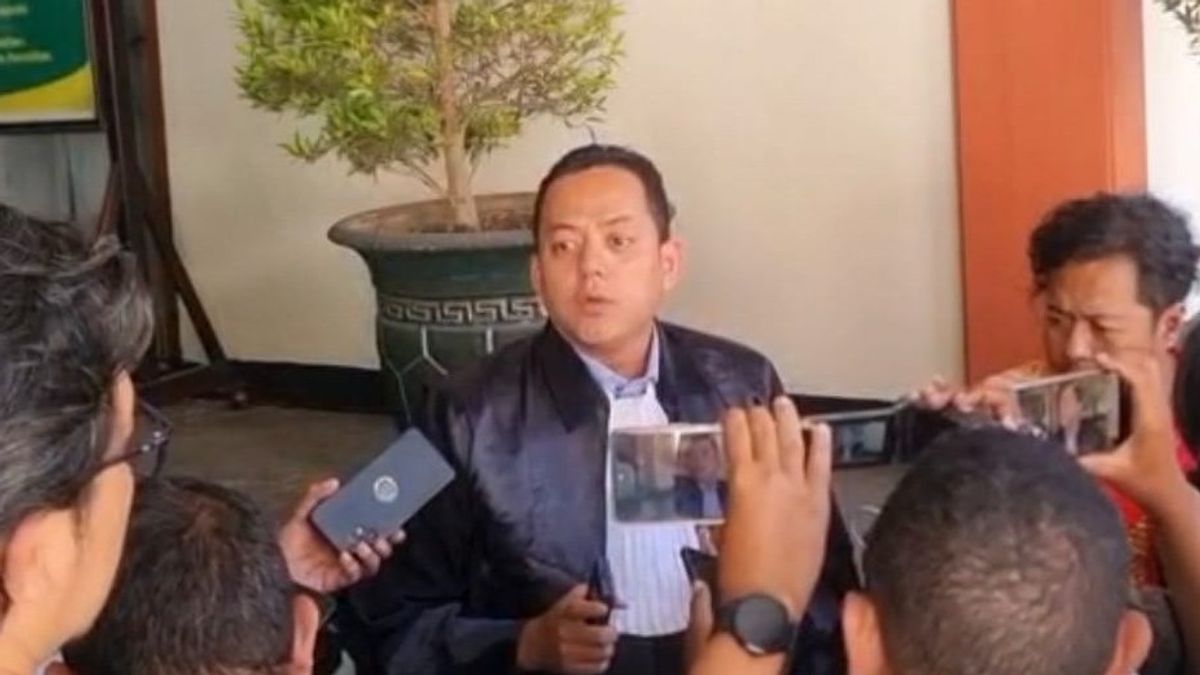
The defendant's lawyer from PT DPM, Bionda Johan Anggara, in his statement, Thursday, January 15, stated that the object of the case was a credit agreement between PT DPM as the debtor and Bank Raya as the creditor related to the financing of an oil palm plantation in Kaur Regency. According to him, the legal relationship of the parties was born from a contractual association that is subject to the principle of freedom of contract as regulated in the Civil Code.
"This legal relationship is entirely a civil relationship. Therefore, it is not appropriate to force it to be a criminal case," said Bionda.
He also assessed that the JPU's indictment did not explain concretely the act against the criminal law or the causal relationship that could lead to criminal liability. According to him, Raharjo Sapto Ajie Sumargo's involvement in signing the credit application was based on good faith to add personal guarantees in the form of personal assets so that the credit collateral was met.
Furthermore, the lawyer emphasized that the default or business risk in the credit agreement could not be prosecuted immediately. If there is a delay in payment, credit restructuring, or default, the settlement mechanism should be through a civil law, such as a default lawsuit or the execution of collateral in the form of business rights (HGU) and contingent liability.
The legal team also assessed that the JPU mixed the concept of actual state losses and potential losses without a valid calculation basis. They highlighted that the calculation of losses was not carried out by the authorized state institutions, but by educational institutions, and there was no civil judgment with binding force.
In addition, the lawyer said that there had been a shift in legal responsibility between PT DPM and PT KMB in 2019, as stated in the Deed of Agreement on the Transfer of Shares Number 40 dated November 19, 2019 which was said to have been approved by the bank.
Referring to various Supreme Court jurisprudence and legal provisions, lawyers emphasized that civil disputes should not be forced to become criminal cases, especially if there is no element of malice. They also referred to the provision that the determination of state losses must be carried out by authorized institutions such as the BPK, BPKP, or Inspectorate.
On this basis, the legal team submitted a prologue or brief statement as stipulated in the latest Criminal Procedure Code Article 210 paragraph (1) as a response to the prosecutor's indictment. They hope that the panel of judges headed by Achmadsyah Ade Murry can consider this matter objectively and uphold the principle of ultimum remedium, namely criminal law as a last resort in resolving disputes.
The English, Chinese, Japanese, Arabic, and French versions are automatically generated by the AI. So there may still be inaccuracies in translating, please always see Indonesian as our main language. (system supported by DigitalSiber.id)
Most Popular Tags
#Prabowo Subianto #donald trump #2026 World Cup #Febrie Adriansyah #8791Popular


