
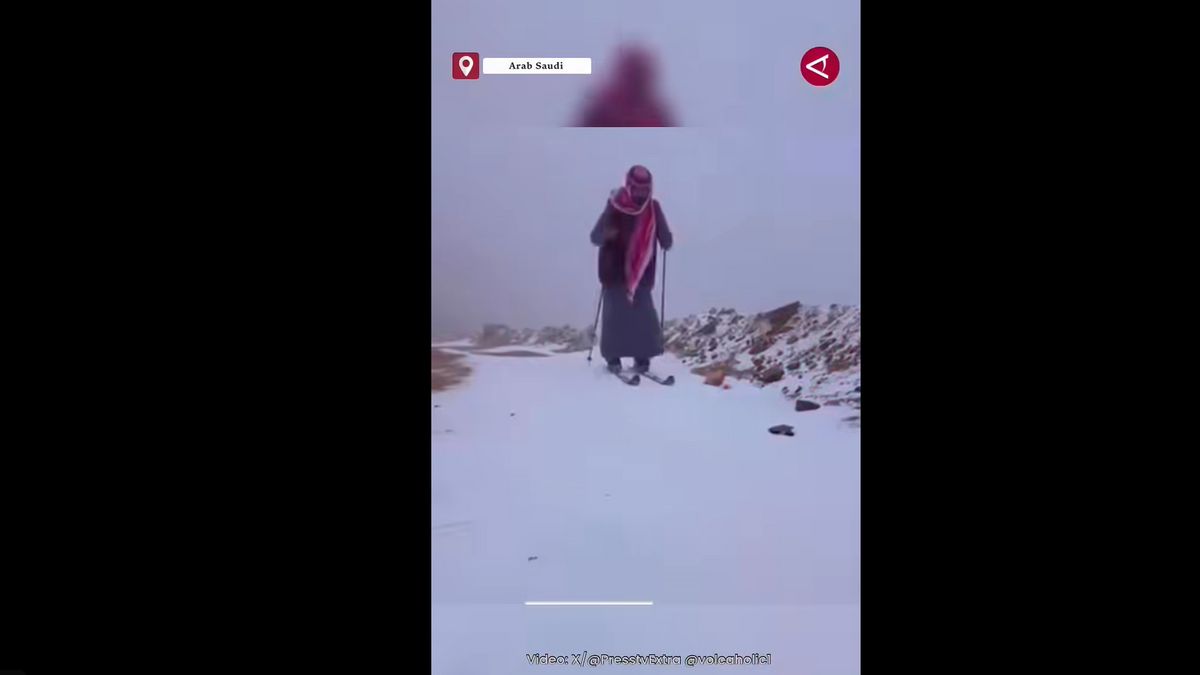


YOGYAKARTA - The phenomenon of the Saudi Arabian region covered in snow often surprises the public, considering that this country is synonymous with hot deserts, extreme weather, and a dry climate throughout the year.
Not without reason, this incident is not only viral on social media, but has a scientific explanation related to geographical factors, climate change, and certain atmospheric conditions.
Snow Phenomenon in Desert CountriesSaudi Arabia is synonymous with a hot and dry desert climate throughout the year. Daytime temperatures in many areas can even exceed 40 degrees Celsius. Therefore, the appearance of snow is considered an unusual weather anomaly.
However, geographically Saudi Arabia has highland and mountainous areas that allow low temperatures, especially during the winter. This condition opens up the opportunity for snow to appear even though it is rare.
Curious, what areas in Saudi Arabia? Reported by VOI from the Times of India website, the following is a summary:
Get to Know the Snow-Covered Saudi ArabiaOne of the areas of Saudi Arabia covered in snow is Tabuk Province, especially the Jabal Al-Lawz area. The mountain, which has an altitude of about 2,580 meters above sea level, has experienced snow several times, including on December 18, 2025.
In addition to Tabuk, the highland areas of Trojena, Hail, and Al-Ghat in the north of Riyadh were also reported to have snow or ice-covered conditions. In fact, the Al-Qassim region and the northern part of Riyadh were included in the snow weather forecast by meteorological authorities.
It should be noted that snow in the area generally occurs between December and February, especially in areas with high elevations and steep terrain.
Knowing the Scientific Causes of SnowfallThe phenomenon of the Saudi Arabian region covered with snow is caused by the entry of a strong cold air mass from the European and Central Asian regions. This air mass meets a low pressure system that carries moisture.
The combination of cold air and humidity causes heavy rain, hail, and even snow in highland areas. Well, in some cases, the air temperature has been recorded as low as minus 4 degrees Celsius, far below the normal desert temperature.
In addition, global climate change is also said to play a role in increasing the frequency of extreme weather, including in the Middle East region.
Read also articles discussing Agricultural Land in Indonesia and Climate Change Challenges Threaten Food Security
What is the Impact of Snow on the Environment and Society?The snowfall transforms the desert landscape into white for a while. This phenomenon attracts local residents and domestic tourists to witness the rare sight.
However, behind the beauty, snow also carries risks. The road becomes slippery, the visibility is reduced due to fog and snow, and community activities are disrupted. Livestock and vehicles that pass through snowy areas also face safety challenges.
Regarding this phenomenon, the Saudi Arabian National Meteorological Center issued an early warning regarding the potential for snow, hail, strong winds, and flash floods. The government urged the public to increase vigilance and follow safety guidelines.
Experts say snow in Saudi Arabia is not impossible, although it is still rare. However, the trend of global climate change has the potential to make extreme weather phenomena more frequent.
The phenomenon of the Saudi Arabian region covered in snow is a reminder that climate change has far-reaching impacts and can occur even in regions that are known for being hot and dry.
The English, Chinese, Japanese, Arabic, and French versions are automatically generated by the AI. So there may still be inaccuracies in translating, please always see Indonesian as our main language. (system supported by DigitalSiber.id)
Popular


