



Access to coastal areas directly affected by the Krueng overflow flood or Peusangan River in Kutablang District, Bireuen Regency, Aceh Province, vehicles, both two and four wheels, can pass.
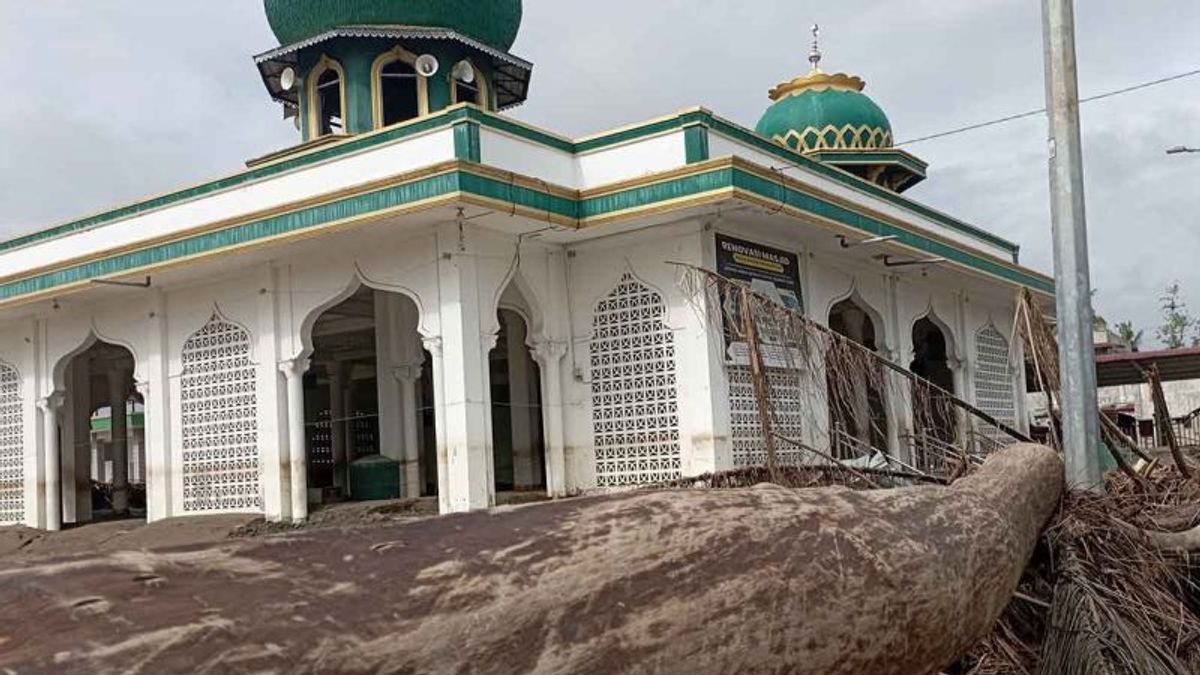
The route to the coastal area includes the Kemesjidan Cot Ara, Kutablang District, Bireuen Regency. Floods in the area due to the breakdown of the embankment along almost one kilometer.
The mosque covers four villages or gampongs, namely Gampong Cot Ara, Gampong Jambo Kajeung, Gampong Kerumbok, and Gampong Rancong.
The area is located in the downstream area of the Krueng Peusangan river basin (DAS). Previously, the four villages were isolated due to the overflowing flood of Krueng Peusangan on Thursday, November 27.
"We were isolated for two days after the overflowing flood submerged this area, including four villages in Kemesjidan Cot Ara. We were trapped after the road was buried in mud with a height of up to one meter," he said. a resident named M Kasim at the location, Wednesday, was confiscated by Antara.
M Kasim said the road access to the area was again open after heavy equipment was imported to clean flood materials. Flood materials are not only mud, but also barbars and fallen trees that were dragged by floods from Krueng Peusangan.
"This area can be accessed again since the last two days. With the opening of access, transportation to our place is back open after previously being locked," he said.
SEE ALSO:
-
 | BERITA
Halangi Wartawan Meliput Gaza dan Tepi Barat, Israel Digugat 2 Serikat Jurnalis Prancis
03 Desember 2025, 15:35 -
 | BERITA
Belum Terima Surat Cak Imin, Menteri LH Setuju Soal Tobat Nasuhah Usai Bencana Sumatera
03 Desember 2025, 15:41 -
 | BERITA
Ukraina Klaim Rusia Kehilangan 1.200 Tentara dan 90 Drone dalam 24 Jam Terakhir
03 Desember 2025, 15:04 -
 | BERITA
Ridwan Kamil Akui Ada Aliran Duit ke Lisa Mariana Usai Diperiksa KPK: Konteksnya Pemerasan
02 Desember 2025, 17:29

M Kasim said that the residents in Gampong Cot Ara reached 700 people from 215 families who experienced the direct impact of the Krueng Peusangan flood. Most of the houses of residents were submerged in mud and others were dragged by the flood and leveled to the ground.
"The height of the mud is more than one meter. Most residents are displaced and residents who live in two-level houses survive in their respective residences because the second floor is not exposed to mud," he said.
Several public facilities, he said, such as mosques and madrasas were also mixed with mud. Several large logs and piles of wooden twigs were also dragged into the mosque's yard.
"Masjids and madrasa buildings cannot be used because mud covers the entire mosque area, both inside and in the yard," he said.
M Kasim said the community currently needs refugee tents and logistics such as rice, eggs, and others. In addition, there is also a need for toddlers, children and the elderly.
"Likewise, clean water for washing toilets. We also hope for government support to restore rice fields that are buried in mud. Because most of the residents' livelihoods are farming in the fields," said M Kasim.
The English, Chinese, Japanese, Arabic, and French versions are automatically generated by the AI. So there may still be inaccuracies in translating, please always see Indonesian as our main language. (system supported by DigitalSiber.id)
Most Popular Tags
#Prabowo Subianto #donald trump #2026 World Cup #Febrie Adriansyah #8791Popular


