


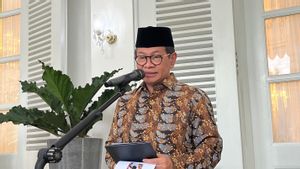
JAKARTA - Head of the Meteorology, Climatology and Geophysics Agency (BMKG), Teuku Faisal Fathani conveyed that the latest weather conditions in disaster-affected areas, namely Aceh, North Sumatra and West Sumatra. According to him, in the next month the rain will continue to fall in the area but in relatively mild to moderate intensity.
"Untuk cuaca di daerah Aceh, Sumatera Utara dan Sumatera Barat sampai dengan bulan Desember ini biasanya hujan itu di tengah hari sampai dengan malam, sedang maupun mulai ringan sampai sedang," ujar Teuku Faisal di Kompleks Parliament, Senayan, Jakarta, Selasa, 2 Desember.
However, BMKG is aware of the potential for tropical cyclone seeds that grow in the southern region of Indonesia ahead of the 2026 Christmas and New Year celebrations. This type of disaster includes extreme rain, strong winds, and other phenomena such as tornadoes, hail, resulting in limited visibility that often disrupts flight and shipping activities.
"But what we are wary of now is in the southern part of Indonesia because there is a possibility that the cyclone seeds will form in the southern waters of Indonesia, starting from the southern part of Sumatra, Java, Bali, Nusa Tenggara to southern Papua," said Teuku Faisal.
"So actually, now we are also more focused on predicting the occurrence, the seeds of cyclones in the southern part of Indonesia, that's what we will face next to Nataru later," he continued.
Regarding weather modifications, BMKG is carrying out modifications at Kuala Namu Airport, Sultan Iskandar Muda Airport and at Padang Airport. He explained, there are a total of four to five aircraft that are now working to modify the weather.
"If this rain cloud moves towards an area where there is still an emergency rescue process, we will drop it elsewhere, it will use NATL," he explained.
"There are also those that have been collected in these vulnerable areas, we provide CAU or Tohor Cret, so that it is split and does not rain. So there are two, we rain in places that are safe, such as in the sea or areas that are safe or we make the rain not happen, we are still doing this at the three airports," continued Teuku Faisal.
SEE ALSO:
-
 | BERITA
Doa Bersama 1.000 Orang di Lokasi Ledakan Beirut, Paus Leo XIV Akhiri Kunjungan di Lebanon
02 Desember 2025, 15:01 -
 | BERITA
10 Pemukim Israel Bertopeng Aniaya 4 Aktivis Pro Palestina Warga Italia-Kanada di Tepi Barat
01 Desember 2025, 14:51 -
 | BERITA
Pramono Prioritaskan PNS DKI Naik Jadi Pejabat Pemprov, Sindir Sekda Sebelumnya?
01 Desember 2025, 17:02

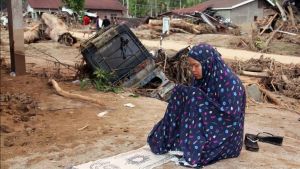
Teuku Faisal said areas such as Aceh, North Sumatra and West Sumatra had passed the extreme weather phase so that weather modifications were no longer carried out. However, the intensity of light rain weather is still allowed to facilitate the evacuation process of victims who are still buried.
"Earlier there was input from Basarnas when entering to rescue victims such as deserts, because the rain has been modified there is no rain, so it becomes dusty and then makes it difficult when you have to dig down, so that in places like that, usually we let rain occur, so that the soil is wetted and easier for the evacuation process," he said.
"So this weather modification really depends on what is needed from the rescue and emergency processes. But if the extreme weather in the areas of Aceh, North Sumatra and West Sumatra, there is no further information, it hasn't happened yet," concluded Teuku Faisal.
The English, Chinese, Japanese, Arabic, and French versions are automatically generated by the AI. So there may still be inaccuracies in translating, please always see Indonesian as our main language. (system supported by DigitalSiber.id)
Most Popular Tags
#Prabowo Subianto #donald trump #2026 World Cup #Febrie Adriansyah #8791Popular


