

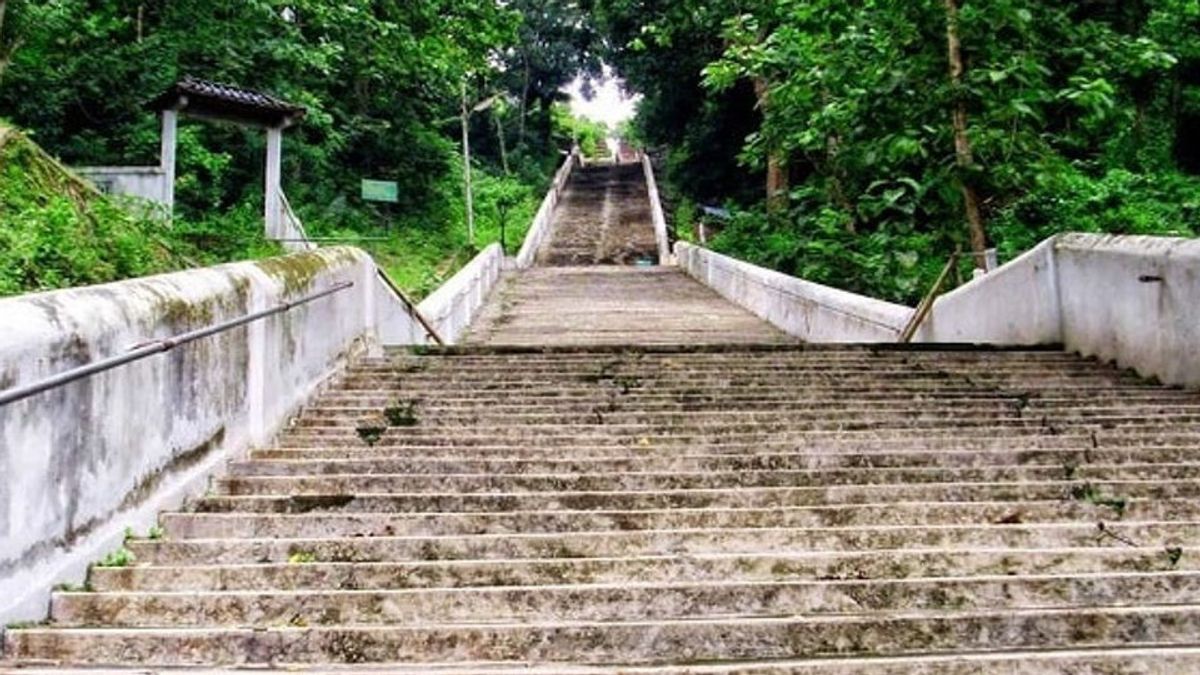


YOGYAKARTA - Pajimatan Imogiri is a complex of tombs of kings and their families of Islamic Mataram located on Mount Merak, Girirejo, Imogiri, Bantul. This area is the official necropolis of the dynasty, occupying hills that were chosen for their sacredness and strategic position in the Javanese cultural landscape.
Since the 17th century, Imogiri has become a resting place for rulers who continue the lineage to two successor palaces: the Yogyakarta Sultanate and the Surakarta Kasunanan. In addition to being of historical value, this site affirms the tradition of pilgrimage, displaying the Javanese-Islamic architectural style, and reflecting the Javanese cosmology that binds the sacred space, power, and community rituals.
History of Pajimatan Imogiri: Sultan Agung Project (1632-1640)The construction of this complex began during the reign of Sultan Agung Hanyakrakusuma. He designed a dynasty tomb at a location that was considered sacred, easily recognizable, and served as a statement of legitimacy of power.
After his death, Sultan Agung was buried in the center of the complex, which was later called Kasultanagungan. From this point, Imogiri developed into a royal necropolis with a tiered room arrangement that led pilgrims to walk the path to the spiritual center.
Architecture and Spatial Planning
Imogiri represents 17th-century Javanese Islamic architecture: red brick walls, arched gates, and terraced courtyards that climb to the top of a hill.
The successive gates mark the transition from a profane space to a sacred space. Hundreds of stairs become a symbolic act: a pilgrimage as an inner journey. The simple ornate tomb emphasizes the sacredness instead of the splendor.The combination of Hindu-Javanese and Islamic elements is visible in the pattern of the axis, the orientation rules, and the use of red bricks and teak wood.
Important Parts
Kasultanagungan: the core of the complex that houses Sultan Agung's tomb. Yogyakarta and Surakarta family complex: separate areas for sultans, kings, and relatives, reflecting the continuity of the dynasty after the break-up of Mataram. Giriloyo and Banyusumurup: two old cemetery areas around Imogiri that enrich the political and social narratives of the Mataram era.The Tradition of Ziarah and Ethics
The visit to Imogiri was accompanied by strict etiquette.
Traditional clothing is commonly used to enter the most sacred area. Clothing rentals are available on site. Sura (Muharam) rituals such as cleaning ancestral objects and water containers affirm respect for the founder and ancestors. Visit hours are limited on certain days to maintain the solemnity of the procession.Brief tips for pilgrims: come early, prepare drinking water to climb the stairs, and obey the instructions of the caretaker.
The Meaning of Politics and Culture
Imogiri is not only a makbarah, but an open archive on how the power of the dynasty is interpreted. The decision to place the king's tomb on the hill shows how Mataram binds space, ritual, and legitimacy. Here, pilgrimage becomes a medium of cultural education: the current generation learns about the kingdom, building art, to Javanese social ethics.
Important Points
Founder: Sultan Agung; construction around 1632-1640. Location: Bukit Merak, Girirejo, Imogiri, Bantul. Function: official burial of the king and the family of Mataram's successors. Visual features: red brick, arched gate, terraced courtyard, stairs leading to the main pavilion. Living heritage: fashion traditions, Sura rituals, and the role of the caretaker.Relevance for Cultural Tourism
For researchers, Imogiri offers field data on architecture, manuscripts, and dynastic genealogy. For tourists, the ascending staircase, hilly landscape, and tree shade provide a calm spiritual experience. The local economy - renting costumes, guides, and culinary - also has a positive impact from pilgrimage visits.
The Imogiri Pajimatan links the history of Mataram, Javanese Islamic architecture, and pilgrimage practices in one intact landscape. From Kasultanagungan to the two-palace family complex, every gate and staircase contains stories about legitimacy, respect, and the sustainability of tradition. Visiting Imogiri means re-reading an important chapter in Javanese history - not only with the eyes, but also with orderly steps and a reverent heart.
So after knowing the history of the Imogiri pajimatan, check out other interesting news on VOI.ID, it's time to revolutionize the news!
The English, Chinese, Japanese, Arabic, and French versions are automatically generated by the AI. So there may still be inaccuracies in translating, please always see Indonesian as our main language. (system supported by DigitalSiber.id)
Most Popular Tags
#Prabowo Subianto #donald trump #Febrie Adriansyah #8791 #giias 2026Popular


