

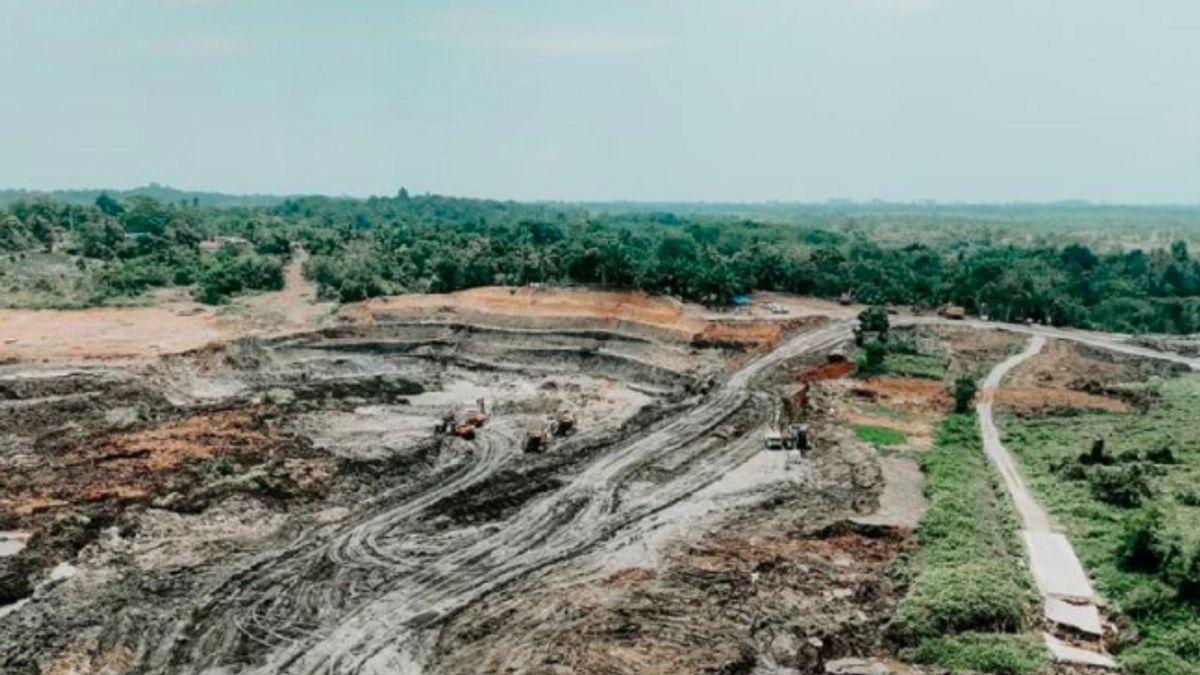


JAKARTA - Deputy Chairman of Commission XIII of the House of Representatives of the Republic of Indonesia (DPR RI), Andreas Hugo Pareira, regretted the prison sentence handed down by the Soasio District Court, Tidore Islands, against 11 indigenous residents of Maba Sangaji, East Halmahera, North Maluku. Residents were convicted of obstructing PT Position's nickel mining activities.
Andreas emphasized that this verdict reflects the failure of the justice system in defending the rights of indigenous peoples and has the potential to criminalize environmental fighters.
"This is certainly very unfortunate. The legal verdict for residents who defend their own customary land shows the failure of the justice system in defending the rights of the community. There should be no criminalization for residents who defend, fight and defend their customary rights, including the rights to their ancestral lands," Andreas told reporters in Jakarta, Thursday, October 23, 2025.
Constitutional Guarantee Amid Regulatory Tensions
This PDI-P legislator reminded that efforts to maintain a healthy environment are an integral part of human rights guaranteed by the Constitution. He considered that the court's decision showed serious tension between corporate economic interests and human rights protection.
"Every act of citizens in maintaining their living space should not be criminalized. The state must ensure that the law is not used to silence public participation, especially indigenous groups that are vulnerable to structural and corporate pressures," he stressed.
Andreas assessed that the court's refusal to recognize the residents of Maba Sangaji as defenders of the right to the environment showed a big gap in legal harmonization in Indonesia, especially between the Law on Environmental Protection and Management (UUPPLH) and the Mineral and Coal Mining Act (UU Minerba).
SEE ALSO:
-
 | BERITA
150.000 Guru Akan Dapat Beasiswa Kuliah Rp6 Juta per Tahun dari Kemendikdasmen
23 Oktober 2025, 07:06 -
 | TEKNOLOGI
Penerbit Media Ganti Strategi: Lawan AI Scraping dengan “Perang Siber”
21 Oktober 2025, 07:05

Pressure On Reform And Evaluation Of Article 162
The commission in charge of human rights affairs then encourages reform of natural resource sector regulations. Andreas asked for total harmonization between the Minerba Law, the Environment Law, and the Indigenous Peoples Act.
Specifically, Andreas urged an evaluation of the application of Article 162 of the Minerba Law, which is often used to ensnare residents who refuse mining.
"We also ask for an evaluation of the application of Article 162 of the Minerba Law, which is often used to ensnare residents who refuse mining activities, so that it has the potential to cause criminalization of indigenous peoples," he said.
In addition, Commission XIII also encouraged the Supreme Court (MA) and Komnas HAM to immediately conduct an in-depth study of the Soasio District Court's decision, in order to ensure that the principles of human rights and justice are not ignored.
The English, Chinese, Japanese, Arabic, and French versions are automatically generated by the AI. So there may still be inaccuracies in translating, please always see Indonesian as our main language. (system supported by DigitalSiber.id)
Most Popular Tags
#Prabowo Subianto #donald trump #firearm #8791 #giias 2026Popular


