

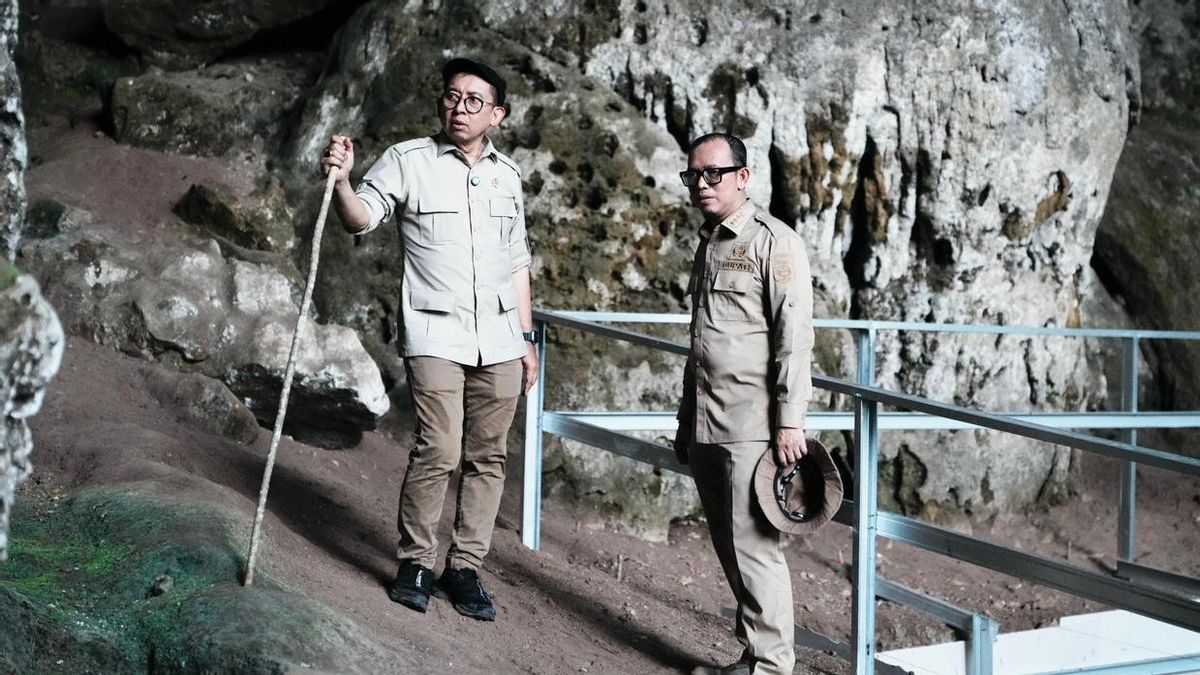


"We need to do carbon dating on this painting in the cave to know exactly its age," said Minister of Culture Fadli Zon while reviewing the Tiger Cave Site at Ogan Komering Ulu, South Sumatra, Sunday (19/10).
This statement is a sign of his commitment to encourage researchers and archaeologists to deepen research on the traces of the civilization of the archipelago on the prehistoric site.
Fadli said that the Tiger Cave holds an important legacy of Indonesian human history. Here are many human bone fossil findings, so far there are 82, and also ancient cave wall paintings or rock art, "he said in a written statement received by VOI.
Findings excavated by the National Archaeological Research Center (now BRIN) show that the inhabitants of this cave are even older than the Austro-Melanesian community. Also found oldest metal artifacts, such as bronze funnel axes, iron, stones, and various other objects," added Fadli.
SEE ALSO:
-
 | BERITA
Kemenbud Apresiasi Garin Nugroho Raih Penghargaan Sinema Kemanusiaan di Lugano
19 Oktober 2025, 22:58 -
 | BERITA
Tragedi Hunut Durian Patah: Polda Maluku Minta 6 DPO Kasus Pembakaran Serahkan Diri
19 Oktober 2025, 21:46
He emphasized the importance of keeping prehistoric sites such as the Tiger Cave as a cultural laboratory, where the nation's knowledge and identity meet. "Maybe later we can carry out further expeditions, including excavations and deepening of existing research," he said.
During the visit, Regent Ogan Komering Ulu Teddy Meilwansyah, Deputy Regent Marjito Bachri, and Kemenbud officials such as Restu Gunawan, Agus Mulyana, Rachmanda Primayudha, and Kristanto Januardi were present.
Furthermore, Fadli emphasized the importance of reviving museums and cultural sites to become centers of community activities. "The museum should not only be a space for showing off. There must be activities such as contemporary exhibitions and other cultural activities," he said.
The English, Chinese, Japanese, Arabic, and French versions are automatically generated by the AI. So there may still be inaccuracies in translating, please always see Indonesian as our main language. (system supported by DigitalSiber.id)


