

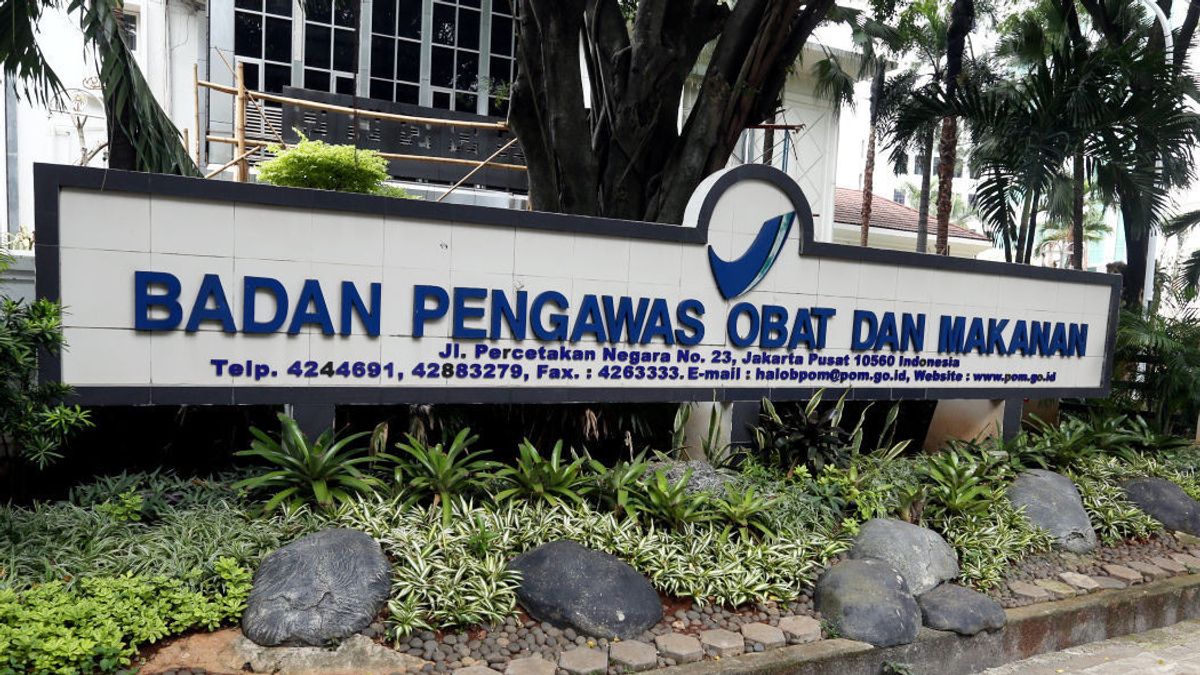


JAKARTA - Member of Commission IX of the House of Representatives Netty Prasetiyani Aher, asked the Food and Drug Supervisory Agency (BPOM) to immediately follow up on his report which found ten health products in Indonesia to be identified as fake, illegal, or low quality in the market. He warned that the circulation of fake health products would not spread further.
"These findings must be followed up immediately with concrete steps. Do not let people consume products that endanger health due to weak supervision of drug trafficking plus a lack of public insight," said Netty in a statement to reporters, Thursday, September 18.
Netty also encouraged BPOM and the Ministry of Health to strengthen post-edar supervision by randomly sampling in various regions, including remote areas, not only in big cities. According to him, law enforcement against violators ranging from producers, distributors, and sellers of illegal or fake products is important.
"Strict sanctions must be imposed so that there is a deterrent effect. Public safety should not be at stake for the benefit of a handful of parties," said the PKS legislator.
In addition to supervision and prosecution, Netty assesses consumer education as well as crucial. Therefore, she encourages broad campaigns on how to choose safe health products through the Cek-Klik principles: Packaging Checks, Labels, distribution permits, and Expiration.
"Consumer literacy is very important. People must be critical and vigilant before buying drugs, supplements, cosmetics, or traditional products, both offline and online," said Netty.
The member of the House of Representatives' health commission also reminded the importance of cross-sectoral collaboration, including local governments, business actors, and e-commerce platforms. Because, said Netty, online channels are referred to as the main route for the circulation of illegal products that are difficult to control.
"All parties must take responsibility. The state must be present to protect the people from dangerous products, while online platforms must also not be hands off," he said.
Netty also encouraged the Government to immediately develop a long-term strategy to ensure the quality and safety of health products in Indonesia.
"We can't just be reactive, but we must also be proactive in maintaining people's health. Every product circulating in the market must be really safe and useful," concluded Netty
For information, BPOM states that at least 1 in 10 health products such as drugs, cosmetics, and unlicensed foodstuffs. The Head of BPOM Taruna Ikrar explained that based on WHO (World Health Organization), one in ten health products circulating in developing countries are counterfeit or low-quality products.
SEE ALSO:
-
 | TEKNOLOGI
Resmi Meluncur di China, Redmi 15R 5G Hadir dengan Baterai 6000mAh dan Dimensity 6300
18 September 2025, 06:05


In 2024, BPOM together with the Ministry of Communication and Digital Affairs (Komdigi) have lowered (take down) as many as 309 unqualified product links in e-commerce.
In 2022, there were 262 findings found by BPOM. This figure increased to 263 in 2023 and 282 cases in 2024.
The English, Chinese, Japanese, Arabic, and French versions are automatically generated by the AI. So there may still be inaccuracies in translating, please always see Indonesian as our main language. (system supported by DigitalSiber.id)
Most Popular Tags
#Prabowo Subianto #donald trump #Febrie Adriansyah #8791 #giias 2026Popular


