


JAKARTA - Indonesia will become a center for halal in regional and global areas, but it requires close cooperation with partners to promotions.
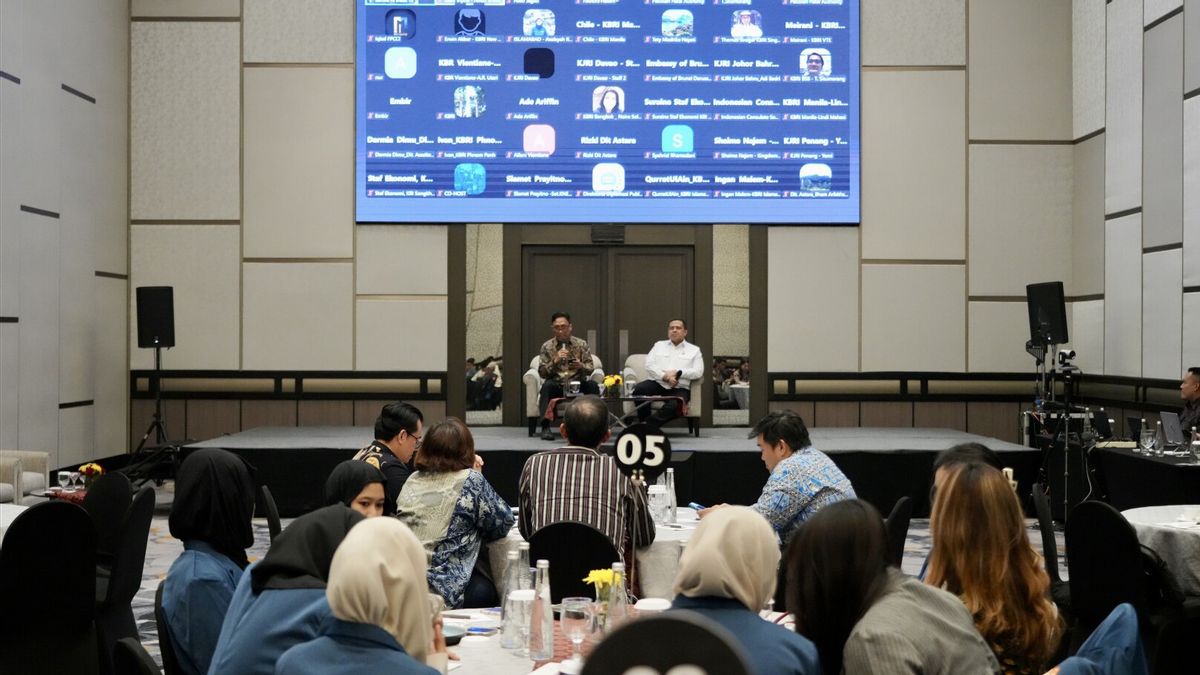
This was said by the Expert Staff for Economic Diplomacy, Ministry of Foreign Affairs of the Republic of Indonesia, Ambassador Didin Wahyudin when opening "Halal Indonesia Go Regional: Dialogue on Market Expansion of Indonesian Halal Industrial Zones with Representatives of Southeast Asian, South and Central Asia, and Middle Eastern Countries" in Surabaya Tuesday.
The activity held by the Directorate General of Asia Pacific and Africa, the Indonesian Ministry of Foreign Affairs aims to promote Indonesia's halal industrial area to representatives of Southeast Asia, South and Central Asia, as well as the Middle East. In addition, this forum also opens up opportunities and expands access to the Indonesian halal sector market for products, services, and investment in the region.
In his remarks when opening the event, Ambassador Dindin emphasized Indonesia's commitment to become one of the world's halal centers. Furthermore, Ambassador Dindin emphasized that the halal industrial area plays an important role in the provision of integrated facilities that support certification, logistics, and exports of Indonesian halal products.
"Indonesia will affirm its position as a regional halal center in the near future, and as time goes on, it will become a global halal center. For this reason, we need to strengthen cooperation with partners in harming halal standards, building strong supply chains, increasing investment in halal industrial areas, and promoting halal products and lifestyles globally," said Ambassador Didin, launching a statement from the Indonesian Ministry of Foreign Affairs, Wednesday, August 27.
This activity was held in two seasons. In the first session, Putu Rahwidhiyasa of the National Committee for Sharia Economics and Finance (KNEKS) explained Indonesia's Halal Industry Master Plan as a strategic guide towards Indonesia's vision as a world halal center. Panelist from the Ministry of Industry conveyed government support in strengthening infrastructure, establishing halal industrial areas, and facilitating halal certification for MSMEs. Meanwhile, Adi Tedja, President Director of Halal Industrial Park Sidoarjo (HIPS), presented integrated facilities for HIPS that focus on six leading sectors; food and beverages, pharmaceuticals, cosmetics, electronics, textiles and fashion, as well as multi-logistics.
SEE ALSO:
-
 | BERITA
34 Tentara Diculik di Kolombia Setelah Bentrokan dengan Kelompok FARC
27 Agustus 2025, 11:45 -
 | BERITA
Hamas Bantah Pernyataan Israel Soal Korban Tewas Serangan di RS Gaza
27 Agustus 2025, 10:30 -
 | BERITA
Kecam Serangan di RS Nasser, UE Minta Israel Hormati Hukum Humaniter Internasional
27 Agustus 2025, 09:15 -
 | BERITA
Presiden Trump akan Pimpin Pertemuan Mengenai Gaza di Gedung Putih Hari ini
27 Agustus 2025, 08:40
In the second session, the discussion presented representatives of Indonesia, Malaysia, Singapore, the United Arab Emirates, and Pakistan who shared experiences about the development of the halal industry in their respective countries. Head of the Halal Product Guarantee Administration Agency (BPJPH), Ahmad Haikal Hassan, emphasized the importance of halal certification in Indonesia.
"According to the mandate of the law, all imported products entering the Indonesian market are expected to have halal certification. This is to ensure consumer protection while strengthening Indonesia's position in the global halal ecosystem," Haikal explained.
It is known, this activity is held in a hybrid manner, brings together inter-border halal stakeholders, and is part of the ongoing efforts of the Indonesian Ministry of Foreign Affairs in encouraging the development of the halal industry and realizing the goal of making Indonesia a global halal center.
The English, Chinese, Japanese, Arabic, and French versions are automatically generated by the AI. So there may still be inaccuracies in translating, please always see Indonesian as our main language. (system supported by DigitalSiber.id)


