
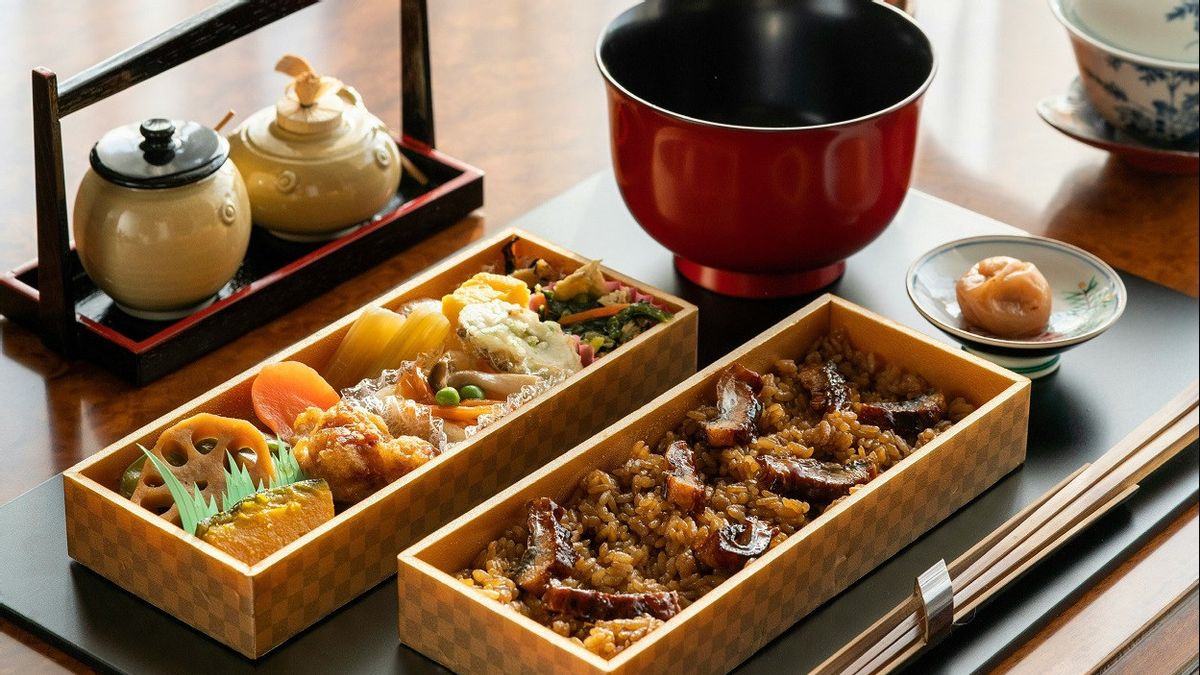


JAKARTA - The rate of depression is lower among working-age people who consume Japanese-style diets including rice, miso soup and fish, according to a recent study.
Japan's Institute of Health assesses the benefits of traditional "Japanese-style diets" consisting of soybean products, cooked vegetables, mushrooms, fish, seaweed, and green tea, along with modified versions that add fresh fruit, vegetables and dairy products.
Although there are few studies of Japan-style diet impacts on mental health, similar assessments of the Mediterranean diet - which consists of vegetables, whole grains, olive oil, and fish - and depression - have been done before, the institute said.
"Further research is needed, but we hope that the evidence shown among Japanese people can be used for public health measures in the workplace and fields related to the prevention of depression," the institution said in a press release, reported by Kyodo News 20 August.
The study, which was conducted based on its own report, was conducted on 12,499 employees from five companies, of which 88 percent were men with an average age of 42.5 years.
As many as 30.9 percent of cohorts show symptoms of depression, but those who follow Japan's typical diet are found to be less likely to experience it. The researchers are trying to isolate other potential factors that could affect these results.
SEE ALSO:
-
 | BERITA
Kepala Bantuan PBB Desak PM Israel Hentikan Perang dan Mengakhiri Kelaparan di Gaza
23 Agustus 2025, 05:00 -
 | BERITA
Israel Sebut Laporan IPC Soal Kelaparan di Gaza Berdasarkan Kebohongan Hamas
23 Agustus 2025, 04:00



The institute states that certain diet foods can be associated with increased happiness. Seaweed, soybean products, and folic acid in vegetables help remove neurotransmitters such as serotonin and dopamine, while oily fish rich in omega-3 fatty acids have anti-inflammatory effects.
The English, Chinese, Japanese, Arabic, and French versions are automatically generated by the AI. So there may still be inaccuracies in translating, please always see Indonesian as our main language. (system supported by DigitalSiber.id)
Most Popular Tags
#Prabowo Subianto #donald trump #earthquake #independence day #8791 #hut riPopular


