

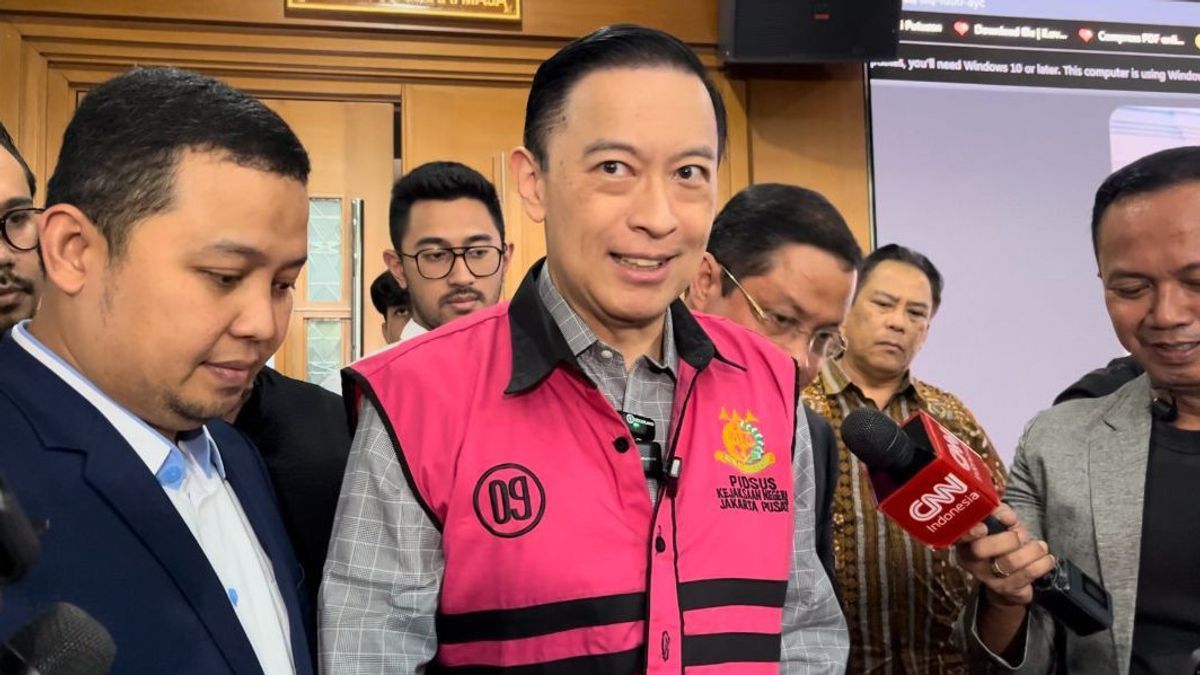


JAKARTA - Political communication observer at Esa Unggul University, Jamiluddin Ritonga, assessed that the granting of abolitions to former Trade Minister Tom Lembong, and amnesty to the Secretary General of PDIP Hasto Kristiyanto was inappropriate. The reason is, both of them are defendants in corruption cases.
It is known that Tom Lembong is a defendant in a corruption case of sugar imports. Meanwhile, Hasto is a defendant in the bribery case of former KPU commissioner Wahyu Setiawan related to the management of interim replacement (PAW) Harun Masiku.
"Giving abolition and amnesty for corruption cases is certainly not appropriate. Because corruptors actually undermine the joints of life of the nation and state," said Jamiluddin in his statement, Friday, August 1.
"They are the main enemy of democracy. Therefore, it is very inappropriate for abolition and amnesty to be given to corruptors," he added.
Nevertheless, Jamiluddin assessed that President Prabowo Subianto's decision to give an abolition to Tom Lembong and amnesty to Hasto was based on the spirit of unity.
"Prabowo gave this, he thought he wanted to minimize the conflict among the nation's children. As a former TNI, Prabowo certainly wants to maintain political stability. Only with political stability can the development of all fields be carried out optimally," he said.
Jamiluddin assessed that Prabowo's mindset adhered to accommodative politics. For Prabowo, according to him, accommodating various interests of elements of the nation will be able to maintain political stability to be used as a "modal" for development.
"Pala pikir sehingga tentu tidak ada salahnya. Semua kepentingan diakomodir demi peciptanya stabilitas politik," tuturnya.
"It's just that, accommodating various interests related to political cases should of course be carried out. Because such cases are not worthy of trial in a democratic country," continued Jamiluddin.
SEE ALSO:
-
 | BERITA
Tom Lembong dan Hasto Dapat Pengampunan Usai Terbukti Korupsi, Ini Alasan Pemerintah
01 Agustus 2025, 07:06


Therefore, he added, as long as the legal cases of Tom Lembong and Hasto are considered very political, they are very worthy of being given an abolition and amnesty.
"But if their case is purely corruption, of course the granting of abolition and amnesty should be rejected. Because it injures the ideals of democracy and the state of law adopted by Indonesia," concluded Jamiluddin.
The English, Chinese, Japanese, Arabic, and French versions are automatically generated by the AI. So there may still be inaccuracies in translating, please always see Indonesian as our main language. (system supported by DigitalSiber.id)
Most Popular Tags
#Prabowo Subianto #donald trump #Febrie Adriansyah #8791 #giias 2026Popular


