

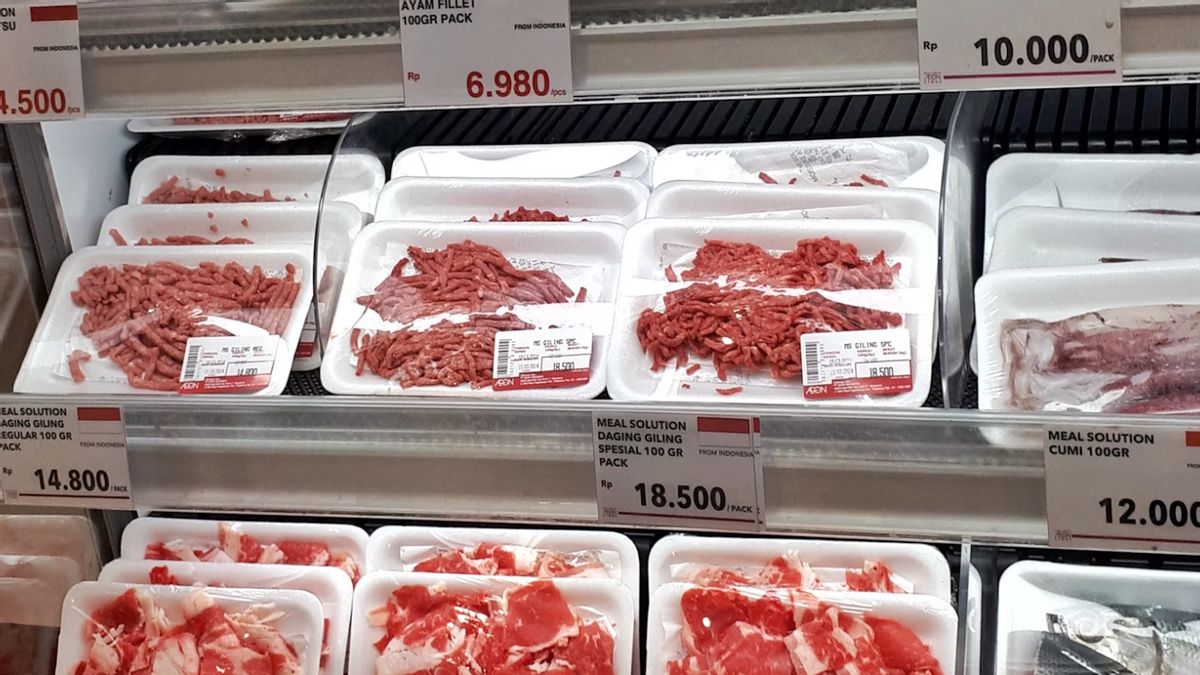


JAKARTA - The South Korean government has decided not to continue the opening of the beef and rice market as a bargaining chip in tariff negotiations with the United States and designated it a red line.
Reported by ANTARA from Yonhap-OANA, Wednesday, July 23, the decision was taken at a meeting of the ministers in the economic sector which was held the day before, according to a source familiar with the issue.
The agriculture and livestock sectors are crucial points in trade negotiations between the two countries, as Korea seeks full exemption or reduction in reciprocal rates from the US, as well as certain sector rates for imports of steel products and cars.
Among these issues, the United States is said to have asked Seoul to lift the ban on American beef imports from livestock aged 30 months and over and expand rice imports from the US.
However, given the sensitivity of the two commodities in terms of food and health security, South Korea is considering opening up a further market for energy plants such as corn and other types of bioethenol instead, according to the source.
The age limit on US beef imports was imposed under a 2008 Korea-US free trade agreement, which was set amid concerns over the spread of mad cow disease (bovine spongiform encephalopathy).
Despite age-based restrictions, Seoul has become the largest importer of US beef in recent years worth US$2.22 billion (Rp358.6 trillion) in 2024 alone, according to government data.
SEE ALSO:
-
 | BERITA
Negosiator Rusia Terbang ke Turki untuk Perundingan Damai Perang Ukraina
23 Juli 2025, 16:41


Regarding rice commodities, Korea imposed import tariff quotas from the US, China, Australia, Thailand, and Vietnam, with the US contributing 32 percent of the total quota.
Every year, South Korea imports up to 132,304 tons of rice from the US which is only subject to a 5 percent tariff, much lower than the 513 percent tariff imposed on non-coota imports.
To provide additional volume imports to the US, South Korea must go through a complicated procedure to obtain approval from the World Trade Organization (WTO) which then requires ratification by parliament in accordance with the law of the country's agreement.
The domestic agriculture and livestock industry strongly opposes the possibility of the government making beef and rice issues a medium of exchange in a broader trade agreement with the US.
Industry players even threatened to take collective action if the government included the issue in the agenda of negotiations with Washington.
The English, Chinese, Japanese, Arabic, and French versions are automatically generated by the AI. So there may still be inaccuracies in translating, please always see Indonesian as our main language. (system supported by DigitalSiber.id)


