


JAKARTA - A senior Israeli security official said on Tuesday that the country's military has not yet identified a famine in the Gaza Strip, amid criticism of unprecedented hunger in Palestine, but stressed the need for action to "stabilize the humanitarian situation."
The official, speaking to reporters on condition of anonymity, acknowledged a recent significant decrease in the amount of aid reaching Palestinians in the Gaza Strip, but blamed United Nations agencies for failing to collect and distribute food and supplies.
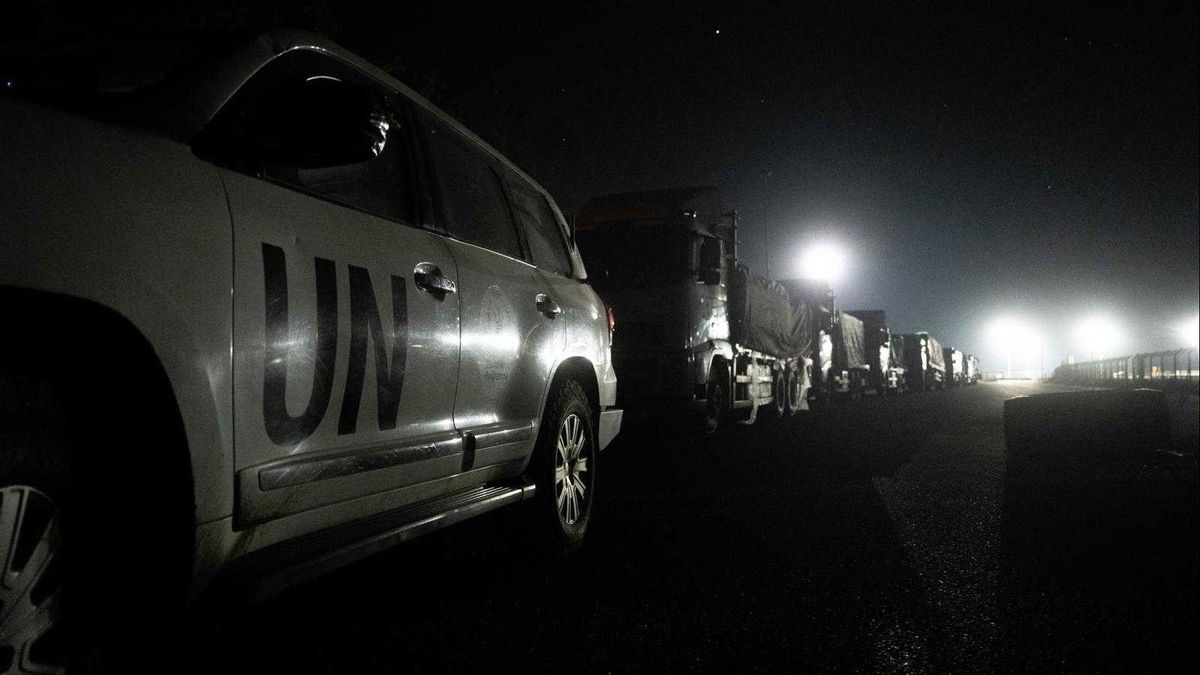
The Coordinator of Government Activities in the Territories (COGAT), the Israeli military and Defense Ministry agency responsible for coordinating aid deliveries to Gaza, said about 950 truckloads of aid are waiting to be collected by the UN from the Palestinian side at the Kerem Shalom and Zikim crossings.
The official said that, on its own, the aid currently waiting at the crossings to be collected is enough to meet the Gaza Strip's food needs for two and a half weeks.
"We have not identified any famine at this time, but we understand that action is needed to stabilize the humanitarian situation," the official said, adding that there may be difficulties in accessing food in some areas, which he said is a problem that needs to be addressed, according to The Times of Israel on July 23.
🎥 WATCH: 950 trucks worth of aid, currently waiting in Gaza❗️for international organizations to pick up and distribute to Gazan civilians. This is after Israel facilitated the aid entry into Gaza. pic.twitter.com/aQTR7Sryhs
— LTC Nadav Shoshani (@LTC_Shoshani) July 22, 2025
This decision was made after a "deep assessment" of the humanitarian situation in Gaza conducted by COGAT, he said.
The official said COGAT has been negotiating with UN officials to try and resolve the growing number of aid shipments that have been allowed into Gaza but have not yet been distributed.
According to the official, there are no problems with aid reaching the crossings and entering Gaza, but the main obstacle is distribution itself.
In recent meetings, the official said the UN had agreed to distribute 70-80 trucks by Tuesday, but in practice, only 30 trucks were received.
The UN itself has repeatedly claimed that COGAT has denied requests for collection and distribution authorization, while the dangerous and complex conditions inside Gaza make aid distribution extremely difficult.
According to the UN, Israeli restrictions and permit denials are the reason for the backlog of aid at the border, as aid organizations are regularly prevented from delivering aid to warehouses and distribution sites.
Convoys that do not coordinate their travel with Israeli authorities and lack difficult-to-obtain permits have been targeted by deadly IDF attacks.
The official said the UN had made demands regarding the shipment that COGAT could not agree to, such as requiring Hamas police to escort the convoy, or allowing them to carry communications equipment that Israel feared could fall into the hands of the terror group.
Regarding the famine claims, the official said Hamas was exploiting the humanitarian situation in Gaza and conducting a propaganda campaign as part of a pressure tactic amid ongoing hostage negotiations.

"This is a cynical and timely move aimed at creating international pressure on Israel," the official said.
Earlier, the Hamas Ministry of Health said on Tuesday that hospitals in Gaza had recorded 15 deaths, including four children, "from starvation and malnutrition" in the past 24 hours, adding that this brought the total number of cases since the start of the war to 101, "including 80 children."
The official said Israel can determine there is no widespread famine in Gaza based on how much aid reaches Gazans, saying, "We know the calorific value of each truckload that enters, and how many people it feeds."
The official said COGAT has also spoken with Palestinians involved in aid distribution and obtained other intelligence indicating there is no famine.
In the past two months, about 4,500 aid trucks have entered Gaza, according to COGAT. Half of those trucks are headed to Gaza Humanitarian Foundation (GHF) distribution sites, and the other half are taken to warehouses owned by the UN and other approved aid organizations. In the past month, an average of 71 trucks entered Gaza daily, COGAT said.
SEE ALSO:
-
 | BERITA
15 Orang Meninggal dalam 24 Jam Terakhir Akibat Kelaparan di Jalur Gaza
23 Juli 2025, 09:45




However, the official said almost all aid trucks heading to the aid organization's warehouse were looted by Gaza mobs, not Hamas.
Since the resumption of aid deliveries to Gaza on May 19, after a pause that began on March 2, Israel has established a new mechanism to prevent aid trucks from being taken over by Hamas, the official said.
This mechanism only allows international aid agencies registered with the Israeli Ministry of Diaspora Affairs to bring aid into Gaza, after strict security checks at border crossings.
The mechanism also sanctions aid groups and individuals who do not comply with Israeli requirements.
The English, Chinese, Japanese, Arabic, and French versions are automatically generated by the AI. So there may still be inaccuracies in translating, please always see Indonesian as our main language. (system supported by DigitalSiber.id)
Most Popular Tags
#Prabowo Subianto #donald trump #Febrie Adriansyah #8791 #giias 2026Popular


