
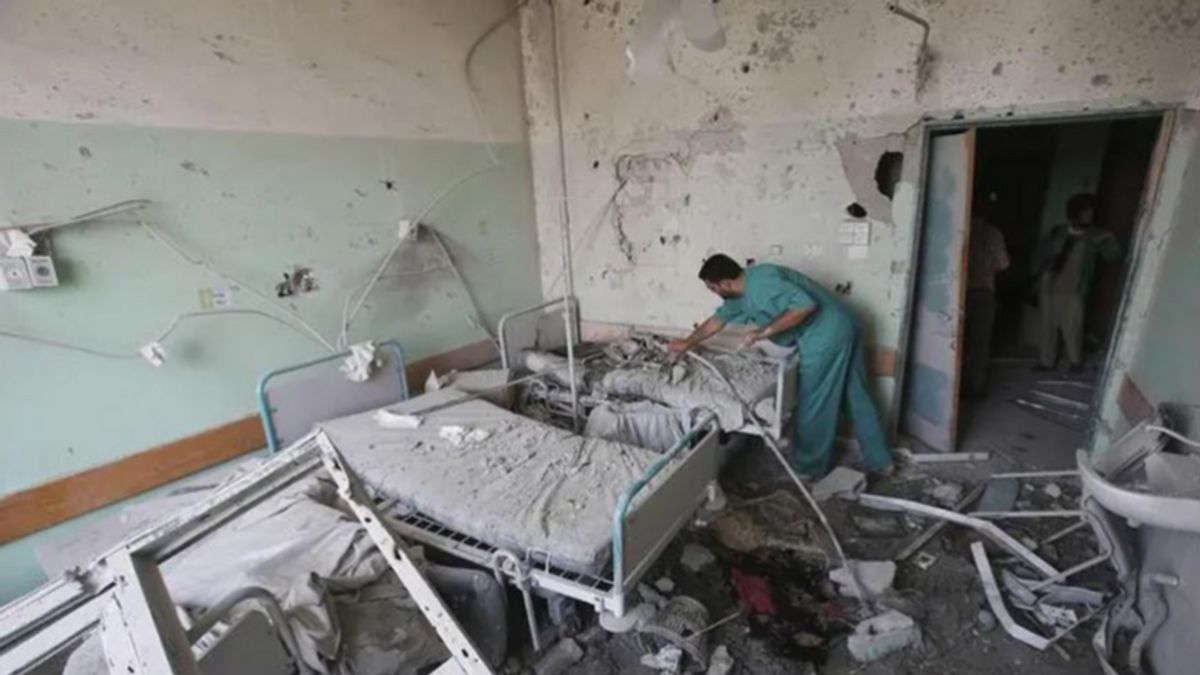


JAKARTA - The fuel crisis in Gaza has reached a critical point, threatening to stop all humanitarian operations and endanger the lives of all aid-dependent people in the region, UN agencies warned in a joint statement on weekends.
"The fuel is the backbone of survival in Gaza," the statement said, quoted from WAFA July 14.
"Without fuel, this lifeline will disappear for 2.1 million people," he added.
UN humanitarian workers stressed that fuel drives everything from hospitals and water systems to bakeries and ambulances.
Without a stable supply, " Labor units, neonatals, and intensive care will be damaged, and ambulances will no longer be able to move."
The fuel shortage, they said, had put Gaza's population, already facing severe food insecurity and the threat of constant violence, on the brink of disaster.
They warned, "without adequate fuel, UN agencies responding to this crisis will likely be forced to stop their operations completely," meaning "no health services, no clean water, and no capacity to deliver aid."
The UN agencies noted, for the first time in 130 days, a small amount of fuel was allowed into Gaza this week.
Although welcomed, this amount, only 75,000 liters for two days, is far from sufficient to meet the daily needs of the population and vital civil aid operations.
Earlier, UN spokesman Stephane Dujarric speaking at the United Nations Headquarters in New York late Friday described the situation as "terrible and getting worse day by day."
"Every day without a ceasefire resulted in more deaths that could actually be prevented, children died of pain, and people who were starving were shot while trying to get help who were allowed in," he said.
Dujarric also expressed deep concern over the restrictions on aid access that continue by Israel.
"Yesterday, our team was able to provide some of the fuel that goes into the hospital, but only in the south. That's because the Israeli authorities rejected our efforts to bring fuel to the north," he said.
"Such rejection is life-threatening," he said.
He added that fuel shortages also had an impact on water treatment, ambulances, and waste management.
"All of these services are at risk of collapse," he warned.
Of the 15 humanitarian missions requiring coordination with Israeli authorities on Thursday, only six were fully facilitated. Five were completely rejected, while four faced problems delaying or preventing shipments.
One mission, to save injured victims trapped under the rubble in Gaza City, was only approved two days after the initial request was too late to save lives.
"When the mission was finally allowed in yesterday, no one was found safe," said Dujarric.
In addition, important items such as tents and residential materials have been blocked from entering Gaza for more than four months, causing thousands of people to be exposed to the weather.
SEE ALSO:





UN agencies are calling for immediate and self-consistent fuel shipments on a large scale, and full and secure access to the entire Gaza region.
"The urgency of this moment cannot be exaggerated," they said.
"Without fuel, Gaza is facing a complete collapse of humanitarian efforts," he concluded.
The English, Chinese, Japanese, Arabic, and French versions are automatically generated by the AI. So there may still be inaccuracies in translating, please always see Indonesian as our main language. (system supported by DigitalSiber.id)


