
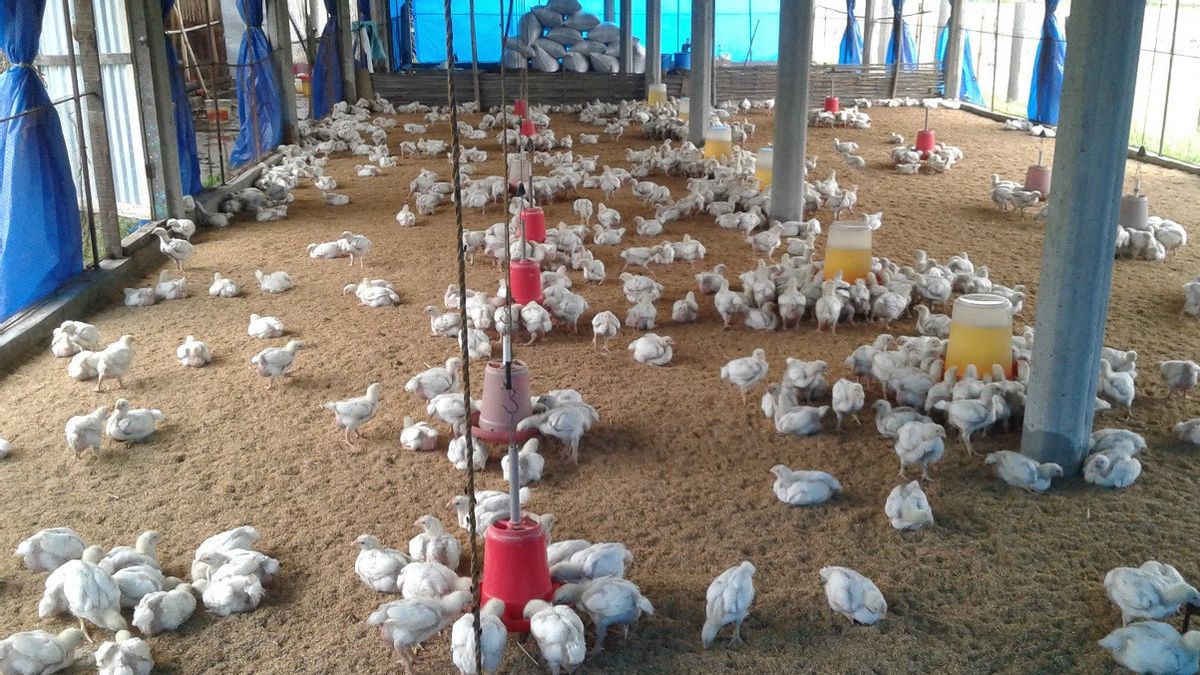


JAKARTA - The heat wave that hit South Korea caused unprecedented livestock losses, with authorities reporting spikes in livestock deaths as temperatures continued to rise.
According to the National Disaster Management and Safety Headquarters, said Thursday, 160,123 livestock died in various regions of the country on Tuesday, with 158,006 of them poultry. The rest, 2,117 are pigs, reported The Korea Times 10 July.
Livestock are very sensitive to heat. The optimal temperature ranges from 10 to 20 degrees Celsius for beef cows, 5 to 20 degrees Celsius for dairy cows, 15 to 25 degrees Celsius for pigs, and 16 to 24 degrees Celsius for chickens.
When temperatures exceed the critical threshold 30 degrees Celsius for cows and chickens, 27 degrees Celsius for pigs and dairy cows animals experience a decrease in feed intake, stunted growth, and in severe cases, death.
This spike is considered surprising. From May 20 to Tuesday, about 379,475 animals died, an increase of 7.6 times compared to 49,799 recorded in the same period last year.
The daily death toll nearly doubled in just 24 hours, from 81,970 animals on Monday to more than 160,000 on Tuesday.
Meanwhile, regional data showed North Jeolla Province was most severely affected by 87,144 livestock deaths, followed by South Jeolla with 81,515, North Gyeongsang with 52,195, South Chungcheong with 50,962, North Chungcheong with 43,049 and South Gyeongsang with 36,772.
North Jeolla Province, which is home to many poultry farms, has lost about 20,000 chickens and ducks every day over the past three days.
In one incident, a farm in Gokseong lost 15,900 chickens in one day, resulting in an estimated loss of 17 million won.
SEE ALSO:
-
 | BERITA
Menlu RI Ingatkan Perselisihan dan Konflik Harus Diselesaikan Secara Damai
10 Juli 2025, 19:20




Another report from Yeongnam details the death of 1,600 ducks, which resulted in a loss of 5 million won. Total financial losses in South Jeolla Province have reached nearly 1.28 billion won.
Meanwhile, temperatures continue to rise nationally amid intense heat, with the highest temperature during the day reaching around 36 degrees.
Weather forecasts warn that the hot index will remain at about 35 degrees in the western and interior regions, while tropical nights are expected to continue.
The English, Chinese, Japanese, Arabic, and French versions are automatically generated by the AI. So there may still be inaccuracies in translating, please always see Indonesian as our main language. (system supported by DigitalSiber.id)
Popular


