

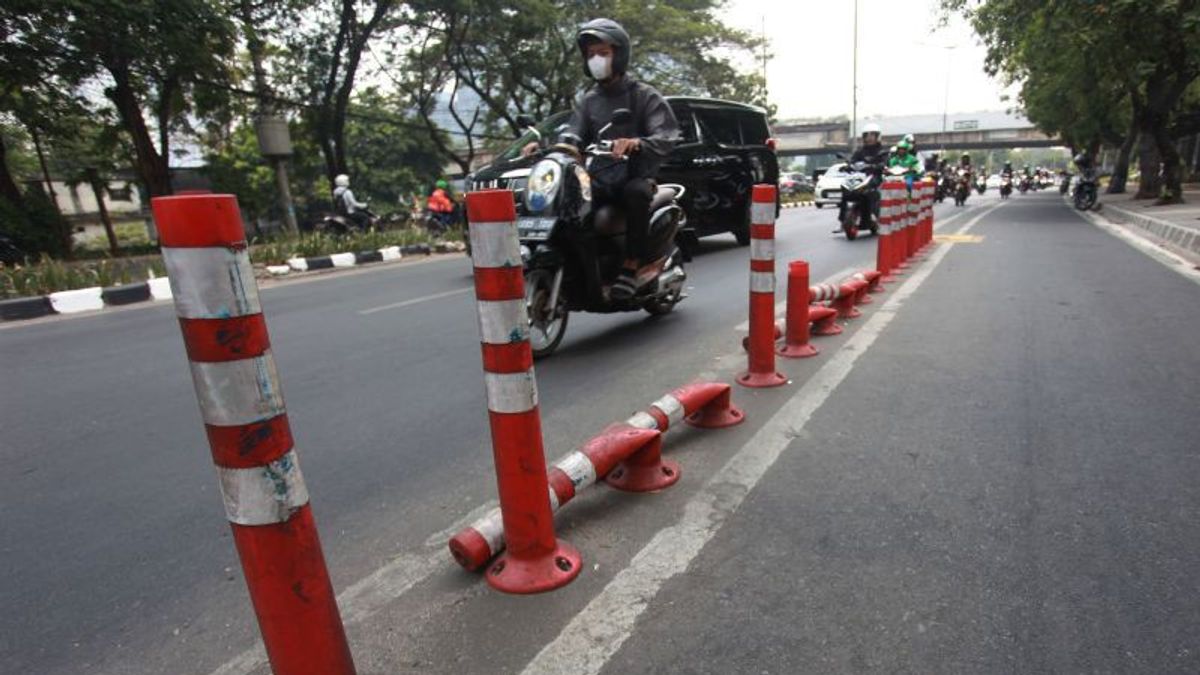


JAKARTA - The paid road system or electronic road pricing (ERP) in Jakarta is still an uncertain discourse. This discourse was re-emphasized by former DKI Jakarta Governor Pramono Anung.
Transportation observer Muhammad Akbar assessed that if the ERP was implemented, it would certainly result in rejection from a number of parties because they felt aggrieved.
"Like other public policies, the implementation of ERP is certainly not free from rejection. Some of these groups may be most vocal in voicing objections," Akbar said in his statement, Monday, June 16.
The parties who refuse include private car owners who are usually middle and upper class residents. They feel aggrieved if ERP is implemented because they have paid motor vehicle taxes.
"For them, ERP rates are considered as double taxes that are unfair, as if they have to pay twice just to be able to use the same road," said Akbar.
Then, online motorcycle taxi drivers and small-scale logistics entrepreneurs. They are worried that operational costs in their work will increase. The ojol group also voiced rejection of ERP several years ago.
"They are worried that if ERP is also applied to two-wheeled vehicles or light commercial vehicles, their operational costs will increase. For this group, additional costs can erode already thin daily profits," explained Akbar.
SEE ALSO:


In addition, refusals can also arise from politicians who are worried that they will lose support or votes from some people if they support paid road policies.
"They are worried that public support will decline if it is seen that it supports policies that are considered burdensome to the people. In fact, policies such as ERP actually side with the long-term interests of the city and its citizens as a whole," Akbar explained.
Not only that, the general public who have not received complete information about the goals and mechanisms of the ERP, is considered to be Akbar, vulnerable to being influenced by negative narratives and causing misunderstandings.
"The government needs to explain that ERP is not an additional tax, but a fair road space management mechanism, where the cost of congestion is no longer borne together, but by those who choose to continue to use private vehicles," he said.
The English, Chinese, Japanese, Arabic, and French versions are automatically generated by the AI. So there may still be inaccuracies in translating, please always see Indonesian as our main language. (system supported by DigitalSiber.id)


