

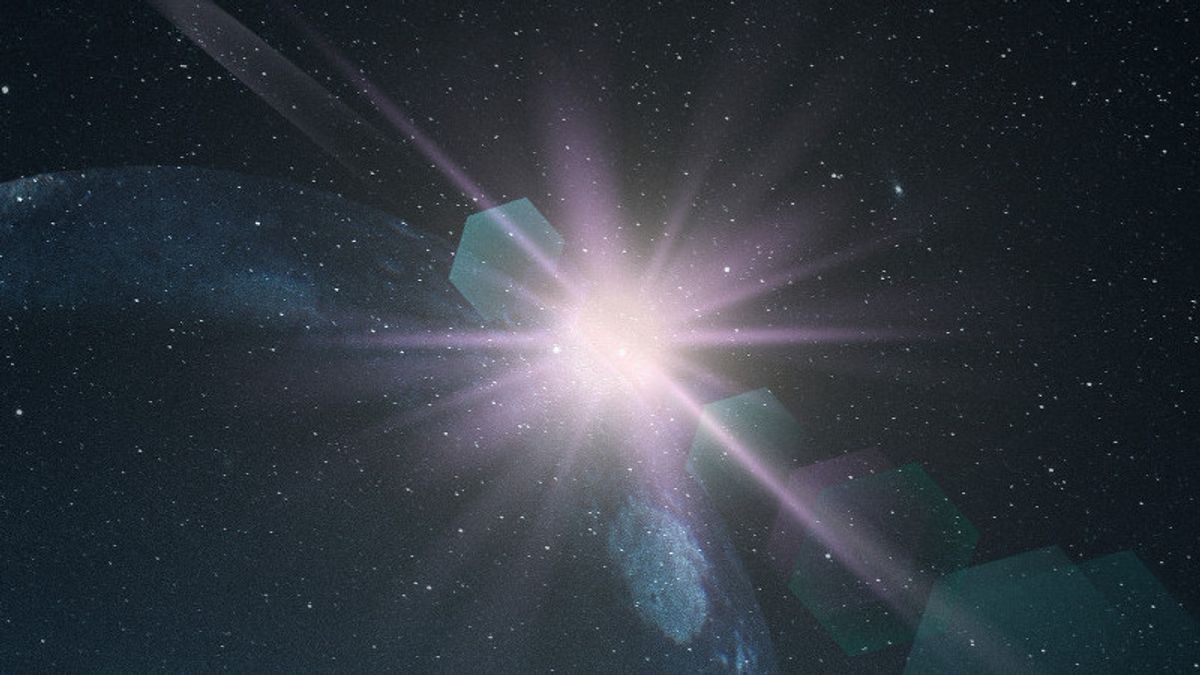


YOGYAKARTA - Behind the visible stars in the sky, there is a ray of cosmic light that originates from events and objects in the universe. This cosmic light is not always visible to the human eye, but can be detected through various instruments and technologies that continue to grow.
One of the most interesting forms of cosmic light is the radiation of cosmic light. Cosmic light comes not only from stars, but also from other universe phenomena such as supernova explosions, active galaxies, to remnants of the Big Bang.
All of these beam shapes emit radiation in electromagnetic spectra that most of them cannot be seen directly by the human eye. However, it can be analyzed using radio telescopes, X-rays, gamma rays, and other instruments. So what is cosmic light beam radiation like?
Cosmic light beam radiation refers to various types of electromagnetic radiation emitted by objects or astronomical events in space. These emitters cover the whole spectrum of light, ranging from radio, infrared, visible, ultraviolet, to X-ray and gamma-ray waves.
One of the most well-known forms of cosmic radiation is the cosmic microwave background (CMB) radiation which is the remnant light of the Big Bang event about 13.8 billion years ago. The CMB was discovered in 1965 by Arno Penzias and Robert Wilson who accidentally captured a uniform radiation signal from all over the sky.
This discovery provides strong evidence that the universe was once in a very hot and dense state, in accordance with the Big Bang theory. This radiation is now observable in the form of microwaves and is considered the oldest trace of light ever in the universe.
Cosmic light radiation originates from various phenomena in the universe. Some of the main sources include:
Stars emit light in the visible, infrared, and ultraviolet spectra. The galaxy, which consists of billions of stars, is also a source of massive cosmic radiation. Active galaxies such as quasars even emit very large amounts of radiation, including X-rays and gamma-rays.
Supernova explosions produce shock waves that heat the surrounding matter, resulting in radiation in various wavelengths. supernova remnants such as the Crab Nebula (Crab Nebula) still emit strong light centuries after the explosion occurred.
Black holes, especially those in the center of galaxies, can accelerate particles to high speed and emit high energy radiation in X-ray and gamma-ray form. Accretion disks around black holes are the main sources of high energy cosmic radiation.
The CMB is the earliest form of cosmic light radiation that we can still detect. It spreads evenly throughout the universe and provides important clues to the early structure of the cosmos.
Cosmic light beam radiation is an important window for astronomers and space scientists to understand the history, structure, and composition of the universe. Through observations of the spectrum of light from distant objects, we can know the chemical composition, temperature, velocity, and even the age of an object or phenomenon.
For example, analysis of the CMB spectrum allows scientists to estimate the age of the universe and identify small fluctuations in its density, which then becomes the basis for galaxy formation.
In addition, cosmic radiation also helps in mapping the large structure of the universe, such as galaxy networks (cosmic webs), as well as studying extreme phenomena such as pulses, magnetars, and gamma-ray bursts (gamma ray bursts).
SEE ALSO:
-
 | EKONOMI
Trump Resmi Naikkan Tarif Baja ke 50 Persen, Berlaku Mulai 4 Juni 2025
02 Juni 2025, 02:00

Such is a review of the radiation of cosmic light that plays an important role in the history of the universe. The radiation of cosmic light reflects the activity of stars, galaxies, and even very ancient cosmic events such as the Big Bang. Also read three of the largest black holes in the universe.
Stay up to date with the latest domestic and other overseas news on VOI. We present the latest and updated information nationally and internationally.
The English, Chinese, Japanese, Arabic, and French versions are automatically generated by the AI. So there may still be inaccuracies in translating, please always see Indonesian as our main language. (system supported by DigitalSiber.id)
Most Popular Tags
#Prabowo Subianto #donald trump #Febrie Adriansyah #8791 #giias 2026Popular


