
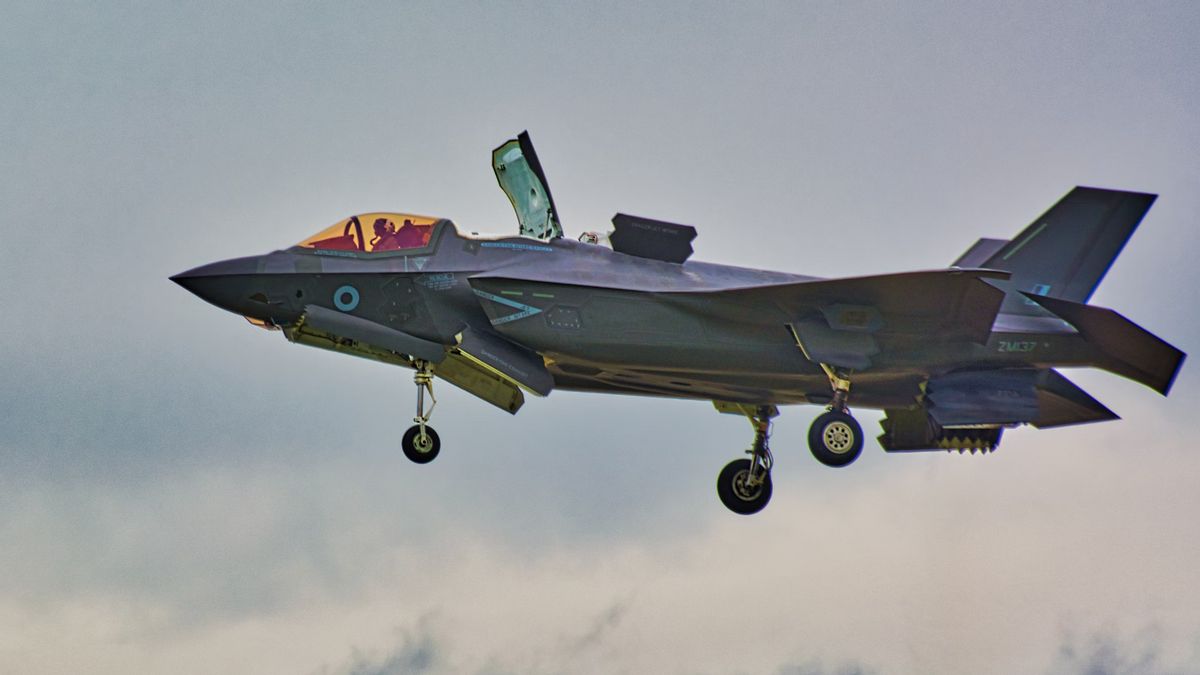


JAKARTA - India's Defense Minister approved a framework for producing the country's most advanced stealth fighter jets. It became a new arms race with Pakistan a few weeks after the military conflict between the two neighboring countries.
The Indian government-owned Aviation Development Agency, which implemented the program, will soon invite the initial interest of defense companies to develop a planned multiple-engine fighter prototype.
As reported by Reuters on Tuesday, May 27, this project is very important for the Indian Air Force, whose squadrons of most Russian and former Soviet aircraft have been reduced to 31 from approved power of 42.
Pakistan has one of China's most advanced fighter aircraft, J-10, in its arsenal.
The military of neighboring nuclear armed Indian and Pakistani countries is facing each other in four-day fighting this month, involving the use of fighter jets, missiles, drones, and artillery by both sides before the ceasefire was announced by US President Donald Trump.
This is the first time the two sides have used a large-scale unmanned aircraft and South Asian power is now locked in an unmanned aircraft arms race, according to a Reuters interview with 15 people, including security officials, industry executives, and analysts in both countries.
India will partner with domestic companies for stealth fighter programs, and companies can bid independently or as joint ventures, the defense ministry said in a statement.
The government opens offers for private and state-owned companies.
In March, India's defense committee had recommended incorporating the private sector in the manufacture of military aircraft to shore up the capabilities of the Indian Air Force and reduce loads on the state-owned Hindustan Aeronautics Ltd, which resulted in most Indian military aircraft.
Air Force Marshal Amar Preet Singh previously criticized Hindustan Aeronautics for sending a slow Tejas light fighter aircraft, a 4.5-generation fighter, to blame the company for sending a slow engine from General Electric due to supply chain issues facing the US company.
The English, Chinese, Japanese, Arabic, and French versions are automatically generated by the AI. So there may still be inaccuracies in translating, please always see Indonesian as our main language. (system supported by DigitalSiber.id)
Most Popular Tags
#Prabowo Subianto #donald trump #firearm #8791 #giias 2026Popular


