


JAKARTA - Pakistan is grappling to close the gap in the lack of artillery ammunition amid its boiling relations with India.
Citing the Hindustan Times, Sunday, May 4, a source told India's ANI news agency that the Pakistani Army only had ammunition for 96 hours in case of fighting.
The shortage of these warships stems from a recent Pakistani arms transfer to Ukraine, particularly the export of 155mm artillery shells - which is important for Pakistan's heavy artillery forces.
The source added that the export of Pakistani military weapons was carried out amid soaring global demand and favorable contracts.
As a result, Pakistan's military strategic reserves were drained, so howitzer M109 and the BM-21 rocket system, which became the country's mainstay, lacked stock.
Pakistan's Ordnance Factories (POF), the country's main ammunition producer, said it was unable to meet demand for resupply due to outdated infrastructure and limited production capacity.
A POF official familiar with the matter told ANI the POF was committed to meeting domestic military needs, but the company struggled to do so under current conditions.
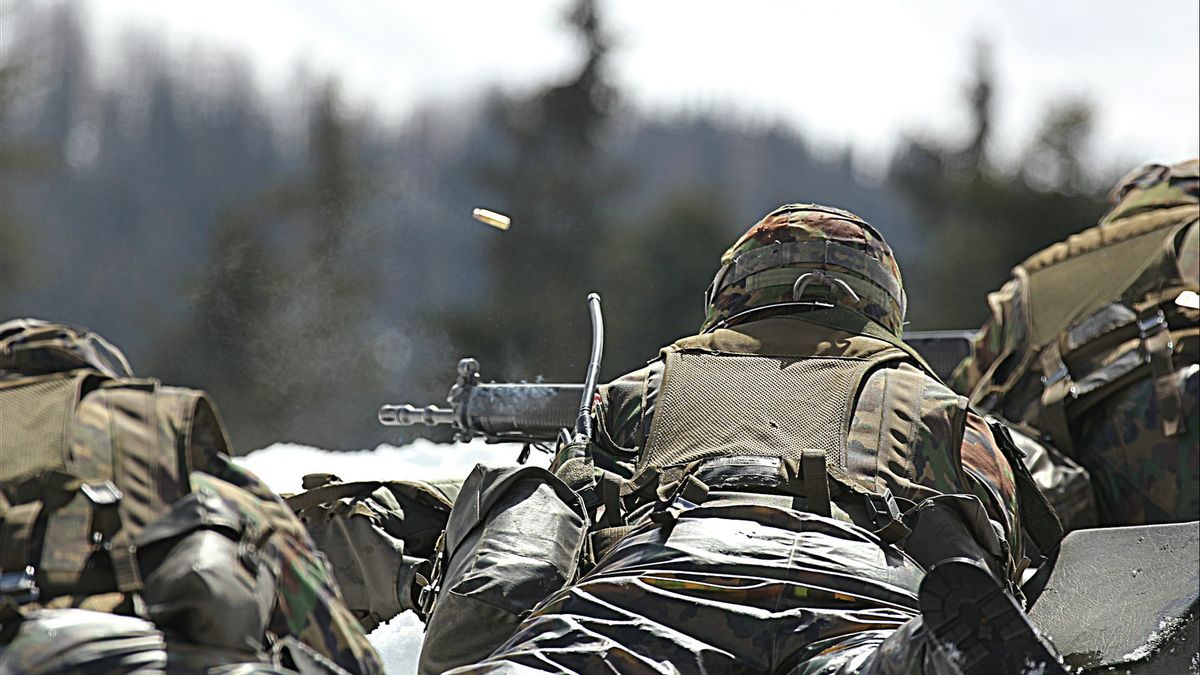
Illustration of artillery soldiers using a high mobility artillery rocket system or HIMARS to help attack troops on the front lines. (Lauren Whitney-defenseimagery.mil.-commons.wikimedia.org)
Earlier, the former head of the Pakistani Army, General Qamar totaling Bajwa, had warned his country of limited capacity for sustainable warfare. He mentioned the constraints on the economy and logistics.
According to ANI, the ongoing economic crisis in Pakistan - marked by skyrocketing inflation, rising debt, and running low in foreign exchange reserves - has forced the military to suspend training, reduce rations, and even have the potential to cancel scheduled war games due to fuel shortages.
However, Pakistan has made a number of preparations if fighting with India occurs.
Based on Indian intelligence reports, Pakistan began building new ammunition depots in the region near the Indian border. However, without sufficient supplies to fill it, analysts argue, the measure has no strategic value.
"Pakistan has sent its ammunition closer to the point of war, just to find itself stranded, its weapons empty, and its defenses wavering," a senior defense analyst told India's ANI news agency.
"Short-term economic gain pursuit has left long-term strategic wounds," he continued.
SEE ALSO:



SEE ALSO:
India-Pakistan clashed over each other after armed militant groups killed 26 people in India's Jammu andtendors on April 22.
According to Indian intelligence, the attack was carried out by Lashkar-e-Taiba over the involvement of Pakistan's Inter-Service Intelligence (ISI).
However, the resistance Front militant group has claimed responsibility for the attacks on the disputed territory of India and Pakistan.
Angered India still blamed Pakistan for responding by implementing a number of detrimental policies. Pakistan also did not remain silent by responding through cornering policies.
The English, Chinese, Japanese, Arabic, and French versions are automatically generated by the AI. So there may still be inaccuracies in translating, please always see Indonesian as our main language. (system supported by DigitalSiber.id)
Most Popular Tags
#Prabowo Subianto #donald trump #2026 World Cup #venezuela #konflik timur tengahPopular


