


BANDARLAMPUNG - The Sumatra Institute of Technology (Itera) added two new professors from the Regional and City Planning Study Program (PWK) of the Faculty of Infrastructure and Regional Technology (FTIK).
"We hope that the addition of these two professors can accelerate the acceleration of Itera's development in the future, because it has opened national and international networks," said Itera Chancellor Prof. Nyoman Pugeg Aryantha, in a statement in South Lampung, Saturday.
The two professors are Prof. Harkunti Pertiwi Rahayu, Ph.D., Professor of Disaster Risk Reduction in Development Planning, and Prof. Ibnu Syabri, B.Sc., M.Sc., Ph.D., with expertise in sustainable infrastructure.
"The two professors did not only excel in the field of science, but also contributed significantly to research and strategic development relevant to the challenges of the times, especially in the field of regional and city planning," he said.
Head of the Lampung Provincial Resources Management Agency, Muhammad Alhusnuriski, called the addition of two Itera professors a proud achievement, not only for Itera but also for Lampung Province.
SEE ALSO:

"We are grateful, Lampung has an intellectual beacon like Itera. A university that is still young but has given birth to innovation and superior resources," he said.
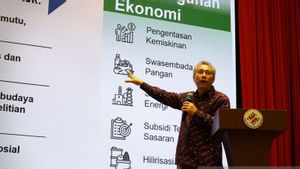
In his first scientific oration, Prof. Harkunti Pertiwi Rahayu, Ph.D., raised the theme "Building National Resilience" through the Presumption of Disaster Risk Reduction in Regional and City Planning.
"It is important to integrate the principle of disaster risk reduction (PRB) into spatial planning and development policies to prevent new vulnerabilities amid increasing disaster intensity," he said.
Prof. Harkunti also discussed critical issues such as strengthening an inclusive early warning system for persons with disabilities, convergence of PRB-API (climate change adaptation) as a proof-based holistic approach (evidence-based).
"As well as PRB mainstreaming from a hazard-based approach to a project-based approach," he said.
Meanwhile, Prof. Ibnu Syabri, B.Sc., M.Sc., Ph.D., raised the theme of Traces of Transportation in Tapak City and Region: Reducing Spatial For Land Detention for Sustainable Transportation Planning.
"I highlight the importance of developing an efficient and land-efficient transportation system. Then encouraging the use of science data-based analysis tools, such as big data, machine learning, and artificial intelligence (AI), to support green transportation in Indonesia," he said.
This approach, he continued, aims to build an inclusive, fair, and sustainable transportation and logistics system.
"I also highlight the concept of spatial dependence in transportation systems through spatial flow dependence modeling. Logistical problems and congestion are not just volume issues, but related to the spatial structure of the flow of goods. Without spatial consolidation and coordination, the system will continue to produce environmental inefficiency and pressure," he said.
The English, Chinese, Japanese, Arabic, and French versions are automatically generated by the AI. So there may still be inaccuracies in translating, please always see Indonesian as our main language. (system supported by DigitalSiber.id)
Most Popular Tags
#Prabowo Subianto #donald trump #Febrie Adriansyah #8791 #giias 2026Popular


