


JAKARTA - The Ministry of Religion has again implemented two special service schemes, namely Murur and tanazul, in organizing the Hajj pilgrimage 1446 Hijri/2025 AD.
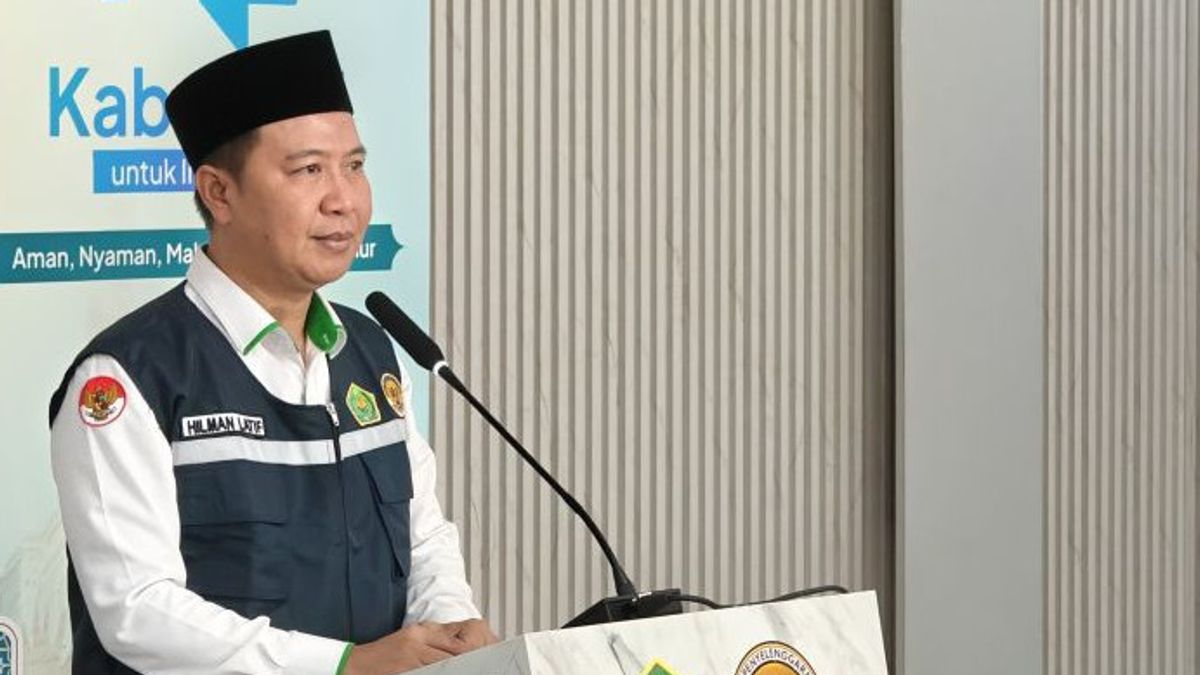
The Director General of Hajj and Umrah at the Ministry of Religion, Hilman Latief, when met at Pondok Gede Hajj Dormitory, Jakarta, Thursday, said that the two special service schemes were implemented to anticipate density and maintain the safety of the congregation in the midst of limited regional capacity in the Holy Land.
The Murur scheme will be applied to around 52 thousand pilgrims consisting of the elderly, people with disabilities, and those with special needs," he said.
Murur is a mechanism in which worshipers cross the Muzdalifah area without getting out of the vehicle, after wukuf in Arafah, to go straight to Mina. This policy was taken to avoid congestion and potential health risks due to density and extreme weather.
"We prioritize pilgrims with special needs, including those who use wheelchairs, so that the movement process is smoother and safer," he said.
SEE ALSO:

Meanwhile, the tanazil scheme will be applied to 38 thousand pilgrims who have made a sum in Mina and then do not return to their tents, but live in the nearest hotel in the Syisyah and Nawariyah areas.
The Ministry of Religion has prepared a capacity of around 100 thousand residences to support the implementation of tanazul.
"This is part of a strategy so that the circulation of the congregation is more controlled and does not accumulate at one point," he asserted.
Although the Murur and tanazil schemes have been implemented in the previous Hajj season, said Hilman, his party continues to intensify socialization to worship guides, chlorary officers, and pilgrims through various official communication channels so that the implementation of worship is safer and orderly.
The Director General of Hajj and Umrah at the Ministry of Religion, Hilman Latief, when met at Pondok Gede Hajj Dormitory, Jakarta, Thursday, said that the two special service schemes were implemented to anticipate density and maintain the safety of the congregation in the midst of limited regional capacity in the Holy Land.
The Murur scheme will be applied to around 52 thousand pilgrims consisting of the elderly, people with disabilities, and those with special needs," he said.
Murur is a mechanism in which worshipers cross the Muzdalifah area without getting out of the vehicle, after wukuf in Arafah, to go straight to Mina. This policy was taken to avoid congestion and potential health risks due to density and extreme weather.
"We prioritize pilgrims with special needs, including those who use wheelchairs, so that the movement process is smoother and safer," he said.
Meanwhile, the tanazil scheme will be applied to 38 thousand pilgrims who have made a sum in Mina and then do not return to their tents, but live in the nearest hotel in the Syisyah and Nawariyah areas.
The Ministry of Religion has prepared a capacity of around 100 thousand residences to support the implementation of tanazul.
"This is part of a strategy so that the circulation of the congregation is more controlled and does not accumulate at one point," he asserted.
Although the Murur and tanazil schemes have been implemented in the previous Hajj season, said Hilman, his party continues to intensify socialization to Hajj guides, chlorary officers, and pilgrims through various official communication channels so that the implementation of worship is safer and orderly.
The English, Chinese, Japanese, Arabic, and French versions are automatically generated by the AI. So there may still be inaccuracies in translating, please always see Indonesian as our main language. (system supported by DigitalSiber.id)
Most Popular Tags
#Prabowo Subianto #donald trump #Febrie Adriansyah #8791 #giias 2026Popular


