

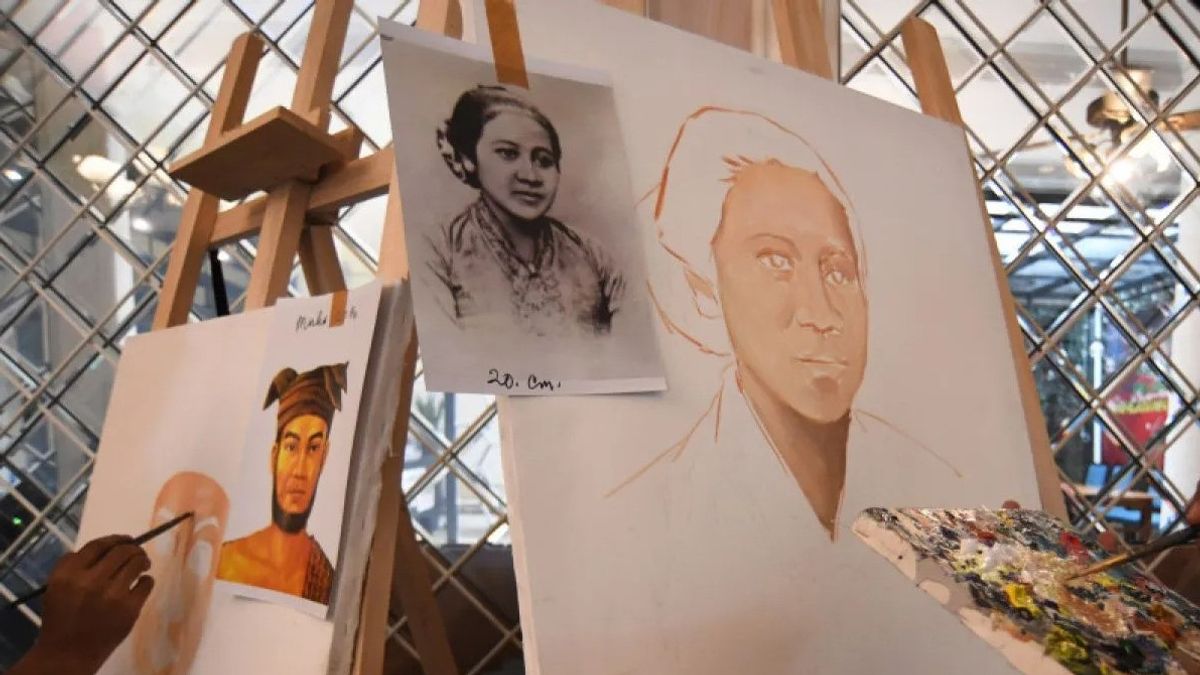


YOGYAKARTA - In the midst of colonial shackles and traditional curvature for women at that time, Raden Ajeng Kartini appeared as a complaints that illuminated the way of emancipation. So, why has RA Kartini been an inspirational figure until now?
This article will thoroughly explore the basic reasons why RA Kartini's struggles and thoughts remain relevant and continue to inspire generations for generations.
According to Boby Andika Ruitang, a psychological observer, feminism, questionnaires, and politics, to answer the questions above, it is necessary to understand what happened during the New Order under President Suharto's administration.
Quoting Julia Suryakusuma's thoughts, an Indonesian feminist about the concept of the State's Immunism, believes that the gender role of women is severely limited through programs engineered by the state during the New Order era.
The vacancy of activism after Gerwani (the underbow organization of the Indonesian Communist Party during the Old Order) allowed Suharto to fill the normative space that constructed feminism in Indonesia.
liberal Feminism, which allows women to be free to do whatever they want at that time is seen as an enemy that if we do not restrict women to kitchens, mattresses and wells, they will rebel against men as proven by the Lubang Buaya incident (the narrative of the New Order, Gerwani tortured the generals before being killed).
Also Read articles That Discuss Getting To Know The Tradition Of Getting Married, When Women Are Kidnapped And Forced To Get Married
The New Order then promoted Kartini's work and identity in accordance with her political beliefs, by weakening the meaning of women's empowerment.
First, Kartini is reduced to being just a 'mother', as seen in the song "Mrs. Kita Kartini". The word 'mother', which is a translation of 'mother' (mother), has a strong association with the traditional role expected from women today.
So even though Kartini is very important in provocating, even creating education for women at that time, women are now unknowingly returned to 'given their place', that no matter how educated women are, they will always be 'mothers' first.
Kartini is also a clear picture of an aristocrat Javanese woman: polite, calm, good manners, does not cause problems and this becomes an ideal woman standard made by Suharto.
In his writing, Boby gave an example, if this is increasingly embedded with the celebration of Kartini Day every year with students and women wearing kebaya, traditional Javanese clothing for women.
Kartini's Day celebrations are then usually followed by competitions such as cooking, makeup, and writing, which further create a subliminal message that the best way to commemorate Kartini is to become a obedient, obedient, and feminine woman.
So why not Dewi Sartika, Tengku Fakinah, Pocut Baren, Cut Meutia, or Cut Nyak Dien as the figure of women's emancipation? The answer is simple: because these strong feminists do not match the dominant narrative about what should be meant by empowerment according to patriarchal defenders.
The figures above symbolize that women can contribute and operate outside the domestic realm, that they can also have masculine traits such as aggressive and controllable.
The nature of these figures can create moral panic that is too often associated with Gerwani that if you don't look after your woman, she will fight you.
SEE ALSO:
-
 | BERITA
Pemerintah Korea Selatan Akan Gelar Pertemuan Negosiasi Tarif Impor di AS
21 April 2025, 02:38


Kartini's choice by Soekarno (and then supported by the New Order) also has a political motive: he symbolizes Javanese colonialism dominated by ethnic groups that will impose his cultural hegemony by reducing history and local languages into one homogeneous event.
In addition to why ra Kartini became an inspirational figure, follow other interesting articles too. Want to know other interesting information? Don't miss it, keep an eye on the updated news from VOI and follow all the social media accounts!
The English, Chinese, Japanese, Arabic, and French versions are automatically generated by the AI. So there may still be inaccuracies in translating, please always see Indonesian as our main language. (system supported by DigitalSiber.id)
Most Popular Tags
#Prabowo Subianto #donald trump #firearm #8791 #giias 2026Popular


