

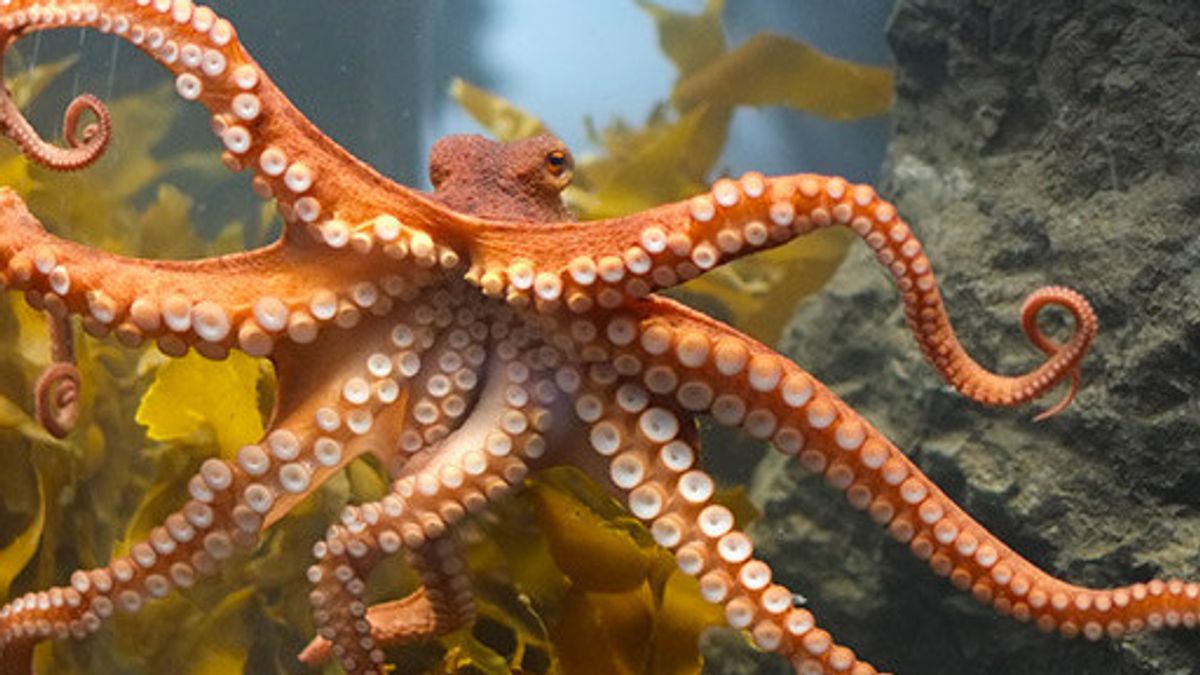


Have you ever wondered what would happen if humans went extinct? Or what species might have emerged after us? Professor Tim Coulson, a zoologist and biologist from the University of Oxford, tries to answer the question in his book The Universal History of Us.
"I am interested in how the ecosystem and its species react when the number of vertex predators changes. I developed the theory and tested it with field data from various animals and wild plants," Coulson said.
Based on their findings, in the end humans will become completely extinct. After that, other primates may develop, but they have limitations due to their social nature that can make it difficult for them to adapt to the new world. A similar phenomenon also applies to dolphins.
However, the species most potentially dominating the Earth are octopuses after humans went extinct. These animals had survived long before the dinosaur era, had high intelligence, and extraordinary adaptability.
In his book, Coulson explains that all species have an expiration date, which paves the way for a new life form. However, octopuses can be an exception.
Despite living underwater, they are able to breathe through the skin, allowing them to explore land habitats and interact with new environments.
SEE ALSO:
-
 | BERITA
Rayakan Idulfitri, Prabowo-Gibran Salat Id Bersama Masyarakat di Istiqlal
31 Maret 2025, 08:15 -
 | MUSIK
Mahir & The ALLIGATORS Suguhkan EP Aku Pulang dengan Beragam Elemen Genre Musik
31 Maret 2025, 02:35

However, there are several challenges octopuses face, such as lacking a skeleton, a short life cycle (only three to five years), and a reproductive pattern that focuses more on numbers than species care.
However, according to The Universal History of Us, if there is one species that can survive after humans become extinct and dominate the planet, then octopuses are the strongest candidates.
The English, Chinese, Japanese, Arabic, and French versions are automatically generated by the AI. So there may still be inaccuracies in translating, please always see Indonesian as our main language. (system supported by DigitalSiber.id)
Most Popular Tags
#Prabowo Subianto #donald trump #Febrie Adriansyah #8791 #giias 2026Popular


