

JAKARTA - President Prabowo Subianto encourages universities to strengthen research and innovation that is oriented towards the development of national industries and increasing state revenues. The directive was conveyed by the President when meeting 1,200 lecturers and professors of universities in Indonesia. In the Presidential Briefing to the rectors and leaders of state and private universities in 2026, the President emphasized the importance of the role of research and innovation as the foundation for the development of science and technology-based industries. The government emphasizes the new focus of national development through the strengthening of research and innovation to encourage industrial competitiveness, in line with the need to face global economic transformation and technological progress. However, this policy direction is considered not to sacrifice the continuity of social-humanitarian sciences and fundamental research which is the foundation for the formation of critical sense, public ethics, and the reflective power of the nation.
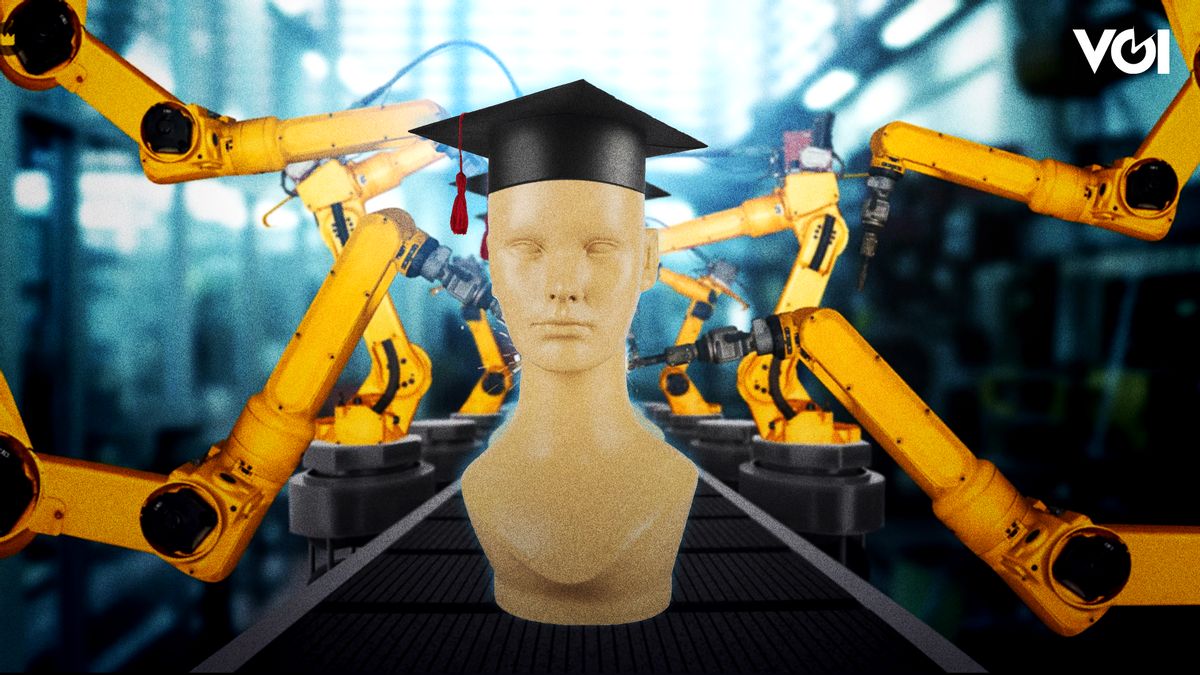
According to the Rector of the University of Indonesia, Prof. DR. Heri Hermansyah ST, M.Eng, he also reminded that universities are not merely factories that produce ready-made human resources for industry, but rather a space for the production of knowledge, dialogue, and criticism that allows the birth of thinkers, not just technocratic workers. The pragmatic-technocratic approach that only measures the value of research from short-term economic benefits is feared to narrow the meaning of higher education, as well as weaken the capacity of universities in responding to social, democratic, and humanitarian issues that are increasingly complex in the modern era.
The government has reaffirmed its commitment to strengthening research and innovation as a key pillar of national economic development, with a focus on encouraging collaboration between universities, research institutions, and industry. This policy is aimed at increasing added value, technological independence, and the competitiveness of national industries in the face of global pressures and rapid technological disruption. Applied research and industrial innovation are seen as strategic instruments for creating jobs, strengthening the manufacturing ecosystem, and accelerating the transformation of the knowledge-based economy.
However, amid the emphasis on market-oriented research, a number of academics and higher education observers warn that the direction of the policy should not ignore the continuity of social-humanities science and fundamental research. These fields are considered to have a crucial role in shaping the framework of critical thinking, democracy, inequality, and social justice.
Criticism was also directed at the approach of universities as mere producers of ready-made human resources for industry. This approach is considered risky in reducing the role of universities as autonomous spaces for the development of science, intellectual dialogue, and social criticism. Universities, according to academics, should not only produce skilled workers, but also thinkers who are able to question the direction of development, offer policy alternatives, and keep the public reason healthy.
The government itself has stated that it is open to these inputs and emphasizes the importance of a balance between applied research, fundamental research, and the strengthening of social and humanities sciences. The dialogue between the state, campus, and community is considered to be the key to ensuring that national research policies are not trapped in short-term economic logic, but are able to build a sustainable, inclusive, and public-oriented knowledge ecosystem in the long term.
Shifting the Role of Campus
The role of the campus is not only to produce graduates, but also to be agents of change that encourage innovation and fill the skills gap with industry.
Starting from the alignment of the curriculum, adjusting the curriculum to be relevant to industry needs, including the development of soft skills and hard skills that are specific to the demands of the labor market, such as digital skills.
Applied Innovation and Research, namely shifting the focus of research from pure theory to research that can be directly implemented to solve industrial problems and create new products/technologies, supported by government funding. Strategic partnerships, building close collaboration with the government and industry through programs such as internships, industry visits, and joint projects to bridge the gap between the academic and practical worlds.
Development of Superior Human Resources, creating graduates who are not only ready for work, but also innovative, and able to become the driving force of innovation in various sectors, in line with the vision of Indonesia Emas. Catalyst for Entrepreneurship, encouraging a digital entrepreneurship ecosystem through business incubation and innovation support, making the campus a center for job creation, not just a provider of labor.
Government Support
The government encourages this shift with a significant commitment to research and innovation funding, as well as encouraging the industrialization of industries that require campus support as a key pillar in the transformation of the national economy. Therefore, the president then increased research funds to 4 trillion
Despite the shift, campuses still face challenges such as the academic cultural gap, limited research funds, and ensuring the quality of internships so that they are not just routine work, but actually transfer knowledge,
Minister of Higher Education, Science, and Technology, Brian Yuliarto said the President asked that research and innovation be directed towards building industries and increasing state revenues. "If in the past the heroes of the nation were those who fought against the colonizers, now the heroes of the nation are those who are able to carry out innovations and breakthroughs so that state revenues increase, Research and innovation as the main foundation for the development of science and technology-based industries. "said Brian
Brian further explained that the government allocated an additional budget of up to Rp. 4 trillion to strengthen research and innovation at universities. As a strategic step to build national independence in the midst of global geopolitical shifts.
"The President emphasized that the leaders of universities and professors are the brains of our country, the elected people who are trusted by the Indonesian people to become academic and scientific leaders," as quoted by Brian.
Meanwhile, Mensesneg, Prasetya Hadi said that to catch up and increase the number of students' tax recipients, to increase food self-sufficiency, energy self-sufficiency. He also asked for support from rectors, professors and the academic community in order to catch up and further improve the results of food self-sufficiency and energy self-sufficiency.
"Universities really play a significant role in producing superior human resources, who are able to answer global challenges," said Brian.
In addition to external challenges, the President also touched on internal national issues, such as corruption, under invoicing, and state leakage. This condition, according to the President, requires universities to produce human resources that are not only superior in capacity and capability, but also have high integrity, a nationalistic spirit, and are in the people's interest.
The President emphasized his vision that Indonesia's future is not only supported by the wealth of natural resources, but by the ability of the nation's children to process them through science, research, and innovation that are globally competitive.
The English, Chinese, Japanese, Arabic, and French versions are automatically generated by the AI. So there may still be inaccuracies in translating, please always see Indonesian as our main language. (system supported by DigitalSiber.id)


