

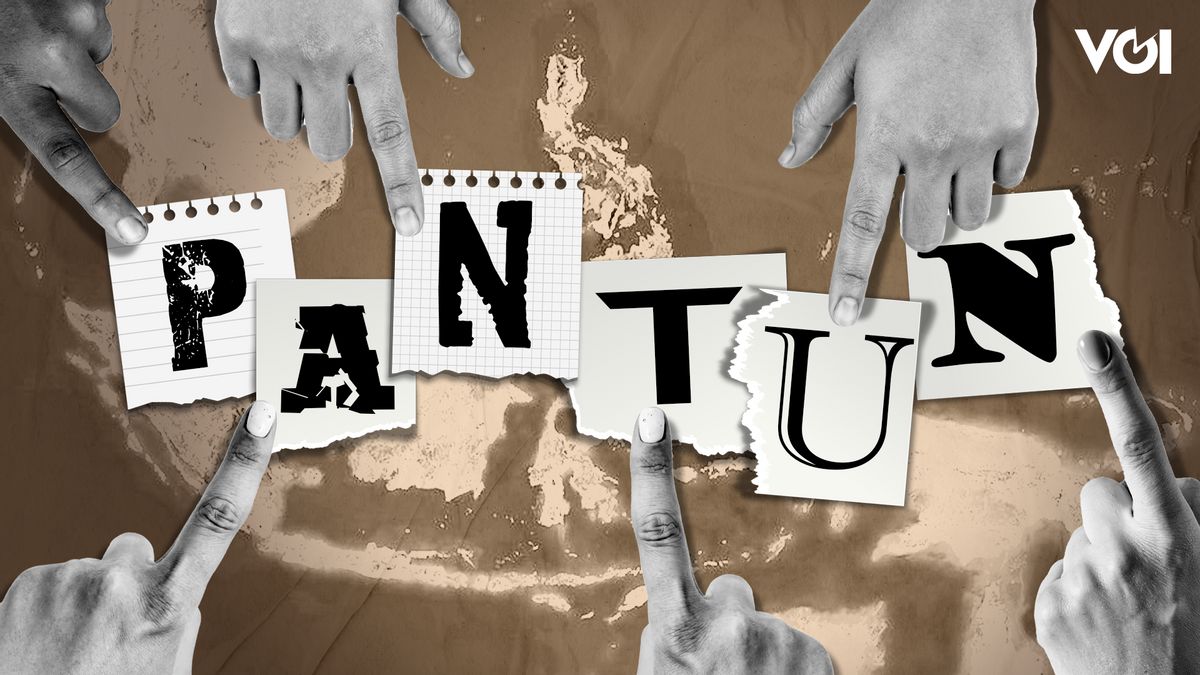
JAKARTA - Pantun is a traditional poem that has become an important part of Indonesian culture. Before getting to know the tradition of writing, rhymes developed as oral literature. Not only as entertainment, pantun also functions as a medium for delivering messages, advice, and cultural values. Pantun emphasizes balance and harmony in human relations.
The development of the rhyme reflects the richness of the culture and local wisdom of the archipelago. The rhyme is passed down from generation to generation and is an important part of communication, traditional ceremonies, and entertainment.
The rhyme is thought to come from the oral traditions of the Malay people. The word "pantun" comes from Minangkabau, "guide", which means "guide or guide". This shows that the rhyme was originally used to provide advice and advice. Over time, rhymes spread to various regions, such as Java, Sundanese, and Bali, with adaptations according to local language and culture.
Pantuns have a diversity of structures and formats. In the culture of the archipelago, pantuns are equivalent to other traditional forms of poetry such as panton, bolichion, rejong, umpasa, pari'an, susulan, siloka, and ende-ende. Meanwhile, in the medium aspect, the rhymes are also known in the form of madihin, doorstops, dermuluk, ronggeng deli, dondang, ronggeng, and pakacaping.
Pantuns are often used in various traditional events, such as weddings, religious ceremonies, and social gatherings. Malay people, Betawi, and other tribes use rhymes as a means of communication in their daily lives.
Pantuns In The Royal And Colonial Periods
In the 19th century, the development of writing and print media documented rhymes in various manuscripts and literary books. Many rhymes appeared in hikayat and poetry, as well as were published in colonial newspapers and magazines.
During the kingdom, rhymes developed in the palace environment. Pantuns are used in traditional ceremonies, weddings, and as a means of diplomacy between kingdoms. In addition, the rhyme conveys moral and spiritual messages in its verses.
In general society, rhymes are present in everyday life. Children use it in games, teenagers in romance, and adults in social interactions. The rhyme structure consisting of four rows with a pass pattern and content makes it easy to remember and inherit.
The entry of Islam into the archipelago in the 13th century had a big influence on rhymes. Pantun is a means of da'wah to spread Islamic teachings. Many rhymes contain moral messages, honesty, and piety. This shows that pantun is not just art, but also educational tools and the spread of religion.
During the Dutch colonial period, the rhymes remained as an expression of culture and resistance. Many rhymes at this time contained satire against the invaders and the spirit of the people's struggle.
Pantun Di Era Modern
Along with the times, rhymes adapt to various aspects of life. Although oral traditions are displaced by modern technology and media, pantuns are still taught in schools as part of a literary curriculum. Pantuns are also used in official events, such as weddings, traditional ceremonies, and cultural festivals.
In 2020, the rhyme was recognized by UNESCO as an Intangible Cultural Heritage from Indonesia and Malaysia. This admission confirms that the rhyme is part of the identity of Malay and Nusantara culture. Pantun does not belong to a tribe or region, but a shared legacy that reflects the richness of Indonesian culture.
Pantun dalam Art dan Budaya Popular
Pantuns often appear in traditional performances such as Betawi lenong, wayang, and ludruk. In people's music, rhymes are also part of the lyrics of songs that describe people's lives.
Technology brings rhymes to the digital realm. Now, rhymes are found on social media, become entertainment content on digital platforms, and are used in social campaigns and commercial promotions.
The history of pantun in Indonesia reflects the richness of local culture and wisdom. From oral traditions to recognized as world heritage, pantun has gone through various historical phases. Pantun is not only art, but also means of education, communication, and resistance. Preserving a rhyme means maintaining a valuable cultural heritage for future generations.
Chairman of the Java FIB Literature Study Program, University of Indonesia (UI), Munawar Holil, sees the phenomenon of the rise of pantuns in the millennial era as a symptom of latah. Many consider pantun as something unique, interesting, or funny. However, UNESCO's recognition on December 17, 2020 made it more than just a trend. The phenomenon of viral rhymes such as "fish fish..." without realizing it helped disseminate the confession.
Munawar, who also serves as General Chair of the Nusantara Pernaskahan Community (MANASSA), who is also an Indonesian Language teacher for Foreign Speakers at UI, explained that pantuns are known in the Sundanese community as Satire, Paparikan, and Wawangsalan. "My hope is that pantun as an Intangible Cultural Heritage can be recognized, inherited, developed, and the benefits are taken to educate the nation. With pantun, we can maintain ethics in speech and behavior," he told VOI, February 19.
The English, Chinese, Japanese, Arabic, and French versions are automatically generated by the AI. So there may still be inaccuracies in translating, please always see Indonesian as our main language. (system supported by DigitalSiber.id)


