
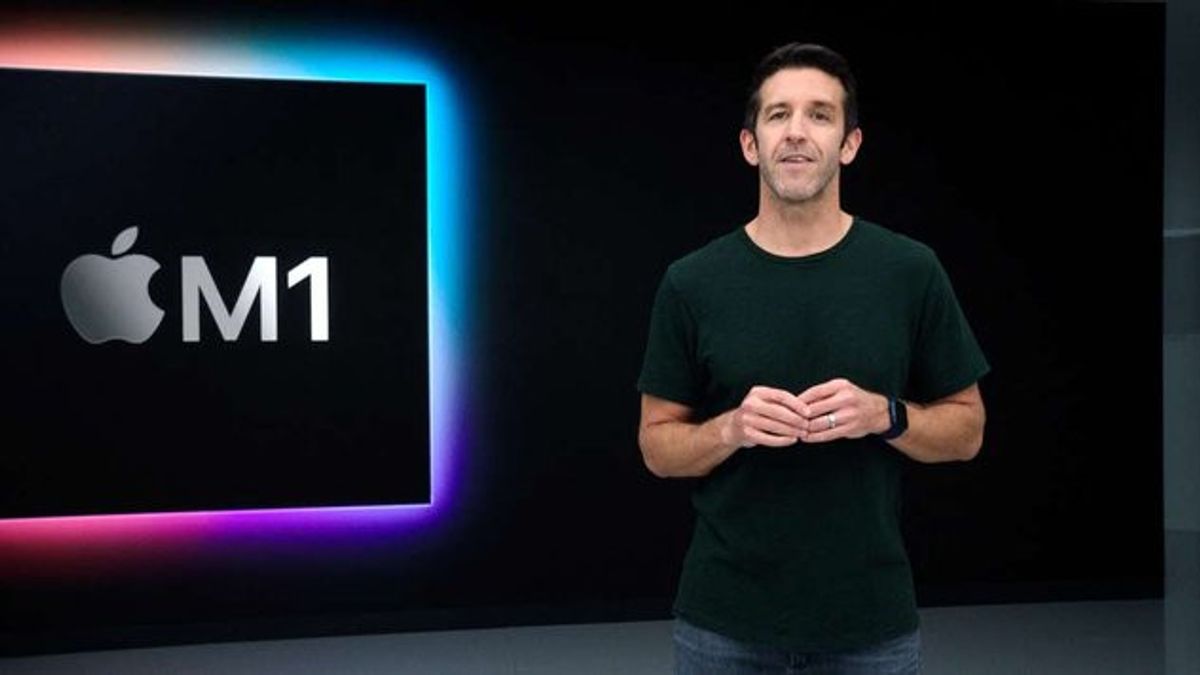


JAKARTA - Apple is entering a strategic transition phase after the appointment of John Ternus as the new CEO, replacing Tim Cook who has led since 2011. This change is not just a leadership succession, but a crucial point for the future direction of the technology giant. Especially in the face of increasingly aggressive artificial intelligence (AI) competition.
In a recent report quoted by Reuters, Wall Street analysts assessed that Ternus' main challenge is to integrate Apple's hardware strengths with AI innovation more aggressively, in order to maintain growth momentum amid a rapidly changing technology landscape.
Apple is now facing pressure from various directions. In addition to falling behind in the generative AI race compared to competitors, the company also has to respond to the protectionist policies of the Donald Trump administration that encourage the relocation of manufacturing to the United States. This factor adds to the complexity of Apple's business strategy, especially in managing the global supply chain.
Furthermore, Apple has even recently lost its status as the world's most valuable company from Nvidia, which has soared thanks to its dominance in the AI chip sector. This has sparked investor concerns about the slow adoption of generative AI by Apple, even though the company was a pioneer with the launch of Siri in 2011.
"Investors want to know if Ternus will really enter the AI race, or continue to follow Cook's approach. There is an expectation that he will move quickly and give his own distinctive features to Apple," said Kathleen Brooks, research director at XTB.
Since Cook's era, Apple's stock value has jumped nearly 20 times to approach a valuation of US$4 trillion. However, the big question now is no longer about who is leading, but rather where the company is headed next.
"The real question for investors is what's next, not who replaces him," said Matt Britzman, senior analyst at Hargreaves Lansdown.
Ternus, who has been at Apple for 25 years and led the development of various generations of iPhones, is expected to be able to drive the integration of AI into the device experience in a more in-depth way. One of the focuses is to maximize collaboration with Google through Gemini technology, to create a more competitive AI-based device ecosystem.
However, a number of analysts predict that Apple's AI strategy changes will take place gradually. Unlike other technology companies that have poured massive investments, Apple is likely to maintain a conservative approach in the short term.
Morgan Stanley said that the shift in AI strategy under Ternus would be long-term oriented, while Evercore ISI assessed that the potential for AI innovation would begin to be seen through the next wave of product launches.
With a combination of geopolitical pressures, technological competition, and market expectations, Ternus' leadership will be the determinant of whether Apple is able to return to the lead - or even fall behind in a new era dominated by artificial intelligence.
Follow VOI Whatsapp Channel
The English, Chinese, Japanese, Arabic, and French versions are automatically generated by the AI. So there may still be inaccuracies in translating, please always see Indonesian as our main language. (system supported by DigitalSiber.id)


