
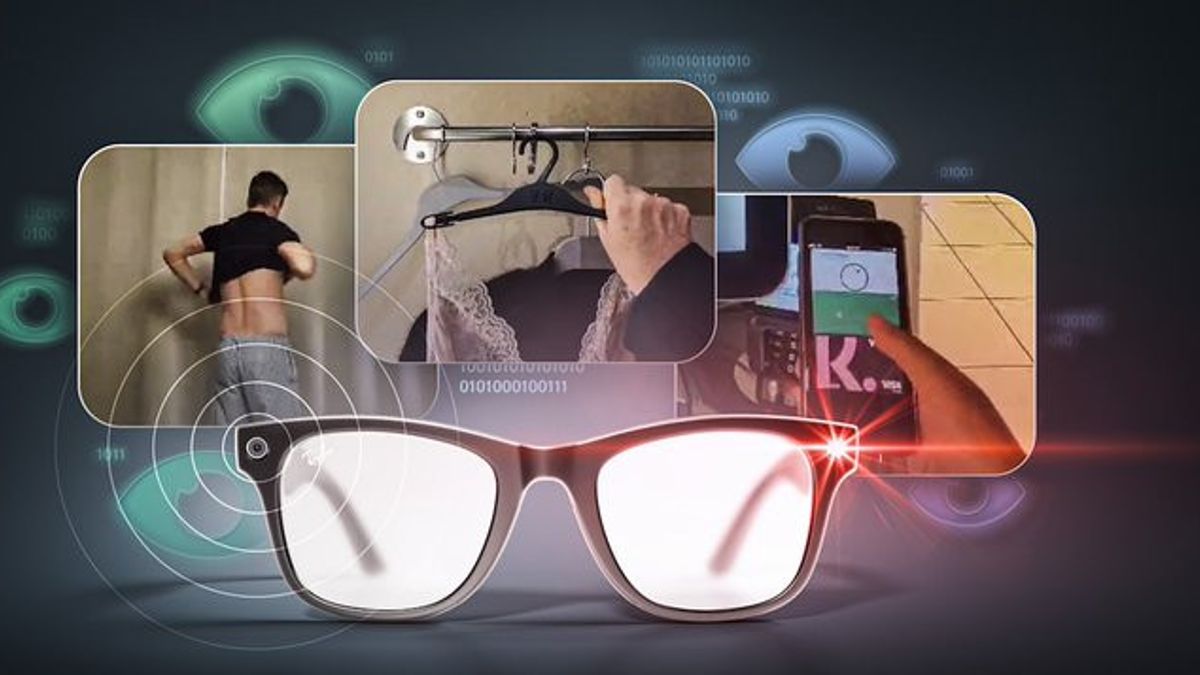


JAKARTA - Users of Meta's AI-based smart glasses in Europe are reportedly at risk of sharing personal footage, including intimate videos and sensitive financial information, with moderators outside the European Union. The findings raise serious questions about privacy, user consent, and compliance with the region's strict data protection rules.
The investigation conducted by the Swedish media Svenska Dagbladet revealed that AI annotation workers in Kenya had reviewed highly sensitive footage. Some moderators admitted to seeing videos of people in the nude, in the bathroom, or having sexual activity. In addition, there are also recordings that accidentally capture credit card numbers and other financial data.
The devices in question include the Ray-Ban Meta Smart Glasses model, which allows users to record the surrounding environment or ask questions through the built-in AI assistant.
To activate the feature, users are required to agree to terms and conditions that allow human review of data. This annotation process is needed to train large language models and visual AI systems, which rely on labeled audio and video data.
The problem is, many users may not realize the extent to which their personal data can be transferred. The report said most of the material reviewed ended up in Nairobi, where moderators work in conditions described as quite stressful.
In the context of European regulations, this practice comes into direct contact with data protection rules that require transparency about how personal information is processed and where the data is sent, especially if it is transferred outside the European Union.
This wearable device privacy policy is said to be not easily accessible and understood. In it, it is stated that sensitive content can be reviewed by both automated and human systems. However, the responsibility for not sharing personal information is ultimately borne by the user.
Technically, this is the paradox of modern AI. To make systems smarter and more contextual, companies need real-world data. But the real world is full of intimate moments, financial details, and fragments of life that were never meant to be the material of algorithm training. Every "agree" click on the terms of use can be a long bridge from the private living room to the moderator's work desk thousands of kilometers away.
This case once again highlights the ethical challenges in the development of AI-based wearable devices. Cameras mounted on the face offer convenience and sophistication, but also create the potential for unseen surveillance. In an era where devices are increasingly integrated with the body, the line between personal experience and machine training data is becoming increasingly thin.
The English, Chinese, Japanese, Arabic, and French versions are automatically generated by the AI. So there may still be inaccuracies in translating, please always see Indonesian as our main language. (system supported by DigitalSiber.id)
Popular


