
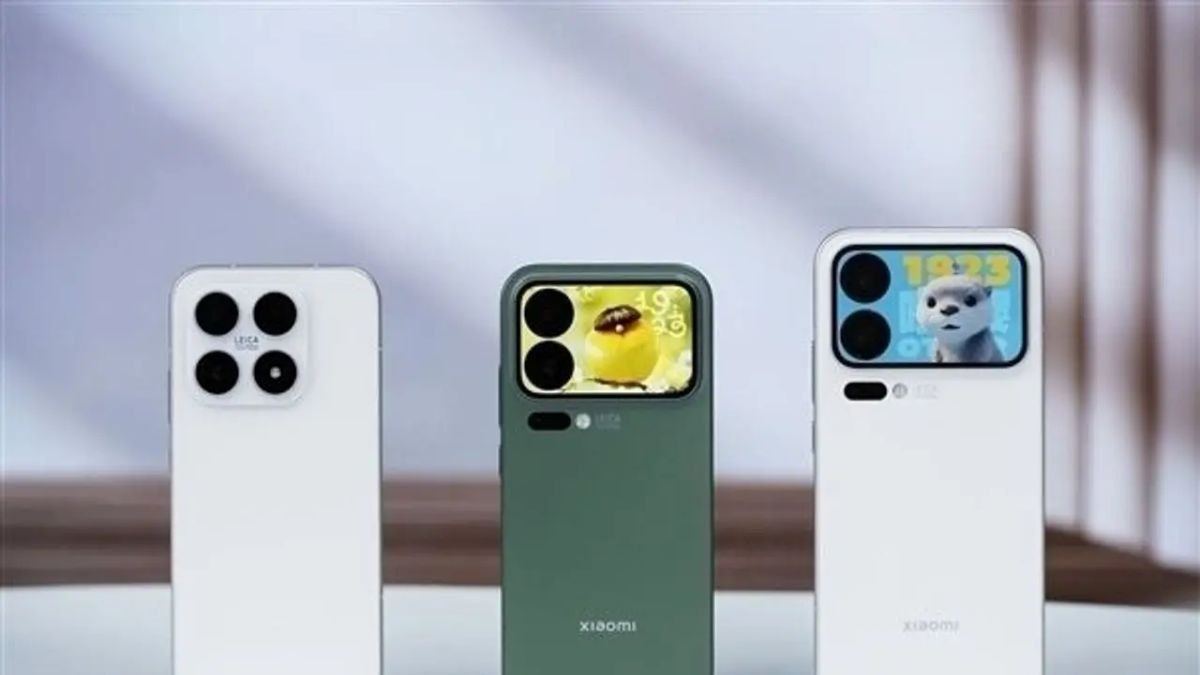


JAKARTA - A new wave of privacy features seems to be rising to a new level. A number of Chinese flagships scheduled to launch around September could potentially bring "anti-peep" screen technology - from software filters to hardware solutions inside the screen panel. According to the hardware-based Digital Chat Station tipster, similar to the approach promoted on the Samsung Galaxy S26 Ultra.
If this information is accurate, then the industry is moving from private screen protectors and software-based dim modes to optical engineering at the OLED panel level. This means that viewing angle restrictions no longer rely on additional accessories, but are embedded directly in the screen structure.
Digital Chat Station said that the Chinese domestic manufacturer is testing a new generation of anti-peeping screen designs for the flagship that will be available in the third quarter. This approach is claimed to be able to reduce the visibility of content from the side angle, so that people in the next seat can't read your messages or notifications on the train.
Names that are said to potentially carry this feature include the Xiaomi 18 series which is rumored to use the Snapdragon 8 Elite Gen 6, as well as the Vivo X500 line with Dimensity 9600. Both are expected to launch around September in China. If the panel test is successful, this privacy feature is likely to only be available in the highest variant - Pro Max or Ultra - following a premium differentiation pattern.
For comparison, the Galaxy S26 Ultra is reportedly relying on advanced OLED controls to selectively limit viewing angles. Instead of simply dimming the screen, this technology is said to manipulate the distribution of light so that the content remains clear from the front but distorted or dark from the side. Some early reports also mention customization options, such as automatic activation when opening sensitive applications or hiding certain elements such as notifications and passwords.
If it is widely adopted, this could be a significant shift in premium smartphone design. So far, flagship differentiation has largely been based on cameras, chipsets, and charging speeds. However, with the increasing awareness of digital privacy - especially in public spaces - visual protection could be a new selling point.
Other manufacturers scheduled to launch in a similar period include Oppo with the next generation of the Find X series, Honor with the latest Magic, to iQOO, OnePlus, and Realme. There is no confirmation yet whether they will also adopt similar technology, but competitive trends usually move quickly if one player manages to pack it as a real premium feature that benefits.
From an industry perspective, the move makes sense. Software can disguise, but the physics of light determine who can actually see. If hardware anti-peeping screens become standard in the high-end, then 2026 may be remembered as the year when visual privacy stopped being an accessory and graduated to a core feature. In an era where data is an asset, even a point of view becomes an innovation field.
The English, Chinese, Japanese, Arabic, and French versions are automatically generated by the AI. So there may still be inaccuracies in translating, please always see Indonesian as our main language. (system supported by DigitalSiber.id)
Popular


