
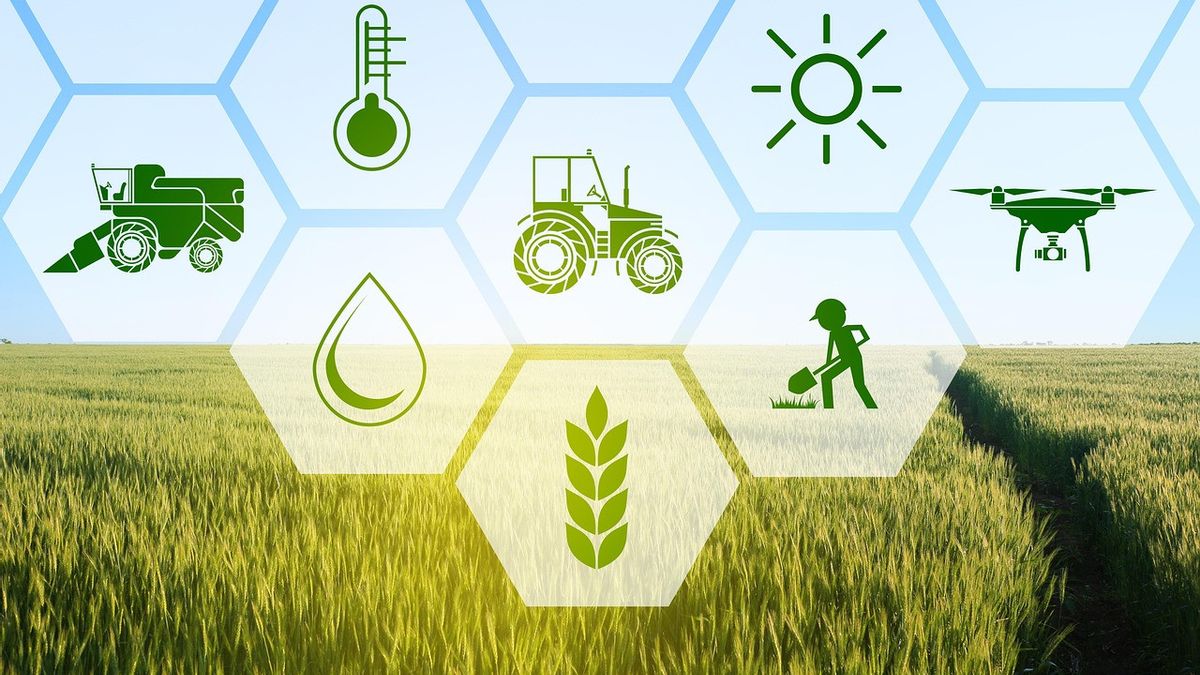


YOGYAKARTA Artificial Intelligence (AI) offers unprecedented opportunities for the environment and agriculture. In the context of environmental monitoring, the use of AI can help humans to observe natural conditions and analyze environmental data in real-time.
Meanwhile, in the agricultural sector, this technology can encourage the creation of smart farming that can optimize resources and increase productivity. To better understand it, let's explore how AI applications for environmental monitoring and smart farming in the following article.
The following are some examples of AI applications for environmental monitoring and smart farming:
Environmental Monitoring
In the context of environmental monitoring, AI can be used to monitor environmental changes, predict weather and disasters, and monitor air quality with a high level of accuracy.
SEE ALSO:
-
 | TEKNOLOGI
Bikin Konten Unik, Begini Cara Pakai Fitur Reverse Video di Aplikasi CapCut
26 Oktober 2025, 19:15 -
 | TEKNOLOGI
Halo: Campaign Evolved akan Dirilis 2026, Remake Penuh dengan Visual 4K Baru
26 Oktober 2025, 18:15 -
 | TEKNOLOGI
Teknologi Robotika Kolaboratif dalam Manufaktur: Keunggulan dan Manfaat Penerapannya
26 Oktober 2025, 18:05 -
 | TEKNOLOGI
Instagram Luncurkan Fitur Watch History untuk Temukan Riwayat Tontonan Reels
26 Oktober 2025, 17:17 -
 | TEKNOLOGI
Kawasan Indo-Pasifik Hadapi Peningkatan Risiko AI pada Infrastruktur Penting
26 Oktober 2025, 16:24
The resulting data can help environmental institutions in taking evidence-based policies to keep the ecosystem balanced. The explanation is as follows:
AI integrates with satellite images and drones to monitor environmental changes, such as deforestation, land conditions, and ecosystems. The computer vision algorithm can analyze these images to detect anomalies or changes over time.
By analyzing historical and real-time data from weather stations and satellites, AI can predict more accurate weather patterns, including storms, floods and drought. This information is critical to disaster mitigation and resource planning.
Sensor networks connected to AI systems can actually monitor air and water quality parameters. AI can detect increased pollutants levels and predict pollution spread.
Smart Farming
While in the smart farming field, the application of AI can help detect plant disease, control weeds automatically, to provide a precise irrigation system.
In the context of smart farming, AI has made significant progress in early detection and diagnostic of plant disease, quoted from the Basic AI page.
A study published in the journal Computer and Electronics in Agriculture shows the ability of the AI system to detect crackers in apples. By utilizing an artificial neural network that has been trained in the Apple leaf image data set, this system can detect diseases with an accuracy of 95 percent.
In smart farming, the AI application is also able to provide an automatic weeds control system. This technology utilizes machine learning and computer vision to accurately distinguish plants and weeds.
An example is See and Spray technology developed by Blue River Technology. This system uses high-resolution cameras and AI algorithms to identify weeds among plants. This technology can reduce the use of chemical herbirides by up to 90 percent, thereby reducing costs and labor.
Along with the development of AI technology, the precision irrigation system is now revolutionizing the way water resources are managed in the agricultural sector. Through the integration of various data such as soil moisture, weather conditions, and plant specific needs, the AI algorithm is able to accurately regulate the volume of water given to each land, so that plants obtain optimal hydration.
That's information about AI applications for environmental monitoring and smart farming. Hopefully this article can add insight to readers. To get other selected news updates, keep reading VOI.ID.
The English, Chinese, Japanese, Arabic, and French versions are automatically generated by the AI. So there may still be inaccuracies in translating, please always see Indonesian as our main language. (system supported by DigitalSiber.id)
Most Popular Tags
#Prabowo Subianto #donald trump #Febrie Adriansyah #8791 #giias 2026Popular


