
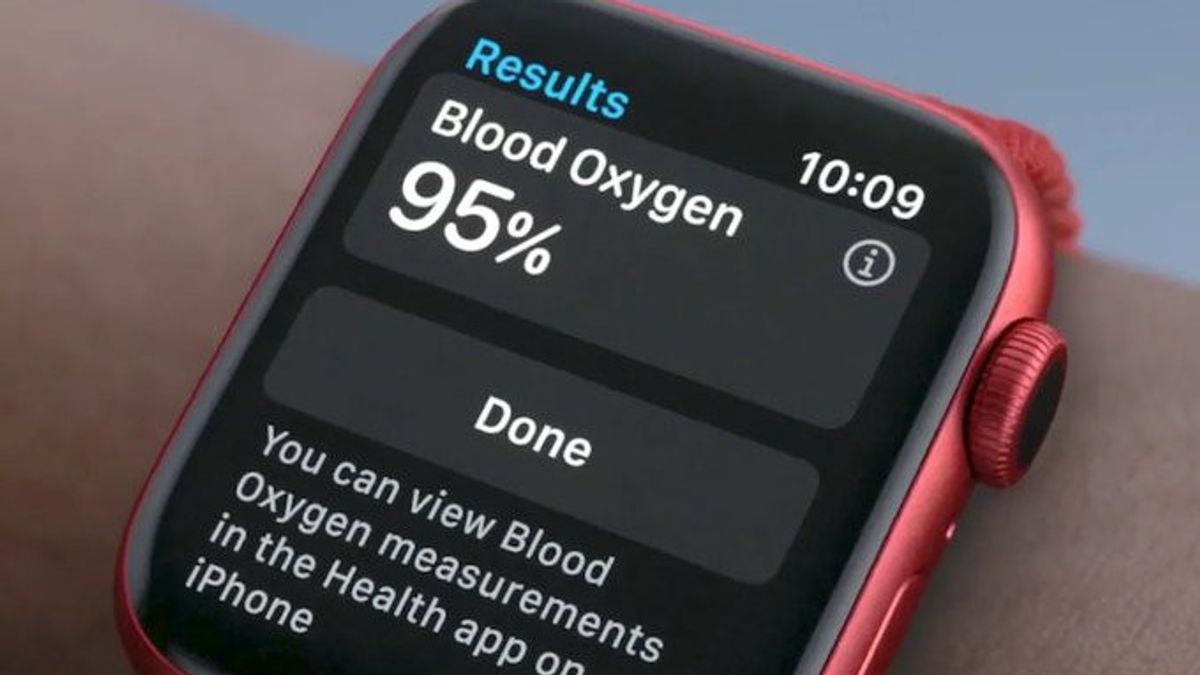


JAKARTA - Apple is again facing legal problems related to the blood oxygen gauge feature (Blood Oxygen) on Apple Watch. Despite having received approval from Customs and Border Protection of the United States (CBP), the decision was apparently not sufficient to ensure the permanent sustainability of the feature. The United States International Trade Commission (ITC) can still intervene and potentially force Apple to reactivate it.
On August 14, 2025, Apple surprised users by announcing the return of the Blood Oxygen feature in the United States. The feature was immediately available through an update of iOS 18.6.1 and watchOS 11.6.1. At that time, Apple explained that the recovery of this feature was possible thanks to the latest decision from US Customs, without providing further details.
According to a Bloomberg Law report on August 23, the decision came from an "internal device trading" issued by the central CBP on August 1. The Ruling allowed Apple to use technical solutions to address the import ban from ITC, which was previously imposed due to a lawsuit by medical device company Masimo. Masimo accused Apple of violating its patents related to blood oxygen measurement technology.
As a precaution, Apple had disabled the feature through software restrictions, which could reopen if Apple won the legal process in the future. However, the latest solution used by Apple is also software-based, by moving the blood oxygen measurement process from the Apple Watch processor to the connected iPhone.
SEE ALSO:
-
 | TEKNOLOGI
Pakar: Zeolit Di Solok Berpotensi Jadi Sumber Baru Ekonomi Rakyat
23 Agustus 2025, 18:24 -
 | TEKNOLOGI
Google Izinkan Penukaran iPhone dan Samsung Galaxy dengan Seri Pixel 10
23 Agustus 2025, 16:19 -
 | TEKNOLOGI
BRIN Bermitra dengan i-CATS untuk Kembangkan Riset Penerbangan dan Antariksa
23 Agustus 2025, 16:00 -
 | TEKNOLOGI
Kuwait Blokir Roblox Demi Lindungi Anak-anak dari Konten Berbahaya
23 Agustus 2025, 15:57 -
 | TEKNOLOGI
Bocoran Spesifikasi iPhone 17e: Apa yang Dapat Diharapkan dari Ponsel Terbaru Apple?
23 Agustus 2025, 15:35
Although considered a clever move, Apple's legal action caused controversy. Masimo filed a new lawsuit, saying Apple had no right to reactivate the feature based solely on a CBP decision, without waiting for the authorities from ITC.
Masimo argues that CBP has exceeded its authority because the role of the institution should only enforce the ITC's decision, not make decisions in patent disputes. In addition, CBP is also considered not to provide an opportunity for Masimo to engage in discussions.
Masimo added that although Apple changed the way the feature works, the modification still violated the patent through the equivalents doctrine, which is a rule that includes changes that are considered not to be substantially different' from existing patent claims.
On August 21, ITC confirmed that it was aware of the new lawsuit and stated that it was evaluating the case. ITC admitted that it was 'worry' about the situation related to the institution's authority in the patent dispute. According to ITC records, similar cases that had occurred before were eventually transferred to ITC for further processing.
In short, ITC emphasized that even though it was not involved in the CBP decision, the agency should still have the main authority. The ITC now opens up opportunities to assess the validity of Apple's solutions, and if deemed infringement, Apple could be forced to re-disabling the Blood Oxygen feature, even facing additional sanctions.
This case also opens new debates over the limits of authority between ITC and CBP, as well as whether CBP really has the right to rule out ITC decisions in technology patent cases.
The English, Chinese, Japanese, Arabic, and French versions are automatically generated by the AI. So there may still be inaccuracies in translating, please always see Indonesian as our main language. (system supported by DigitalSiber.id)


