
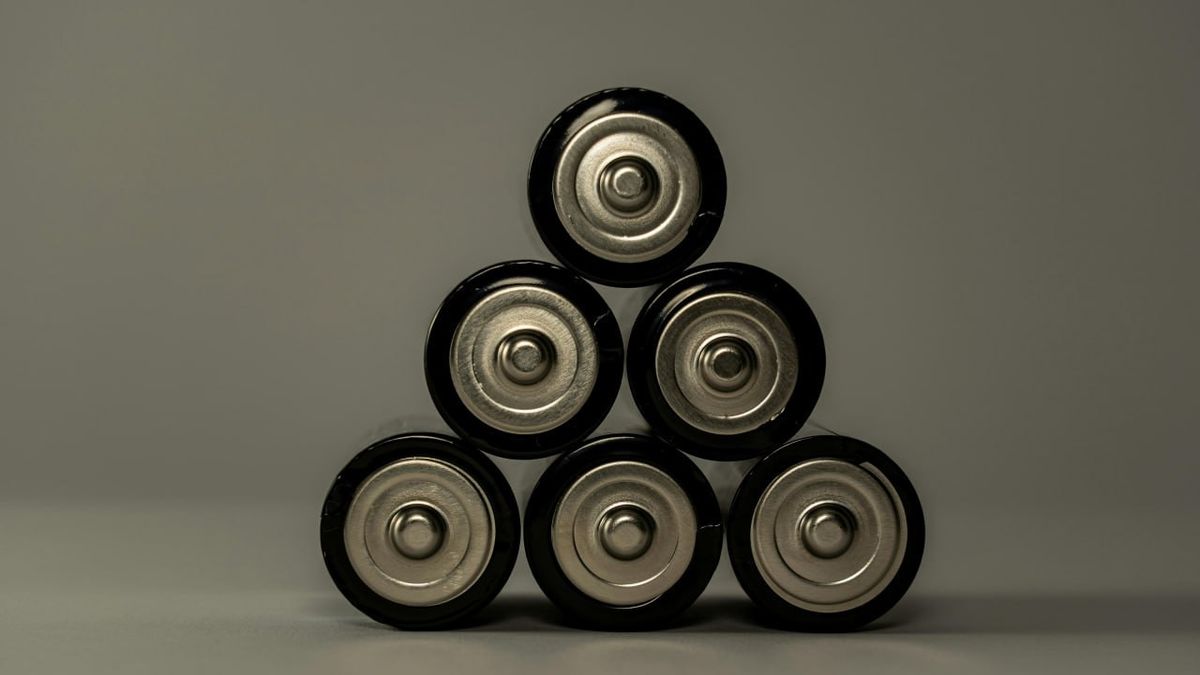


YOGYAKARTA - In the midst of the increasing energy demand, especially in electronic devices and electric vehicles, battery technology continues to develop. One of the most promising innovations in recent years is graphene batteries.
Known for its high efficiency, longer resilience, and fast charging processes, graphene-based batteries are predicted to replace lithium-ion batteries that have dominated the market.
So, what are the main advantages of graphene batteries that make them so special? Summarized from various sources, here are the advantages of graphene batteries.
One of the most prominent advantages of graphene batteries is its ability to charge much faster than conventional batteries. Very thin and conducting graphene structures allow ion and electron flows to take place more efficiently.
If the standard lithium-ion battery takes about 1 to 2 hours to charge fully, the graphene battery can charge up to 100 percent in just a matter of minutes. This is a major breakthrough for smartphone users, laptops, and electric vehicle owners who need fast charging in the midst of high mobility.
Graphene has a higher energy storage capacity than lithium-ion. That is, in the same size and volume, graphene batteries are able to store more energy. This allows manufacturers to design smaller and lighter batteries, but last long.
This advantage is very important in the development of wearable devices, drones, and electric cars that prioritize light weight and high durability.
One of the biggest challenges in battery technology is heat management. Batteries that are too hot can lower performance, accelerate degradation, and even trigger fire risk.
Graphene has extraordinary thermal conductivity, so it can spread the heat more evenly and quickly. This makes the graphene battery more stable, safe, and resistant to extreme temperatures.
The graphene battery has a longer lifespan than lithium-ion. In many trials, the graphene battery is able to undergo more charging cycles without a significant loss of capacity.
If the average lithium-ion battery starts to decline in performance after 500 to 1,000 charging cycles, the graphene battery can last up to more than 2,000 cycles. This means that users don't need to change batteries too often, which of course has an economic and environmental positive impact.
In terms of sustainability, graphene batteries are considered more environmentally friendly. The production process of graphene, although still growing, has the potential to produce less chemical waste than lithium-ion production.
In addition, due to longer graphene battery life, the amount of electronic waste due to battery replacement can be reduced. This is in line with the industrial trend that leads to green and sustainable technology.
Graphene is light, flexible, and powerful material, so it is suitable for use in future electronic devices that require a thin battery and can be formed according to design.
Some research even shows the potential for using graphene batteries on folding screens, smart wearables, and bionic technology.
Despite promising many advantages, graphene batteries still face several challenges. One of them is high production costs. This technology is still relatively new and has not been mass-produced on a large scale. In addition, standardization and regulation are also still in the development stage, so market adoption is still limited.
However, with the increasing investment and global research in this area, experts are optimistic that the cost of graphene batteries will be more competitive in the coming years. Several large technology companies have even started developing prototypes and integrating graphene in their products.
The English, Chinese, Japanese, Arabic, and French versions are automatically generated by the AI. So there may still be inaccuracies in translating, please always see Indonesian as our main language. (system supported by DigitalSiber.id)
Most Popular Tags
#Prabowo Subianto #donald trump #2026 World Cup #venezuela #konflik timur tengahPopular


