
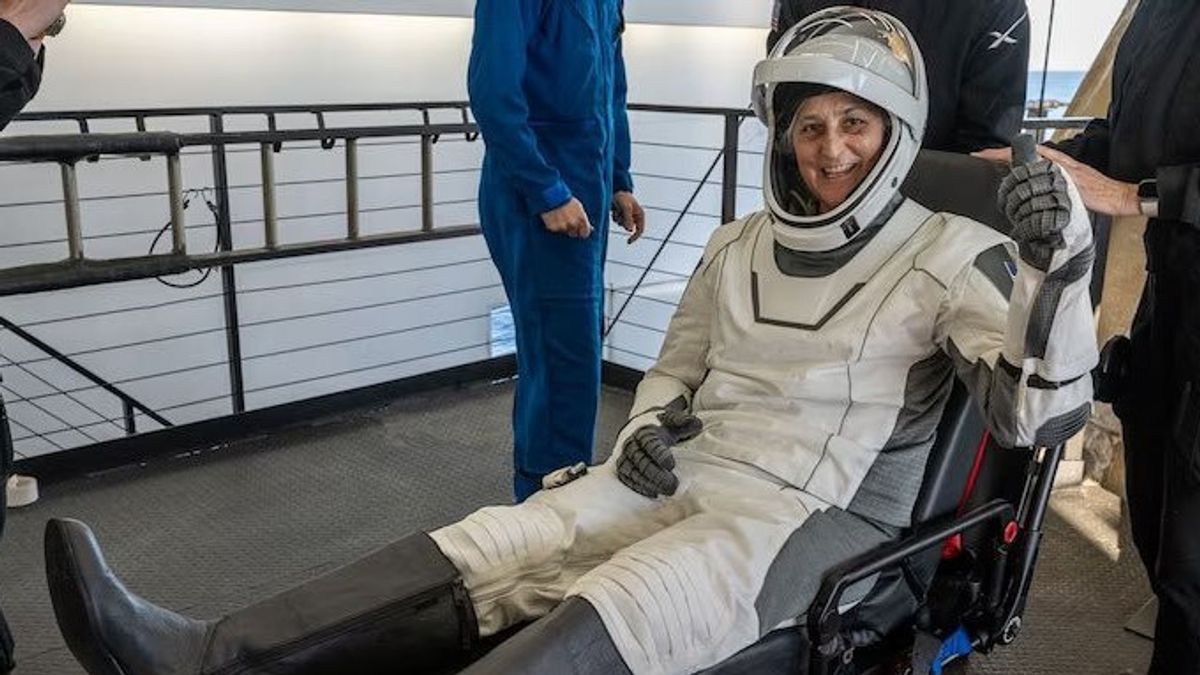


NASA is considering requiring Boeing to conduct a third unmanned trial of the Starliner capsule before being reused to carry astronauts. The requirement comes after a series of technical problems that left two NASA astronauts stranded on the International Space Station (ISS) for nine months.
Astronauts Butch Wilmore and Suni Williams, who boarded the Starliner capsule to the ISS in 2024, finally returned to Earth on Tuesday 18 March using SpaceX's Crew Dragon capsule. This decision was taken after Boeing struggled to improve the Starliner propulsion system which failed in its manned test mission.
The Starliner development program has been one of the big challenges for Boeing, with costs that have swelled by more than $2 billion. The capsule is designed to compete with Elon Musk's Crew Dragon and provides NASA with a second option for astronaut transport to low Earth orbit.
However, before getting certification from NASA for regular flights, Starliner may need to undergo one additional unmanned trial. This will be the fourth test after the previous two unmanned tests in 2019 and 2022.
"We are considering several options for Starliner, including the possibility of running additional unmanned flights if needed," Steve Stich, NASA's Head of Commercial Crew Program, said at a press conference on Tuesday evening.
According to him, Starliner flights with crew last year did complete several important tests related to control and operation of capsules by astronauts. However, additional tests may be needed to ensure Starliner's propulsion system can work well in space, something difficult to simulate on Earth.
The main problem that befell Starliner is the failure of five of its booster engines on its way to the ISS, as well as the helium leak used to suppress the propulsion system. This situation made NASA decide to have Starliner return to Earth unmanned in September 2024 because it was deemed too risky to bring astronauts back.
Boeing plans to conduct ground-based propulsion system testing this summer to ensure improvements are effective. However, the failures for the failures experienced by Starliner make its future even more uncertain, especially in competition with SpaceX.
Currently, SpaceX's Crew Dragon has completed 11 missions with NASA astronauts since its first manned test in 2020. Meanwhile, Starliner is still struggling to prove its worth in space missions.
SEE ALSO:
-
 | TEKNOLOGI
Gim Netflix Spirit Crossing Akan Diluncurkan untuk Pengguna iOS dan Android
20 Maret 2025, 19:10



On the other hand, Boeing also has a long-term plan to make Starliner a space taxi for commercial space stations being developed by various parties. However, without NASA certification, the project could be threatened with failure.
Since 2016, Boeing has spent more than $2 billion to cover Starliner's development and repair costs. Meanwhile, the company's fixed contract with NASA worth USD 4.2 billion (IDR 69.1 trillion) for Starliner's development and mission has increased by USD 326 million (IDR 5.3 trillion) since it was granted in 2014. To date, Boeing has received around USD 2.2 billion (IDR 36.2 trillion) of the total fund.
Meanwhile, SpaceX's initial contract with NASA worth US$3 billion (Rp49.4 trillion) in 2014 has now increased to nearly US$5 billion (Rp82.3 trillion), thanks to the addition of a new mission provided by NASA due to Starliner's delay.
With Boeing's continued challenges, the big question now is whether NASA will continue to maintain Starliner as a second option in its space transportation program, or it will depend more on SpaceX.
The English, Chinese, Japanese, Arabic, and French versions are automatically generated by the AI. So there may still be inaccuracies in translating, please always see Indonesian as our main language. (system supported by DigitalSiber.id)
Popular


