

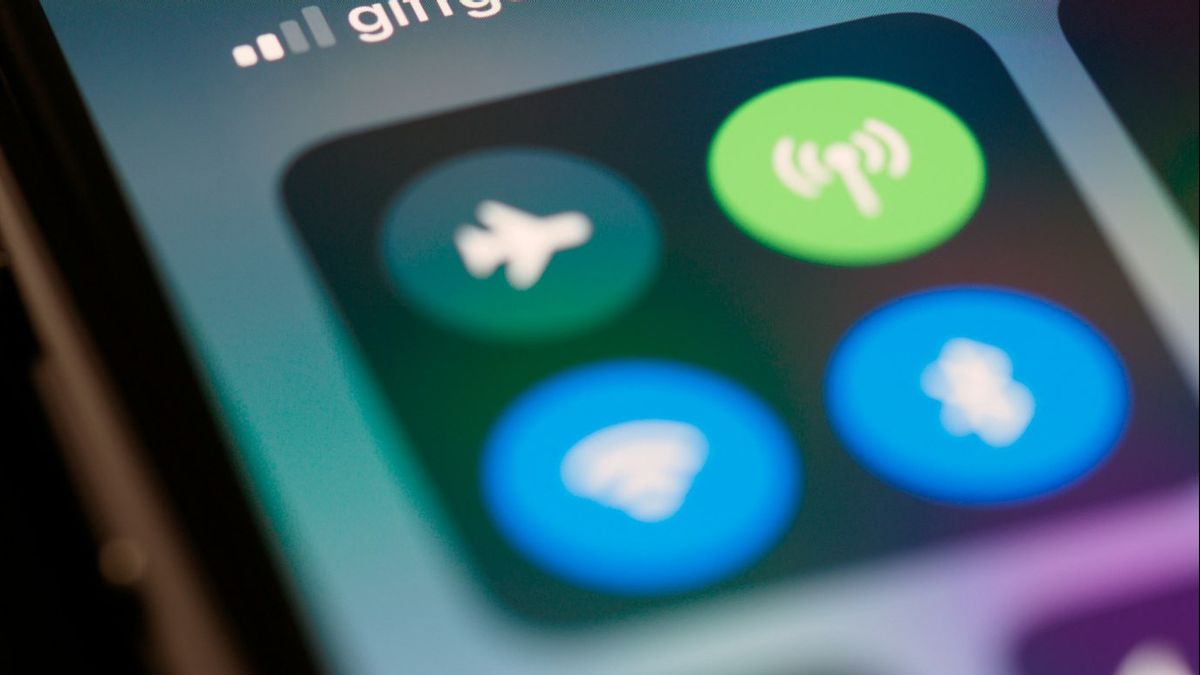


JAKARTA - Turning off Wi-Fi and Bluetooth features on a smartphone is not the right way to save battery. Instead, this way is more troublesome than providing benefits.
This happens because modern wireless radios are designed to work with energy-efficient technology support. Like Bluetooth Low Energy for example, this technology consumes almost no power in the active position as long as it is not connected to any device.
In a test conducted by Makeusof within 24 hours, the difference in battery consumption between the features that are turned off and active is only 3.4 percent. This figure proves that the impact of turning off Wi-Fi and Bluetooth is not too big.
This test was conducted on Samsung Galaxy Note 20 Ultra and Galaxy Z Flip 6 devices in total silence. The results show that the power drained while Wi-Fi and Bluetooth are active is only about 0.71 percent per hour.
The test results also revealed that turning on Wi-Fi is much more power efficient than using cellular data. Cellular data requires up to 500mW of power, while Wi-Fi requires around 30mW to connect to the network.
The drastic battery drain occurs when the phone is forced to connect to a very weak or unstable Wi-Fi signal. In one bar condition, the battery can be drained three times faster because the device works extra to maintain an internet connection.
Leaving Wi-Fi on also provides users with an advantage in terms of GPS accuracy. In addition, activating Bluetooth is also important because the lost device tracking feature requires this technology.
Turning off these two features only needs to be done in extreme emergencies, for example when the battery is almost completely depleted. For normal daily use, Wi-Fi and Bluetooth can be left on so that the device works more optimally.
The English, Chinese, Japanese, Arabic, and French versions are automatically generated by the AI. So there may still be inaccuracies in translating, please always see Indonesian as our main language. (system supported by DigitalSiber.id)


