


JAKARTA - Cyber security is now a crucial issue as people's dependence on digital technology increases.
The development of artificial intelligence not only brings convenience, but also opens new loopholes for cybercrime that is increasingly sophisticated, fast, and difficult to detect. Digital threats are no longer abstract, but are present in the daily activities of citizens.
Deputy Minister of Communication and Digital (Wamenkomdigi) Nezar Patria reminded that cyber attacks in the era of artificial intelligence (AI) have targeted the lives of the general public directly.
According to him, the risk of digital security is no longer limited to banks, personal identities, and even everyday devices.
"Attacks now do not always require user interaction. There is a so-called zero click attack, where the incoming message is enough to activate malware," said Nezar Patria in an official statement received in Jakarta, Sunday.
He explained that the use of AI makes cyber attack patterns change to be much faster and large-scale. Automation allows criminals to scan millions of systems in a short time and choose targets that are considered to have high value.
"Based on the Boston Consulting Group (BCG) data in December 2025, the rate of cyber attacks exceeds defense capabilities. This is what makes many people become victims without realizing it," he said.
Nezar also emphasized that cyber threats are not only technical, but also exploit the emotional side of humans. AI technology is now able to imitate a person's face and voice with a high degree of similarity.
"Faces and voices can be very convincingly faked. The modus operandi is very personal, so that the victim is easily believed because they think they are interacting with someone they know," he said.
He added that conventional protection systems are increasingly vulnerable in the face of advances in AI and quantum computing research. Passwords that have been the mainstay are no longer considered adequate for the long term.
"The passwords we use today may one day lose their relevance. The world is heading towards a post-quantum era," explained Nezar.
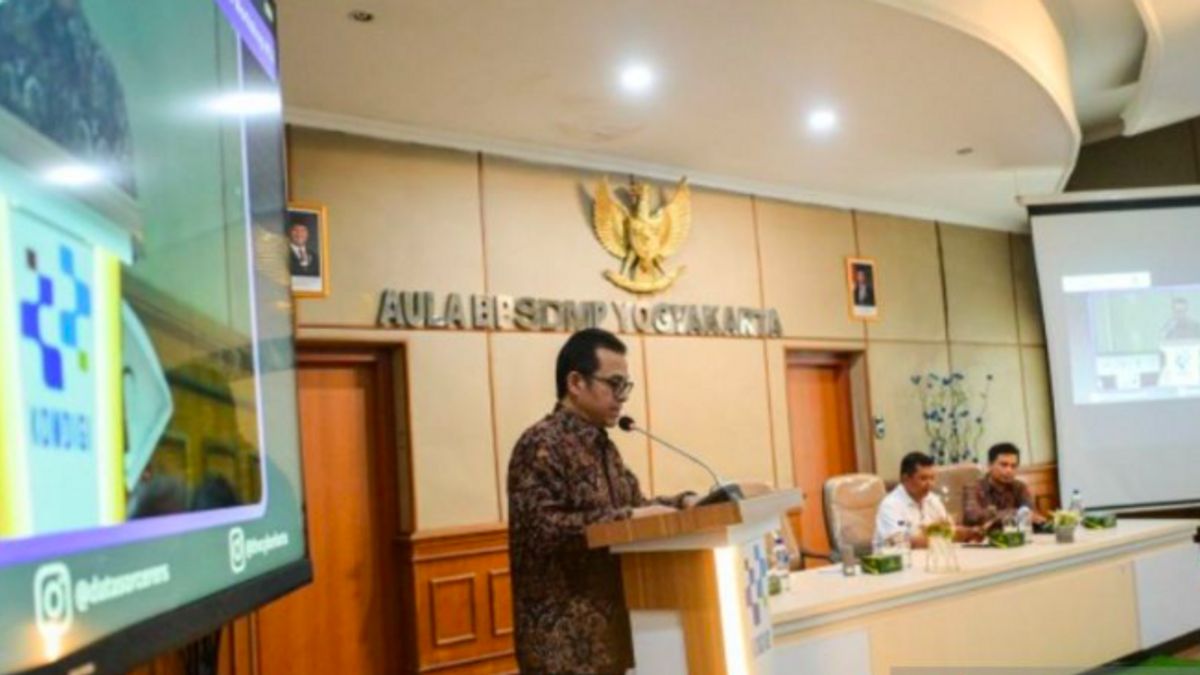
When opening the Cybersecurity Workshop at BPSDMP Komdigi Yogyakarta, Bantul, DI Yogyakarta, Saturday (31/01/2026), Nezar emphasized that there is no absolute safe zone in the digital space as long as devices are connected to each other in a network.
Threats can come from a variety of sources, ranging from smartphones, applications, to simple devices used in daily life.
"As long as we are connected, there is no such thing as truly safe in the digital space," he said.
To protect the community, the Ministry of Communication and Digital encourages the implementation of the security by design approach. Security principles must be part of the early stages of system development, not just a response after an incident occurs.
"Cybersecurity is not just a matter of technology, but also concerns habits, awareness, and leadership," concluded Nezar.
Through the strengthening of digital talent and national security architecture, Kemkomdigi emphasized the country's commitment to protecting citizens in the digital space amid the rapid development of artificial intelligence.
The English, Chinese, Japanese, Arabic, and French versions are automatically generated by the AI. So there may still be inaccuracies in translating, please always see Indonesian as our main language. (system supported by DigitalSiber.id)


