
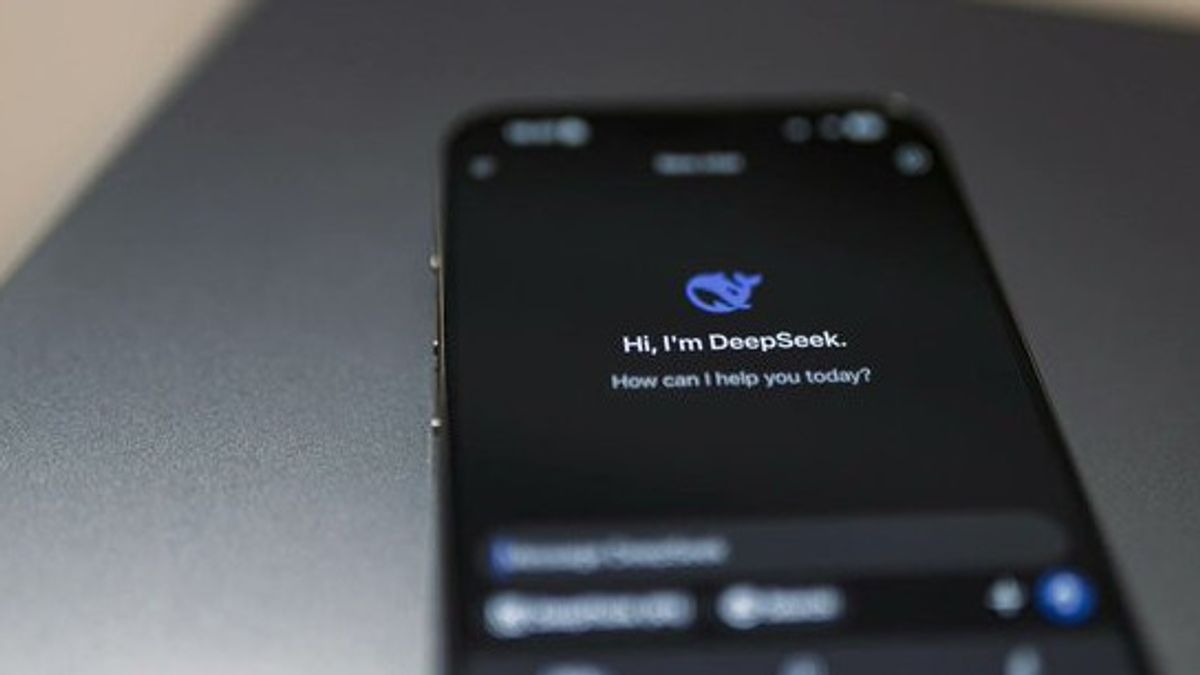


JAKARTA - Chinese artificial intelligence startup DeepSeek is now facing scrutiny from governments and regulators in a number of countries. The company previously claimed to have developed an AI model that is capable of rivaling ChatGPT at a much lower cost. However, DeepSeek's security policies and data protection practices have sparked concerns in various jurisdictions.
Based on its own privacy policy, DeepSeek stores various user personal data, including requests to AI programs and uploaded files, on servers located in China. This raises concerns about data security, privacy, and potential access by local authorities.
A number of countries have taken firm steps against the use of DeepSeek services. In Australia, the government in early February banned the use of DeepSeek on all government devices because it was considered a risk to national security.
The Czech Republic also imposed a similar ban in July, banning all government agencies from using DeepSeek services due to data security concerns.
In France, the data protection authority in January 2025 stated that it would request clarification from DeepSeek to better understand how the AI system works and the potential privacy risks for users.
Meanwhile, Germany has asked Apple and Google to remove the DeepSeek app from their app stores due to data security concerns.
India is also taking preventive measures. The Indian Ministry of Finance has asked its employees to avoid using AI tools, including ChatGPT and DeepSeek, for official purposes because they are considered risky for the confidentiality of government documents and data.
Italy briefly blocked the DeepSeek app in January 2025 due to a lack of information regarding the use of personal data. However, the Italian competition authority later closed its investigation into DeepSeek's alleged failure to warn of potential misinformation, after the company agreed to a number of binding commitments.
The Netherlands, through its data protection authority, announced an investigation into DeepSeek's data collection practices and urged people to be cautious when using the software. The Dutch government also banned civil servants from using the app, citing a policy against countries with offensive cyber programs.
In South Korea, data protection authorities in mid-February suspended new downloads of the DeepSeek app after the company admitted it had not fully complied with personal data protection rules. Government employees' access to the app was also temporarily blocked, before the service was made available again at the end of April.
Taiwan also banned all government agencies from using DeepSeek, citing security risks, potential censorship, and the possibility that user data ends up in China.
A different attitude is seen in Russia. President Vladimir Putin in early February actually instructed Sberbank to cooperate with Chinese researchers in joint AI projects, including with relevant parties in China.
In the United States, President Donald Trump's administration is reportedly considering sanctions that could prevent DeepSeek from buying US technology, as well as discussing possible restrictions on Americans' access to the service.
In addition, a group of US lawmakers urged the Department of Defense to include DeepSeek on the list of companies suspected of assisting the Chinese military. Previously, a number of Republican senators had also asked the Department of Commerce to evaluate the potential security vulnerabilities of Chinese open source AI models, including DeepSeek.
This increased global scrutiny shows that data security and privacy issues are a major factor in the acceptance of AI technology across countries, especially those developed by companies from China.
The English, Chinese, Japanese, Arabic, and French versions are automatically generated by the AI. So there may still be inaccuracies in translating, please always see Indonesian as our main language. (system supported by DigitalSiber.id)
Popular


