
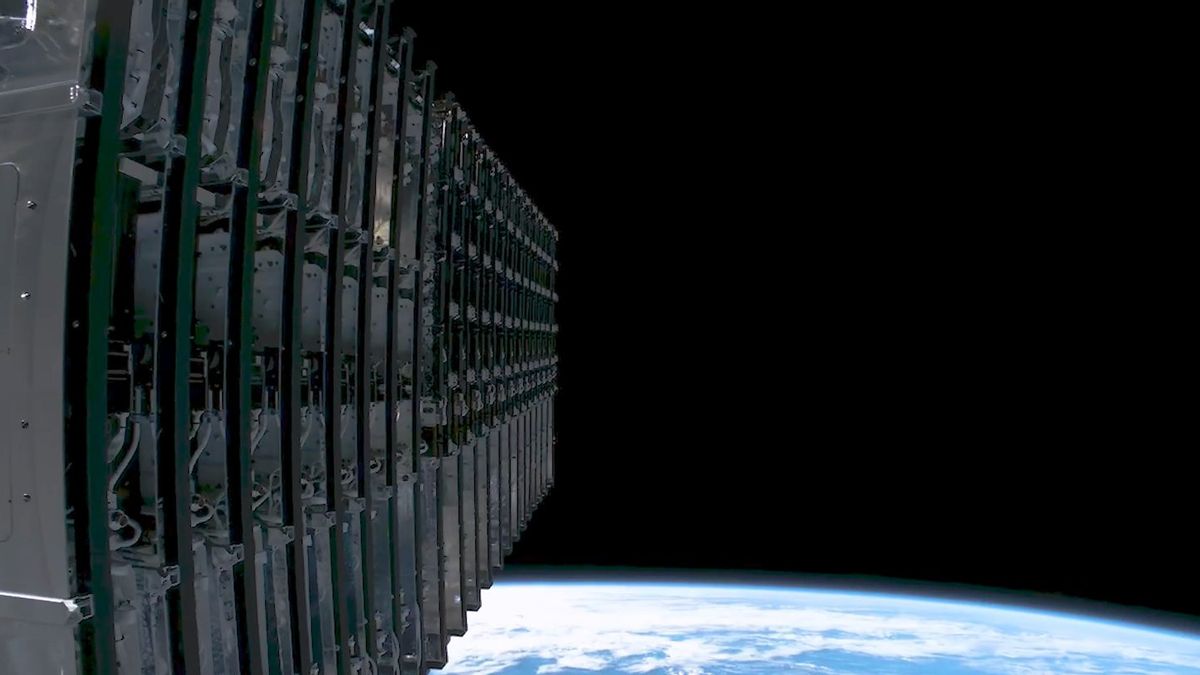


SpaceX will deorbit around 4,400 Starlink satellites by 2026 in a major move that it claims is aimed at improving space safety. All Starlink broadband satellites currently orbiting at an altitude of about 550 kilometers above Earth will be moved to a lower orbit, about 480 kilometers.
This step was announced by SpaceX's Starlink Engineering Vice President, Michael Nicolls, through the X platform on Thursday, January 1. According to Nicolls, the orbit reduction was carried out for two main considerations, namely changes in atmospheric conditions due to the solar cycle and increasing satellite traffic density in low Earth orbit.
Nicolls explained that the approaching solar minimum phase would cause the density of the atmosphere to decrease, so that the natural decay time of the satellite or ballistic decay would be longer. By lowering the orbit, the decay time can be cut by more than 80 percent, from the previous four years to only a few months if the satellite fails.
In addition, orbits below 500 kilometers are relatively quieter than space debris and other satellite constellations. This condition is considered to reduce the risk of collision, especially in the midst of increasing global satellite launch activities.
The solar activity cycle itself lasts about 11 years. Scientists estimate that the Sun has just passed the maximum phase of the 25th Solar Cycle, while the next minimum phase is expected to occur around 2030. Solar activity has a direct effect on atmospheric density, which in turn determines the speed at which satellites lose orbital altitude.
This orbital migration covers almost half of the total Starlink fleet, which currently has about 9,400 operational satellites and is growing. Nicolls said Starlink's reliability rate is quite high, with only two satellites currently reported as not functioning.
However, SpaceX believes that preventive measures are still necessary. If a satellite fails to operate, the company wants to ensure that the satellite can leave orbit as quickly as possible to reduce the risk to other satellites.
Earth's low orbit is now increasingly crowded. Starlink is the dominant player, controlling about two-thirds of the world's total operational satellites. At the same time, other countries such as China are also starting to build large-scale low-orbit internet constellations, each potentially containing more than 10,000 satellites.
SpaceX's move underscores that the competition in space internet is not just about connection speeds, but also about who is most serious about keeping traffic above people's heads safe.
The English, Chinese, Japanese, Arabic, and French versions are automatically generated by the AI. So there may still be inaccuracies in translating, please always see Indonesian as our main language. (system supported by DigitalSiber.id)


