
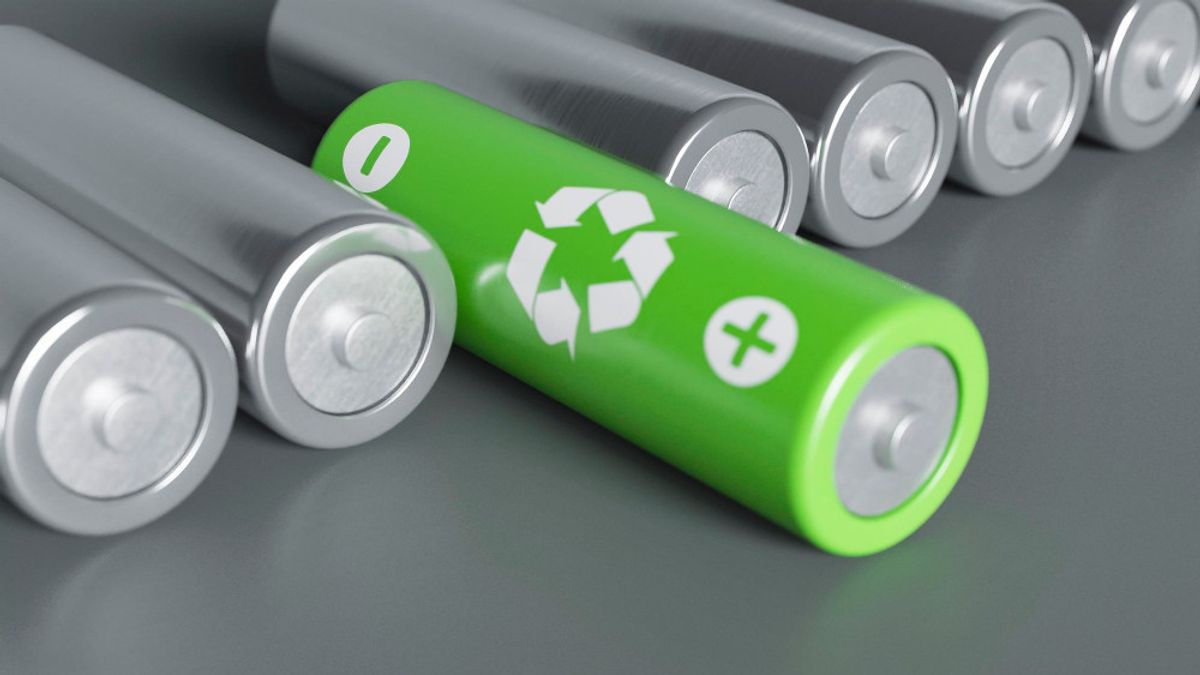


YOGYAKARTA - You definitely use battery powered devices every day. However, did you know that the performance of your device relies heavily on the main components of the lithium battery working in it?
Well, understanding the intricacies of lithium batteries is a first step towards maximizing battery life. Let's dismantle one by one the essential elements that created this portable energy revolution.
In the last 40 years, lithium-ion batteries have become discoveries that change civilization, connect our lives from smartphones, electric vehicles, to space stations.
The presence of lithium batteries has drastically accelerated the evolution of technology. So, how does electricity come from its internal reactions? VOI dissarised from the Taiwan Hopax Chemicals page, here are some things you need to know:
The lithium-ion (Li-ion) battery working principle is described through lithium (Li+) ion transfer to complement charge (charge) and discharge (power use) circuits, which are divided into two states, as follows:
To store energy, lithium ions are released from positive electrodes (katodes). These ions use electrolytes as a transmission medium, diffuse, pass through the separator, and then embed material in negative electrodes (anodes).
Then when electronic devices are used, lithium ions are released from negative electrodes (anodes). They return to using the electrolyte as a medium, bypassing the separator, and returning to positive electrodes (katodes).
Well, during the cycle of charge or discharge, it is this device that drives our device during the limit of its life cycle.
SEE ALSO:
-
 | BERITA
Ibu Korban Kebakaran Terra Drone Indonesia: "Anak Saya yang Paling Gede Baru Kerja Setahun"
10 Desember 2025, 09:49 -
 | TEKNOLOGI
DOOGEE S200 Ultra Resmi Meluncur, Spek Selevel Robot Tempur Tahan Siksaan
05 Desember 2025, 10:05 -
 | TEKNOLOGI
XLSMART Percepat Pemulihan Jaringan di Aceh, Sumut, dan Sumbar Pasca Bencana
04 Desember 2025, 12:30
The overall performance of the battery is determined by four main components that work together synergically, here's the explanation:
Katoda usually uses conducting aluminum foils coated with metal oxides containing lithium. This material determines the capacity and life cycle of the battery.
Also read articles discussing How to Setting Universal AC Remotes with Manual and Automatic Methods: Follow The Steps!
For example, Litium Iron Fosfat (LiFePO4) is able to reach the life cycle 30,000 times, far exceeding the Ternary system (NMC/NCA) which only reaches several thousand times. Future development is needed to focus on additives to improve battery safety.
Up to 90% of Li-ion batteries in the market use graphite as anode material due to stable and high safety costs.
However, as the trend leads to higher energy densities (such as in Tesla or Gogoro), many research teams have begun to develop silicon-based anode material or silicon oxides.
Separator is a micropore film made of plastic such as Polipropylene (PP) or Poliethylene (PE). Its main function is to block direct contact between cathodes and anodes to prevent short circuits and self-discharges.
Despite separating, its dense pores allow lithium ions to pass through, so the charge/discharge circuit can be formed.
Functioning as a transfer medium for lithium ions between two electrodes. Electrolytes have an important role in battery performance. The main components include EC, DMC, and PC.
In addition, increased formulation and additives on electrolytes can significantly improve the safety, life cycle, and transmission characteristics of lithium ions.
By understanding the crucial role of each main component of lithium batteries, it is key to respecting modern energy technology. The performance and longevity of your device depend on the quality and formulation of these core elements. Don't let your battery wasteful use!
The English, Chinese, Japanese, Arabic, and French versions are automatically generated by the AI. So there may still be inaccuracies in translating, please always see Indonesian as our main language. (system supported by DigitalSiber.id)


