
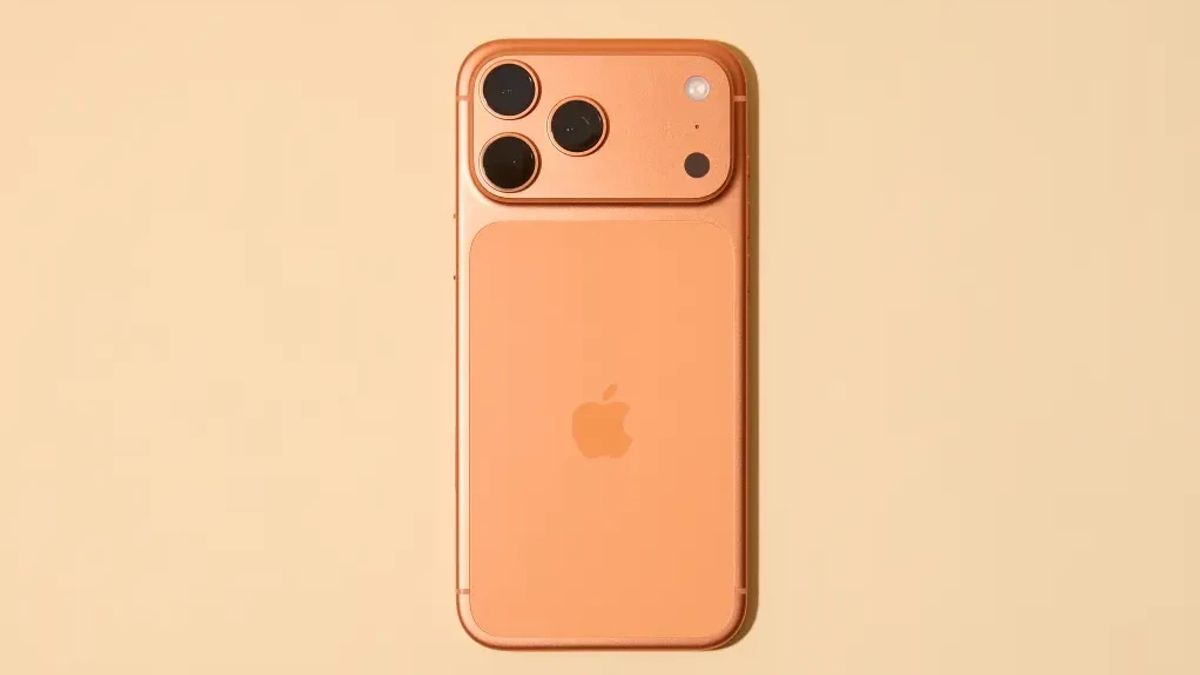


JAKARTA - Recent research shows that the iPhone 17 lineup is a leader in real-world Wi-Fi performance in North America. Even though it is not equipped with full support for some radio spectrum that Android competitors use.
All iPhone 17 models now use Apple's first custom Wi-Fi chip, namely N1. The launch of this chip coincides with the increasing need for wireless network performance for daily activities such as streaming, gaming, online work, and smart home devices.
When Android manufacturers are aggressively promoting Wi-Fi features, the latest data shows that real performance in public networks and households tells a different story.
Ookla's research took data from September 19 to October 29, 2025, covering various flagships such as the Google Pixel 10 Pro, Samsung Galaxy S25, Xiaomi 15T Pro, and Huawei Pura 80, as well as the iPhone 16 for comparison.
SEE ALSO:
-
 | TEKNOLOGI
Gim Bandit Trap akan Dirilis Tahun Depan, Uji Coba Publik Mulai 27 November
19 November 2025, 18:30 -
 | TEKNOLOGI
Qualcomm Siap Rilis Snapdragon 8 Gen 5 di China pada 26 November
19 November 2025, 18:08 -
 | TEKNOLOGI
Garena Delta Force Hadirkan Season Baru “Ahsarah” pada 18 November
19 November 2025, 17:35 -
 | TEKNOLOGI
Astronom Temukan Bintang Generasi Pertama, Terbentuk Setelah Fenomena Big Bang
19 November 2025, 17:10 -
 | TEKNOLOGI
Google DeepMind Akan Buka Laboratorium Riset AI Baru di Singapura
19 November 2025, 16:35
In measurements in the real world, the iPhone 17 recorded a median download speed of 416.14 Mbps, the highest compared to other devices. The next position is in the Pixel 10 Pro, then the Galaxy S25, and the iPhone 16.
This performance is reinforced by the high use of the 6 GHz band in the United States and Canada which adopts modern router technology more quickly.
The iPhone 17 also recorded the 10th percentile download speed of 56.08 Mbps, the highest in all tested devices. This figure shows a more consistent minimum performance, even in weak networks.
On the other hand, more than 20% of the Samsung Galaxy S25 devices tested in North America are connected using the 6 GHz band, while in Europe and East Asia only about 5%, and in the Gulf region only 1.7%.
The US and Canada provide the widest 6 GHz access for consumer devices. Modern router capabilities in both countries are also developing rapidly, mainly due to the use of large mesh systems in the suburban area.
This condition allows the N1 chip to show its best performance.
Although this chip does not support the 320 MHz feature channel, which is the main selling feature of Android on Wi-Fi 7", the impact is still small. Router 320 MHz is not widely used, so the difference is only felt in the laboratory environment.
Ookla data shows that the iPhone 17 records the highest median and 90th percent compared to all devices in North America, signaling that Apple's network architecture is designed for real performance, not just peak numbers.
Apple did not explain technical details, but said the increase came from close integration between software and hardware. The allegedly influential factors include:
antenna tuning
interference management
front-end radio design
optimization of iOS scheduling
The lack of detail makes direct comparisons with Qualcomm and MediaTek more difficult.
As the 320 MHz ecosystem grows, high-end Qualcomm Android devices will reach higher peak speeds. But for now, real-world network conditions still benefit Apple.
Ookla data also indicates that Apple is expanding its internal silicon strategy. The N series radio platform is expected to be present on Mac, iPad, Apple Vision Pro, to HomePod.
The problem of regulatory fragmentation also plays a role. Europe and East Asia lag behind the adoption of 6 GHz due to a slower certification process, while the Gulf region is far behind.
The results of this study confirm that the real Wi-Fi performance is more determined by the condition of routers and the network environment, not just support for the Wi-Fi 7 feature on paper.
Users, both iPhone and Android, will feel a big increase by upgrading routers to Wi-Fi 6E or Wi-Fi 7, regardless of the device used.
The English, Chinese, Japanese, Arabic, and French versions are automatically generated by the AI. So there may still be inaccuracies in translating, please always see Indonesian as our main language. (system supported by DigitalSiber.id)


