
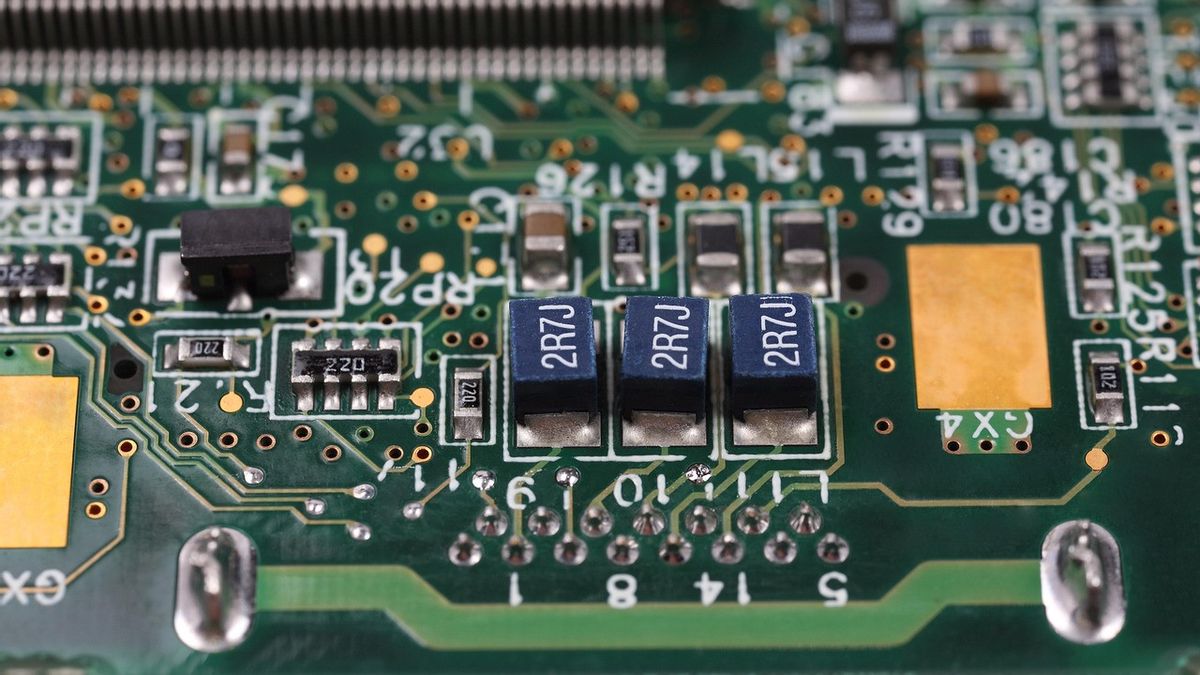


YOGYAKARTA - In digital electronics, the flip flop series functions as an element of binary data storage. This component is used to store one bit of information, namely logic 0 or 1, and becomes the basis of various digital systems such as registers, counters, and computer memory. Understanding of this series is very important for anyone who learns or works in the field of electrical engineering and digital systems.
In simple terms, the flip flop series works with the principle of changing logic signals based on input and previous conditions. In other words, flip flop has the ability to remember its last status, so it is often referred to as a bistable multivibrator. This ability makes flip flop the main component in circuit design that requires temporary storage of digital data.
The use of this term refers to its ability to 'turn' or 'turn' between two stable states. By locking a value and changing it when triggered by a clock signal, flip flop can store data over time, quoted from the Electronics for You page.
SEE ALSO:
-
 | TEKNOLOGI
Alibaba Luncurkan Layanan Chatbot AI Baru untuk Dorong Bisnis Konsumer
24 Oktober 2025, 03:05 -
 | TEKNOLOGI
Google Uji Fitur Edit Gambar Langsung di Overlay Gemini dengan Nano Banana
24 Oktober 2025, 07:05 -
 | TEKNOLOGI
Snapchat Luncurkan Fitur Imagine Lens Gratis untuk Buat Gambar dengan AI
23 Oktober 2025, 21:05

Flip flop is said to be because it has two stable conditions and switches between the two based on trigger events.
There are several types of flip flop series commonly used in digital electronic systems, each of which has different characteristics and functions. The main types of flip flop include:
This type is the most basic form of flip flop. It has two main inputs, namely Set (S) and Reset (R). When the Set signal is active, the output will be logic 1, while the Reset signal will return the output to logic 0. However, conditions when both are simultaneously active should be avoided because they produce unstable states.
JK Flip Flop is the development of the SR Flip Flop to address invalid conditions on SR. When both inputs J and K are active simultaneously, the output will toggle or change states from 0 to 1 or vice versa whenever it receives a clock signal.
This type only has one data input (D). The output will follow the input value when the clock signal is active. Due to its simplicity, D Flip Flop is widely used in data storage and register systems.
The Flip Flop T serves to reverse the output state whenever the input T signal is worth 1 and receives a clock pulse. This type is often used in the creation of digital counters or time counters.
In practical applications, flip flop series is widely used in various modern electronic devices. Examples are in register creation, register shift, counter, and even in memory systems such as RAM. Flip flop also plays an important role in synchronizing signals between parts of digital circuits that work at high speed.
With its ability to store and remember binary data, flip flop is the main foundation for sequential logic in digital systems. Without this suite, computers, microcontrollers, and various digital devices will not be able to operate properly. Therefore, understanding of the flip flop series is very important for anyone who wants to understand the basic work of modern digital systems.
Thus ifnormasi about the flip flop series. Get news updates of other options only on VOI.ID.
The English, Chinese, Japanese, Arabic, and French versions are automatically generated by the AI. So there may still be inaccuracies in translating, please always see Indonesian as our main language. (system supported by DigitalSiber.id)


