


JAKARTA Nokia CEO Justin Hotard has likened the current surge in artificial intelligence (AI) investments to internet booms in the 1990s. But he emphasized that the trend was not just a temporary bubble.
In an interview with Reuters, Hotard said AI was entering an early phase of what he called a long-term growth wave that would reshape the global economy, just like the internet three decades ago.
"I'm really sure we're at the start of the big AI cycle, similar to the 1990s when the internet started exploding," said Hotard. Even if there will be bubbles and tides, the long-term trend remains very positive.
This comment comes amid a global debate over the sustainability of massive investments in the AI sector. A Bank of America survey this month showed more than half of fund managers believe AI stocks are currently in a bubble phase. Even big figures like Amazon founder Jeff Bezos and OpenAI CEO Sam Altman warned that investor euphoria could lead to huge losses.
SEE ALSO:
-
 | TEKNOLOGI
Google Fi Tambahkan Teknologi AI untuk Tingkatkan Jaringan dan Pengalaman Pengguna
23 Oktober 2025, 14:31 -
 | TEKNOLOGI
Nano Banana Hadir di Google Lens dan Mode AI untuk Pengguna Indonesia
23 Oktober 2025, 14:09

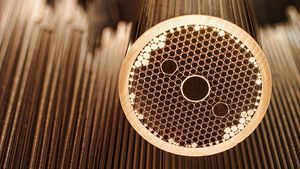

However, on the other hand, demand for data centers has actually jumped sharply as companies compete to build AI support infrastructure. Hotard, who previously led the data center and AI division at Intel, said this trend was seen across Nokia's business lines, from tech giants to small players in Europe.
"Additional investment growth is clearly driven by data centers," he said. This is a huge increase in volume.
On Thursday morning, October 23, Nokia reported a quarterly performance that surpassed market expectations, driven by high demand for optical and cloud primarily from AI-based data centers following acquisition of US-based optical network company Infinera.
The Finnish company said customers from the AI and cloud sectors contributed about 6 percent to total sales in the last quarter, marking the immediate impact of a surge in network infrastructure to support AI.
Nokia's aggressive move into the AI sector has been the company's biggest transformation since selling its mobile unit in 2013. Although cellular networks are still the backbone of the business, Nokia is now embedding AI into various lines, including radio access networks and fiber networks. optical (fiber networks).
Last year, Nokia officially completed the purchase of Infinera, one of the main providers of intra data center communication technology. Meanwhile, in September 2025, the company formed a new division called Technology and AI Organization, led by Pallavi Mahajan a former Intel executive to accelerate AI innovation throughout Nokia's business.
With this new direction, Nokia seems to be trying to reaffirm its role in the global technology ecosystem, not anymore as a mobile phone maker, but as the backbone of AI-based digital world infrastructure.
The English, Chinese, Japanese, Arabic, and French versions are automatically generated by the AI. So there may still be inaccuracies in translating, please always see Indonesian as our main language. (system supported by DigitalSiber.id)


