
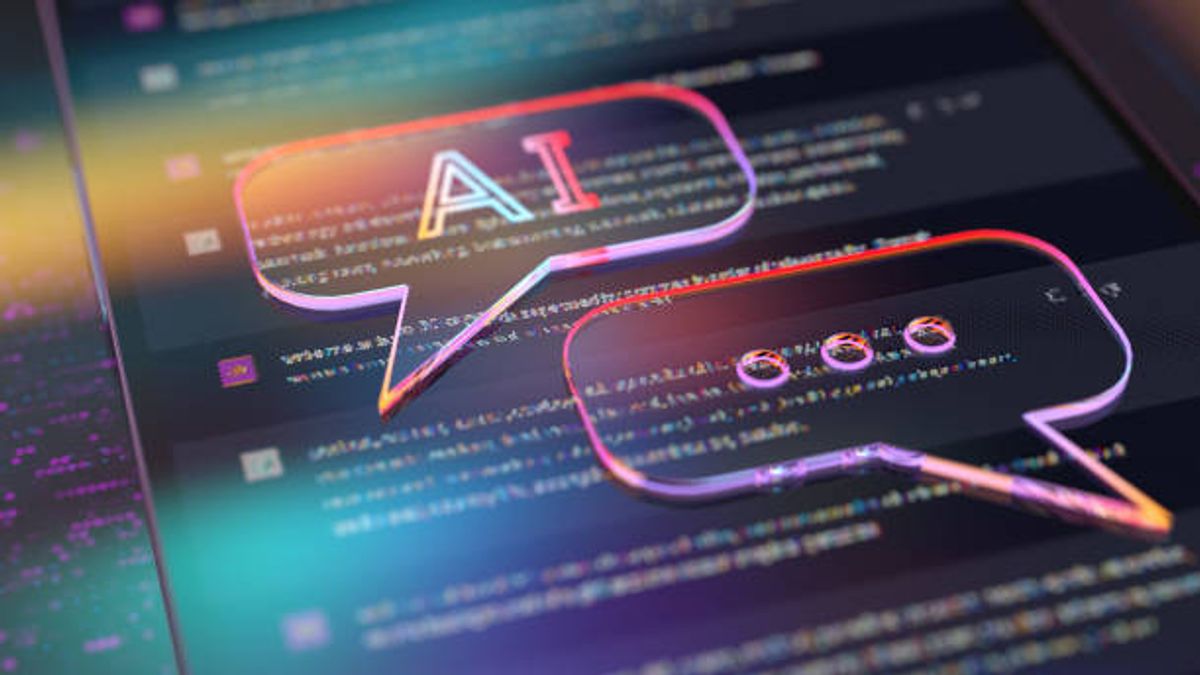


JAKARTA - The Indian government on Wednesday, October 22 proposed a new regulation requiring artificial intelligence (AI) and social media companies to clearly label AI-generated content. This step was taken to suppress the spread of deepfakes and disinformation, following a similar policy that the European Union and China had implemented earlier.
With nearly a billion internet users and high ethnic and religious diversity, India faces a huge risk from spreading fake news that could trigger social conflict. Concerns increased after a number of deepfake videos circulated ahead of the election, making government officials fully alert.
According to a draft regulation released by the Ministry of Information Technology of India, any visual content from AI should be labeled which includes at least 10% of the initial visual display area or 10% of the initial duration for audio content. This provision adds to the responsibility of large companies such as OpenAI, Meta, X (Twitter), and Google.
Social media platforms are also required to request user statements whether their uploads contain AI-made content, as well as apply reasonable technical steps to ensure the checking system runs effectively. The government insists, this rule will jame clear labeling, searchable metadata, as well as transparency for all AI content that appears in public spaces.
SEE ALSO:
-
 | TEKNOLOGI
Pangeran Harry dan Meghan Ikut Serukan Larangan Pengembangan AI Superintelligent
22 Oktober 2025, 17:35 -
 | TEKNOLOGI
Menkomdigi Meutya Percaya Startup Indonesia Masih Bisa Tumbuh Lebih Pesat
22 Oktober 2025, 17:05 -
 | TEKNOLOGI
Samsung Hentikan Distribusi One UI 8, Ini Perangkat yang Terdampak
22 Oktober 2025, 16:35


The government opens public and industrial inputs until November 6 before the regulation is finalized.
This step was taken due to the increasing potential for a generative AI abuse to spread disinformation, manipulate political opinion, or imitate one's identity. The risk to users is increasing rapidly,' said the government's official statement.
So far, OpenAI, Google, and Meta have not responded to requests for comment from the media.
Meanwhile, a number of deepfake-related cases are currently rolling in Indian courts. Bollywood actors Abhishek Bachchan and Aishawarya Rai Bachchan, sued YouTube and demanded a ban on the creation of AI videos that violated their intellectual property rights, and challenged platform-owned AI training policies.
Dhruv Garg, founder of the Indian Government and Policy Project policy research institute, assessed that this 10% labeling rule is one of the most explicit efforts in the world to set measurable visibility standards.
If implemented, this policy will force AI companies in India to build an automated labeling system that marks AI content from the stage of creation.
India itself is growing into a big market for global AI companies. OpenAI CEO Sam Altman revealed in February that India is now the second largest market for its company by a triple increase in user numbers in the past year.
This new policy marks India's decisive step in maintaining information integrity in the digital era, which is increasingly controlled by artificial algorithms and intelligence.
The English, Chinese, Japanese, Arabic, and French versions are automatically generated by the AI. So there may still be inaccuracies in translating, please always see Indonesian as our main language. (system supported by DigitalSiber.id)
Most Popular Tags
#Prabowo Subianto #donald trump #2026 World Cup #Febrie Adriansyah #8791Popular


