
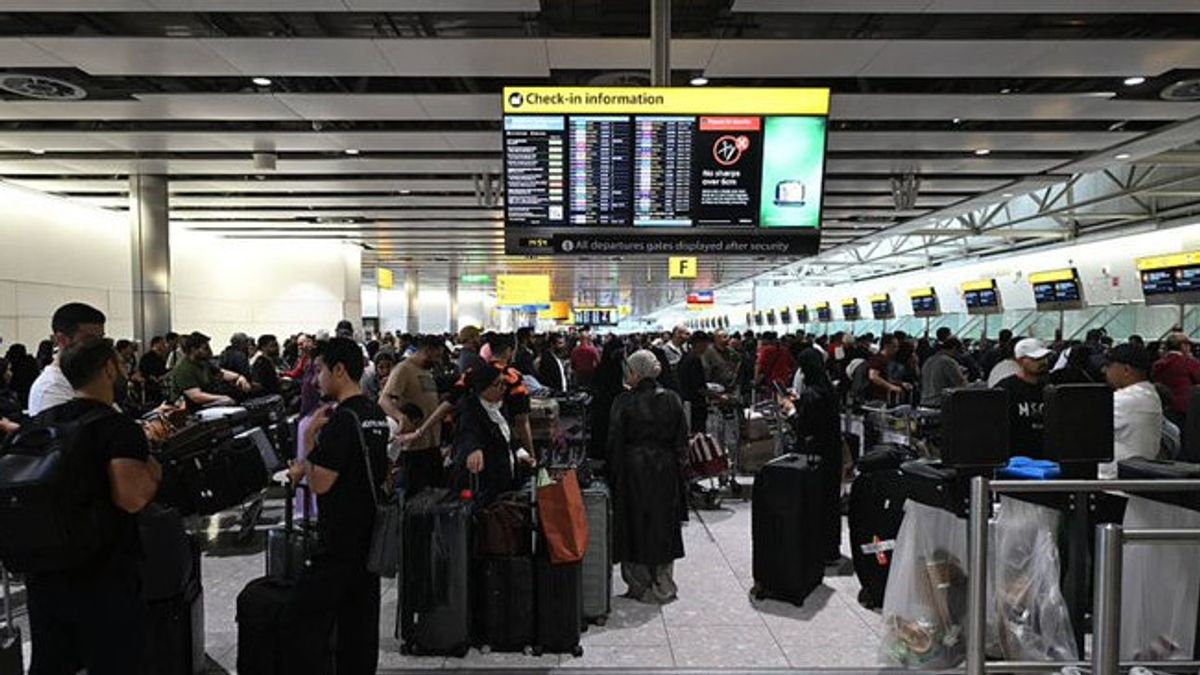


JAKARTA Cyberattacks on check-in and boarding system providers caused operational disruptions at several major European airports on Saturday, September 20. These incidents included Heathrow Airport in London, which is the continent's busiest airport. This incident resulted in delays and cancellations of a number of flights.
The problem centers on Collins Aerospace's MUSE software, a subsidiary of RTX, which is used by a number of airlines at various global airports. RTX confirmed cyber-related disturbances in the software at several airports, without specifying which parties were affected.
Heathrow, Berlin Airport, and Brussels Airport were among the affected. Dublin Airport then reported minor impacts, as did Cork Airport in Ireland.
SEE ALSO:
-
 | TEKNOLOGI
Fitur iPhone Eksklusif yang Tidak Ditemui dalam Android, Apa Saja?
21 September 2025, 17:15 -
 | TEKNOLOGI
Ponsel dengan Kamera Zoom Terbaik dengan Hasil Tetap Tajam Meski Malam Hari
21 September 2025, 16:35 -
 | TEKNOLOGI
4 Cara Mengatasi iPhone Lemot Setelah Update iOS, Yuk Ikuti Panduannya
21 September 2025, 12:40 -
 | TEKNOLOGI
Rapi dan Elegan! Berikut Ide Bio IG Aesthetic Bahasa Inggris yang Buat Kamu Kelihatan Menarik
21 September 2025, 11:40

RTX stated that the biggest impact occurred on electronic check-ins and baggage services, but they could be overcome by checking-in manually. The company insists it is working hard to restore the system.
According to Cirium data, as of 11.30 GMT, a total of 29 flights were canceled in Heathrow, Berlin, and Brussels. In Brussels, four flights were diverted, while most flights were delayed. The airport even asked the airline to cancel half the departure flights on Sunday, September 1 to avoid long queues.
A spokesman for the European Commission said so far there had been no indication of an attack "expanding or severe", although investigations were ongoing.
This type of cyberattack is generally related to ransomware or digital sabotage. Pilling, director of threat intelligence at Sophos, said the incident shows the fragility of a digital ecosystem that relies on each other in the world of aviation.
Passengers are asked to confirm flight status before heading to the airport. In Berlin, long queues occurred at the check-in counter, although the airport said the quick solution was being worked on.
EasyJet airlines said operations remain normal. Delta Airlines reported a minimal impact after implementing an emergency solution, while United Airlines only recorded a minor departure delay.
British Transport Minister, Heidi Alexander, said he received regular reports regarding this situation. German and British cyber authorities have also coordinated with the airport.
Several major European airports, including Heathrow in London, on Sunday tried to restore normal operations after cyberattacks against Collins Aerospace disrupted the automatic check-in system the day before.
Brussels Airport reported 45 of its 257 flights on Sunday were canceled, with a delay of between 30 and 90 minutes. However, the airport confirmed that operational adjustments had succeeded in suppressing long queues.
At Berlin Brandenburg Airport, the disturbance is still felt but the manual system has been in effect so there are no major delays or cancellations. Meanwhile, Heathrow said the majority of flights were still running even though the system's recovery was still ongoing.
Data analysis Cirium shows that delays in Heathrow are relatively small, Berlin is relatively moderate, while Brussels is still experiencing significant delays but is starting to decline.
The English, Chinese, Japanese, Arabic, and French versions are automatically generated by the AI. So there may still be inaccuracies in translating, please always see Indonesian as our main language. (system supported by DigitalSiber.id)
Popular


